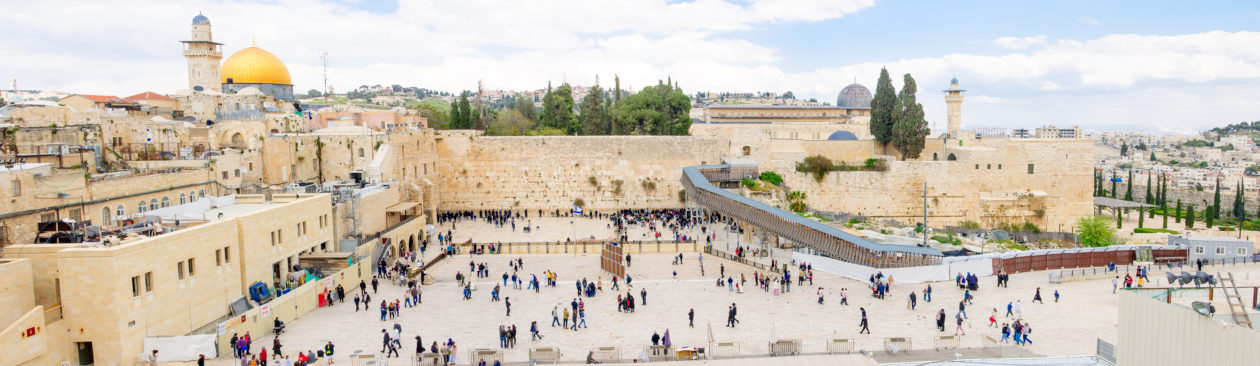


In 2001, my mother revealed that I was Jewish. My maternal line is Sephardic, tracing back to Spain, with my grandfather a Cohen—a priestly descendant. Family tradition even links us through cousins to Gamliel the Elder, the renowned first-century rabbi. Growing up, I was deeply interested in the wisdom and teachings of Messianic Teachers. My father’s side is Black.
They carry the E-M2 (E1b1a) Y-haplogroup. This lineage is dominant in West and Central Africa. It is also common among African Americans due to historical migrations. This mixed heritage in one family
beautifully illustrates my rabbi, Chaim Richmond’s, teaching.
He has always said: Hashem’s children encompass the whole world. Each nation, each person, is unique with a distinct place in the divine plan. The Jewish people were chosen to accept the Torah. They are also chosen to pass on the Torah to the nations. Yet, every person has their role.
The Torah
I was raised in a Christian context where the “Old Testament” formed the foundation. I sought a deeper understanding of my Jewish roots. Rabbi Chaim Richmond became—and remains—my spiritual compass. The pressures of this world can pull me off course. It holds dominant Christian narratives and often resists unfiltered truth. He gently redirects me to the eternal Torah.
My search led me into the Messianic movement. Teachers from First Fruits of Zion visited our synagogue. I learned from Avi Ben-Mordechai, Holisa Alewine, Joe Good, and Rico Cortes. I studied the teachings of Eddie Chumney, Monte Judah, Bill Cloud, Tony Robinson, Jim Staley, and Michael Rood. FFOZ was also influential in my studies.
They presented Yeshua (Jesus) as the Jewish Messiah who fulfilled Torah shadows and types. The message resonated: Gentiles grafted in, Torah still relevant, Israel central yet completed through the Messiah.
I supported these ministries financially with annual thousand-dollars. I introduced them to God’s Learning Channel and opened doors at our synagogue for lectures and teaching. Audiences grew. From 2001 through the mid-2018, I questioned and researched every concept, never accepting anything blindly.
Going Home A Jew Returning
In 2008, a group of eleven of us traveled to Israel. One personal side goal was to meet Tovia Singer and explain why I believed Yeshua was the Messiah of Israel. That meeting was pivotal. It was merged with years of listening to Singer’s counter-missionary teachings.
I also listened to Rabbi Akiva Tatz on the future Messianic age. I listened to Manis Friedman, Lawrence Kellerman, Rabbi David Foreman, and Rabbi Zev Leff. Especially impactful was Rabbi Ephraim Palvanov’s insightful series on Edom. These experiences planted seeds of reevaluation.
The unbroken chain of Jewish tradition—father to son for over 3,300 years—proved decisive. Yemenite Jews, where children as young as eight can recite and discuss Tanakh in depth, embody this living transmission.
Deuteronomy 32:7 commands: “Remember the days of old. Consider the years of many generations. Ask your father, and he will tell you. Your elders will inform you.” I returned fully to Judaism, guided by the elders and the pure Torah.
The Teachers’ “Proofs” – Creative Layers, Not Plain Torah
The Messianic teachers crafted compelling connections between Torah events and Yeshua. Bill Cloud, in lectures I still own on CD, linked the Exodus timeline. He noted the departure around the 14th of Nisan. He also mentioned a “resurrection” alignment on the 17th. This suggests the Red Sea crossing represented a new beginning. Similar ideas in Eddie Chumney’s The Seven Festivals of the Messiah and other Hebrew Roots teachings. These teachings tie dates, like Noah’s ark resting on the 17th of the seventh month, to Nisan 17. They do this via calendar overlaps.
Jewish tradition tells a different story. The Passover meal and the 10th plague occurred on the 14th/15th of Nisan. The Exodus began on the 15th. The Red Sea split on the seventh day of Passover—the 21st of Nisan. The Song of the Sea was then sung. This is the climax of the festival week, commemorated as Shevi’i shel Pesach. Classical sources, midrash, and calendars from Chabad and Orthodox authorities confirm this. The seven days of matzah mark the total redemption. No mainstream Jewish source supports a 17th of Nisan crossing. The Messianic alignment uses a forced typological fit. It intends to parallel the resurrection. This relies on numerology rather than on explicit Torah text.
Passover: Bold Defiance Against Idolatry, Not Sin Atonement
The most significant distortion concerns the Passover lamb itself. Rico Cortes of Wisdom in Torah Ministries teaches that the blood on the doorposts formed a covenant. This covenant made Israel the adopted sons of God. He then draws a direct line ahead. Over one thousand years later, God sent a mediator. (JOB 9:33 )
This mediator was His own son, Yeshua. Yeshua would bring the empire of the Adversary to its knees. He would restore and expand the Kingdom of God to include all people. These are the people who choose to accept the blood of Yeshua as a covenant.” He connects this explicitly to John 1:29—“Behold the Lamb of God who takes away the sins of the world.”
This interpretation imports New Testament theology onto a Torah event whose plain meaning is the opposite.
Will You Not Stone Us
Moses tells Pharaoh in Exodus 8:26, “It would not be right to do so. We shall sacrifice the abomination [to’evah] of the Egyptians to the Lord our God. If we sacrifice the abomination of the Egyptians before their eyes, will they not stone us?”
Rashi and other commentators explain that sheep and rams were sacred to the Egyptians. They associated these animals with deities like the ram-headed Amun-Ra or Khnum. Israelites were commanded to select a lamb on the 10th of Nisan. They kept it visibly in their homes for four days. Then, they slaughtered and roasted it publicly on the 14th.
Blood on the lintel and doorposts was a visible sign of separation. It showed faithfulness to Hashem amid a powerful idolatrous empire. God “passed over” the marked homes in judgment upon Egypt’s gods, protecting those who rejected idolatry.
Pesach Is Not A Sin Offering
The korban Pesach is not a sin offering (chatat), whose purpose is atonement. It shares some consumption rules with shelamim (peace offerings) and is eaten by the family. Yet, Rambam (Maimonides) and the Talmud classify it as a distinct category. It is a male yearling lamb or kid, roasted whole with no bones broken. It must be consumed entirely that night with matzah and bitter herbs. Any leftovers are burned by morning.
Shelamim fosters peace between the offerer, God, and the community, but does not primarily forgive sins. The Passover story is repeated at every Seder for over three millennia. It emphasizes redemption through courageous rejection of dominant false gods: “We slaughtered the god of the Egyptians before their eyes, and Hashem delivered us.”
The Lamb Is A False Deity
How, then, can it symbolize a figure whose death atones for the world’s sins? Tovia Singer often challenges Christian seminaries on this point. He argues that the lamb represented the false deity we publicly rejected and destroyed. It was not a savior whose blood we embraced for personal redemption. The Messianic overlay adds a layer foreign to the Torah’s emphasis on faithfulness and anti-idolatry.
Rico identifies as a Kohen (“Eliezer ben Kohen” in online profiles). When I first encountered him, interactions felt reserved and occasionally puzzling—scheduled lectures moved without clear notice. Friendship developed only after I introduced my Persian Jewish friend, Dr. Bijan Denishfar, who began financially supporting the ministry. Yet when I returned to traditional Judaism, warnings circulated: “Run from them as fast as you can.” No celebration of a Jew returning to the covenant. Instead, exclusion.
Esau, Ishmael, and the End-Times Clash
Bill Cloud’s teachings on Esau have evolved. In earlier Hebrew Roots circles, links were drawn between Esau/Edom and adversarial forces. These discussions often occurred in collaborations with Brad Scott(may his name be for a blessing). They sometimes included Islam.
In Esau Rising, Cloud describes the “spirit of Esau.” It is carnal and self-entitled, and hostile to divine order. This spirit manifests in modern moral decay, government overreach, and opposition to biblical values. In a March 2026 interview with Glenn Beck, Cloud discussed biblical patterns pointing to Islamic expansion. He mentioned “Arab kingdoms” and east winds as symbols of jihad. Nevertheless, he did not directly equate Esau to Islam.
After listening to that interview with my wife, I texted him: “Who is Esau?” His reply: “Genetically or spiritually?” This felt like an evasion. In earlier conversations, I raised questions about why the Jewish people as a whole never accepted Yeshua. These questions elicited warnings that certain rabbis “know a lot” and are “dangerous.”
Esau -Edom-Rome-Christianity
Rabbinic tradition offers clearer identification. Rabbi Ephraim Palvanov’s “Understanding Edom” series traces Esau to Rome. He identifies Herod the Idumean (of Edomite descent) as a Roman-installed ruler. The series discusses the destruction of the Second Temple in 70 CE. It also mentions Constantine’s Christianization of the empire at Nicaea. This process incorporated pagan elements while distancing from Jewish practice.
Medieval rabbis used “Edom” as a coded reference for Christian Europe. Britain’s role in spreading Christianity through imperial expansion fits the “live by the sword” prophecy of Genesis 27:40. Replacement theology is the idea that the Church supplants Israel because Jews “rejected” the Messiah. It echoes exactly the hubris warned against in Obadiah and Malachi.
In the end-times framework of Tanakh and midrash, Esau (associated with the Christian West) and Ishmael (Islamic world) may clash, yet both ultimately target Jacob/Israel—the rightful heir. The strategy to seize the inheritance is simple: eliminate the legitimate son. Scripture and tradition declare that God will judge Edom; Jacob will prevail.
DNA Evidence: Receipts from Science and Tradition
The world often labels Jews as occupiers or thieves of the land. Both the Bible and science push back.
Genesis describes Noah surviving the flood with his three sons—Shem, Ham, and Japhet. Genesis 10 outlines the nations descending from them. My paternal line traces through my father’s E-M2 (E1b1a) haplogroup. This lineage originated in Africa, East or Central. It shows the highest diversity and frequency in West and Central Africa, with 70-97% in many Niger-Congo populations.
This haplogroup spread with Bantu migrations and later through the transatlantic slave trade. My FamilyTreeDNA test on this line shows zero matches at the deep Big Y level. There are dozens of downstream SNPs (CTS, FGC, FT, and other markers). This is not unusual. It indicates I am among the first in this specific, highly refined subclade to test at this resolution. Many variants are private or rare, awaiting future testers to create matches. This highlights the uniqueness and specificity of individual paternal stories.
My GrandFather Is a Cohen
My maternal Jewish line tells a different chapter. My uncles tested positive for the Cohen Modal Haplotype (CMH) in haplogroup J1-P58 (J-M267 subclade). Studies show this signature appears in roughly 45-60% of men claiming Cohen status. This is true across Ashkenazi and non-Ashkenazi (including Sephardic) communities. They share an estimated common ancestor from around 3,000 years ago in the Near East.
Frequencies are notable among Cohanim (around 46% across key studies) and higher in some Sephardic samples. Our family’s Sephardic Spanish roots, with the marker also appearing in German Ashkenazi contexts, show post-1492 expulsions and medieval migrations. This Levantine priestly continuity supports the unbroken chain from Aaron through the elders.
Science Proves The Torah True
Dr. Nathaniel Jeanson’s Traced emphasizes that all paternal Y-chromosome lines ultimately trace back to three primary founders. This echoes Noah’s three sons in a framework aligning with Genesis. Abraham’s covenant flows specifically through Isaac. It also flows through Jacob (the Shem line in the chosen branch: Shem → Arphaxad → Abraham). The physical land promises and role as Torah-bearers belong to Jacob’s descendants.
Jews and Arabs share significant ancient Levantine (Canaanite) ancestry, affirming indigenous ties to the region. The Black Sea deluge hypothesis provides geological context for flood traditions. Around 7,600–8,800 years ago, Mediterranean waters rapidly inundated a freshwater lake. This created catastrophic local flooding. It inspired regional deluge memories, though not a global event.
We All Have Three Fathers
My family embodies diversity within unity. It includes African paternal depth (E-M2 with private markers and now zero matches). It also includes Sephardic Cohen continuity (J1-P58). This does not contradict Torah. Rabbi Chaim teaches that every nation and individual has a unique place.
The covenant inheritance through Jacob remains with the physical descendants. It stays with the elders’ chain. It does not extend to symbolic replacements or “lost branch” claims. These claims lack DNA or historical receipts. No Messianic teacher I have supported has produced equivalent evidence of priestly or Abrahamic lineage.
The Betrayal That Exposed the Lie
Here is the most personal and damning evidence against the replacement theology that these teachers promote. For years, they accepted my financial support and the platforms I helped open.
When I returned to traditional Judaism—embracing the elders, the 3,300-year chain, and pure Torah without added layers—they cut contact. Warnings spread through their circles: “Run from Archie and his family. Have nothing to do with them.”
Rico, after receiving financial support from my introduced contacts, became friendly and participated in the distancing. Bill Cloud sidestepped direct questions. Others simply ghosted. If their message were truly biblical, they should have rejoiced.
Examples include the parable of the lost sheep or Ezekiel’s call for restoration of scattered Israel. A Jew returning to the covenant should be cause for celebration. Instead, fear and shunning prevailed. This mirrors historical patterns where those claiming to supersede Judaism treat returning Jews as threats rather than brothers.
This reaction reveals the core. It is not a genuine grafting-in that honors Israel’s ongoing chosen role. Instead, it is a subtle replacement. The original heirs become optional. New claimants take center stage through belief alone.
A Call to Return to the Source Not To Replace
To Bill Cloud, Rico Cortes, Eddie Chumney, Monte Judah, Avi Ben-Mordechai, and Diana Dye: Thank you for teaching me. Your teachings have added extra layers to the Torah. These contributions added shadows and types.
The plain text and Jewish tradition do not support these additions. The Passover lamb was about public defiance of Egyptian idolatry and faithfulness to Hashem—not a sin-atoning savior for the world. Rabbinic sources recognize Esau with Rome and its Christian successor. They do not view Esau merely as a vague “spirit” or shifting modern foe.
Claims of Gentiles as Ephraim or lost branch inheritors lack both biblical precision and DNA receipts. I sent materials, including Palvanov’s Edom lectures and genetic information. The responses were evasion or silence.
Betrayed: Messianic No More – But Forgiven
I funded, promoted, and trusted. Upon my return home, betrayal followed. That pattern exposes the theology more clearly than any debate.
To readers still in Messianic or Christian circles: You once walked a similar path. Examine the Torah on its own terms. Consult the elders as Deuteronomy commands. The Seder recounts the slaughter of Egypt’s gods and Hashem’s deliverance—not the embrace of a new deity for atonement. Esau faces judgment; Jacob inherits. DNA and archaeology affirm Jewish indigenous continuity in the land alongside Abraham’s broader seed, not occupiers inventing history.
Replacement Claims
The world is filled with noise and competing claims. Yet, the chain endures. Yemenite children master Tanakh. My uncles have confirmed Cohen markers. Rabbi Chaim provides steady guidance. Truth resides in the unbroken transmission from Sinai.
I emerged from Messianic shadows into the clear light of Torah. The journey was difficult but liberating. Others seeking authenticity find the same courage to ask the fathers and elders. Hashem’s plan includes space for every unique soul and nation. The Torah serves as a guiding light for all. It is not a system to be replaced or completed by later additions.
Footnotes / Sources
- Rico Cortes, “The Covenant of Passover,” Wisdom in Torah Ministries.
- Exodus 8:26 and Rashi on “to’evah.”
- Rambam, Mishneh Torah, Laws of Passover Offerings.
- Bill Cloud, Esau Rising and Glenn Beck podcast discussion (March 2026).
- Rabbi Ephraim Palvanov, “Understanding Edom” series.
- FamilyTreeDNA documentation on the Cohen Modal Haplotype (J1-P58); studies, including Hammer et al. (2009), report ~46% prevalence among Cohanim.
- Haplogroup E-M2 distribution: predominant in West/Central Africa (70-97% in many populations), common in African American lines.
- Black Sea deluge hypothesis (Ryan & Pitman, ~7,600–8,800 years ago).
- Deuteronomy 32:7.
- Personal experiences and communications.
Hazan Gavriel ben David


