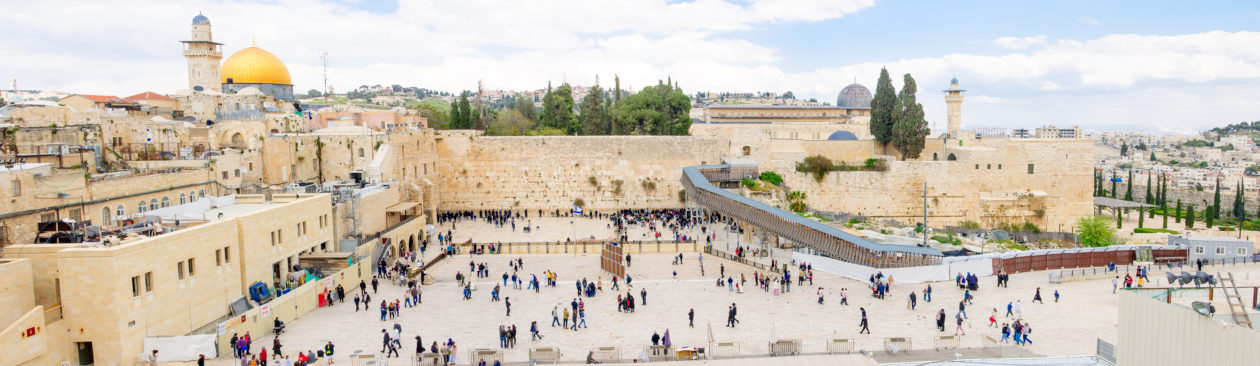
I await the New Year of 5785 and pray for my nation and country. The USA and Israel both stand at the precipice of destruction from power within their ranks. Israel and the USA are fighting for their spiritual lives.
I know that whatever happens to our homelands, Hashem is the King who runs this world. I prepare today and every day to make Hakodesh Barchu my King and to wait joyfully on His promises to us, the Jewish people.
Hashem is getting ready to introduce Himself to a world that thinks there is no truth and no G-D in the world. They can run the world in a way that breaks every Torah commandment and covenant that Hashem has made with mankind and with the Jewish people and the Land of Israel. Our redemption is near, and the war of Gog and Magog is at hand. In our midst today.
Unbelievable Bible Code of Professor Harakickk on GOG MAGOG and the End of Days Rabbi Glazerson
Hidden History of Zionism
Hidden History of Zionism
Timing Is Everything.
Archeologists claim the Exodus never happened.
The world is now facing many challenges and hard decisions. The world of truth is no longer a place where truth belongs. Every nation is fighting for its freedom. The world is seeing our slavey to the unseen masters.
Will the Torah again be proven to be the only truth that will stand?
Things that you do not know. Did Jerico happen?
What do you do when Experts can not agree?
Efraim PalvanovArchaeological Proof for the Torah and Exodus
JUDAISM and CHRISTIANITY: The Parting of the Ways – with Rabbi Eli Cohen
Jews for Judaism
32K subscribers
JUDAISM and CHRISTIANITY: The Parting of the Ways – with Rabbi Eli Cohen
Many people know that the religion that became Christianity originally began as a movement within Judaism. What is less well understood is how this transformation actually took place. This presentation examines the critical embryonic departure from Judaism that led to a total unraveling of Christianity from its Jewish roots.
• JEWS FOR JUDAISM is an outreach organization whose primary goal is to win back to Judaism those Jews who have been influenced by the following six threats to Jewish survival that are devastating the global Jewish community.
Hebrew-Christian missionaries convert thousands of Jews worldwide every year
Destructive cults cause many Jews to abandon family, friends and careers
Eastern religions, Buddhism and Hinduism are spiritual choices for many Jews
Apathy and ignorance leave many Jews unaware, unaffiliated and assimilated
Intermarriage is exploding with a 75% rate in some North American cities
Anti-Israel BDS on campus inhibits Jewish students from standing up for Israel and Judaism
To assist non-Jews who have left other religions, JEWS FOR JUDAISM also provides educational programs to help them embrace the Torah’s Seven Noachide Laws for Gentiles.
We achieve our goals through our worldwide Internet outreach, Social Media, free educational programs, educational literature and counseling services that connect Jewish people to the spiritual depth, beauty and wisdom of Judaism.
“I am so grateful to have discovered the wonderful Jews for Judaism YouTube lectures by Rabbi Skobac. I am a Jew who converted to Christianity in college, but now, thanks to your online outreach, I have returned to Judaism. Thank you.” – Rebecca G.
In a nutshell, Jews for Judaism saves Jewish lives and keeps Jews Jewish.
PLEASE SUPPORT JEWS FOR JUDAISM’S LIFE-SAVING WORK!
Your help is very much needed and greatly appreciated.
Jews for Judaism never charges for its programs, books and counseling services… ever.
We rely solely on donations from people like you.
To donate click here: https://www.canadahelps.org/dn/24741
Thank you very much.
JEWS FOR JUDAISM
3110 Bathurst St, PO Box 54042,
Toronto, ON, CANADA M6A 3B7
T: 416-789-0020 • F: 416-789-0030
How do we account for the fact that human beings are capable of destroying themselves? The opening chapters of the Torah are not a collection of distant myths. They are a precise diagnosis of human psychological and emotional life.
Four major catastrophes unfold in rapid succession: the sin in the Garden of Eden, Cain’s murder of Abel, the Flood, and the building of the Tower of Babel. None of them is a natural disaster. Each is driven by self-destructive behavior. Adam and Eve hide after eating from the tree. Cain cannot bear the disparity between his offering and his brother’s.
The generation of the Flood fills the earth with violence and corruption once material ease arrives. The generation of Babel unites to make a name for itself against heaven. In every case, people act against their own deepest interests.
Chief Rabbi Warren Goldstein has observed that the psychological and emotional forces that shape character traits are incredibly powerful. Left unexamined and unrefined, they undermine relationships, happiness, and the ability to make good decisions. When developed with awareness and intention, the same forces become a source of growth and psychological health.
Parashat Noach sits at the center of this diagnosis. It shows both the mechanism of self-destruction and the path of recovery. The question the Torah forces on every reader is how any of these nuances become visible without the Hebrew text and without recognizing that this is a Book unlike any other.
The Four Catastrophes and the Pattern of Self-Destruction
Genesis opens with a world declared “very good” (Genesis 1:31). Almost immediately, the narrative records choices that produce alienation. After the Tree of Knowledge, Adam and Eve hide from God. The text does not describe an external compulsion; it describes an internal movement of shame and concealment.
Cain’s story is even more explicit. God warns him that sin crouches at the door and that he has the power to master it. Cain does not. Jealousy and the refusal to accept his place produce murder. The Flood’s generation multiplies violence once the curse on the ground is lifted. The generation of Babel channels collective energy into a project of self-exaltation. In each case, the catastrophe is self-authored.
After the Flood, God makes a statement that appears to contradict the “very good” of creation: “the inclination of the heart of man is evil from his youth” (Genesis 8:21). This verse is the source of the term yetzer hara. The tension is real and intentional. The Torah is not saying that human nature is intrinsically bad.
It is saying that the raw drives present from youth—desire for pleasure, status, security, and ease—are powerful enough to override clearer judgment when they are left unrefined. The mind we trust to keep us on track is weaker than we prefer to believe.
Lamech’s Words and Hashem’s Echo: The Hebrew That English Cannot Carry
The key to understanding the Flood generation lies in the naming of Noach. Lamech declares:
זֶה יְנַחֲמֵנוּ מִמַּעֲשֵׂנוּ וּמֵעִצְּבוֹן יָדֵינוּ מִן־הָאֲדָמָה אֲשֶׁר אֵרְרָהּ יְהוָה “This one shall comfort us from our work and from the toil of our hands, from the ground which the Lord has cursed” (Genesis 5:29).
Six verses later, Hashem decides to destroy the world:
וַיִּנָּחֶם יְהוָה כִּי־עָשָׂה אֶת־הָאָדָם בָּאָרֶץ וַיִּתְעַצֵּב אֶל־לִבּוֹ… מֵעַל פְּנֵי הָאֲדָמָה… כִּי נִחַמְתִּי כִּי עֲשִׂיתִם “And the Lord regretted that He had made man on the earth, and it grieved Him to His heart… I will blot out man… from the face of the ground… for I regret that I made them” (Genesis 6:6–7).
The four roots appear in the same order: nacham (comfort/regret), the language of deeds/making, atzav/itzavon (grief/toil), and adamah (ground). This is not the product of multiple authors or later editors. It is deliberate literary design. Hashem takes the exact vocabulary of Lamech’s hoped-for comfort and uses it to announce the end of that world.
The root nacham (נ.ח.ם) itself carries both meanings. It can mean to comfort or to regret because both involve an internal shift—a change of state. English must split the idea into separate words and therefore loses the force of the echo.
Without Hebrew, the reader cannot see that the generation’s own language of comfort became the language of their destruction. This is one of the clearest internal proofs that the Torah was written by a single Author who designed the text to reveal the operating system of the human heart.
The Plow as Technological Comfort and the Homing Beacon
Rashi, following the Midrash, explains that the comfort Lamech foresaw was the invention of the plow and other agricultural tools. Until Noach, people worked the cursed ground with their hands and reaped thorns and thistles. The plow eased the physical toil; the land began to produce properly. Material life improved.
Rabbi David Fohrman (AlephBeta) has shown why this comfort became catastrophic. The curses placed on the ground after the Tree of Knowledge and after Cain were never meant to be permanently engineered away.
They functioned as a homing beacon.
Alienation from the land and from God was designed to create longing to return.
When the plow numbed the pain and allowed people to accommodate themselves to the uncomfortable reality, they stopped feeling the pull. The technological solution to a spiritual problem removed the signal that was meant to bring them home. At that moment, God said, in effect, that they had given up on the relationship. The same language of comfort was turned into the language of regret and a new beginning.
Yetzer Lev Ha’Adam and the Reality of Human Drives
The statement that the inclination of the heart is evil from youth does not mean that any human being wants to do pure evil. Drawing on the Rambam, the Maharal, the Radak, and Pirkei Avot, Chief Rabbi Goldstein clarifies the nature of this inclination.
The yetzer is the raw, powerful drive present from early life—the desire for pleasure, status, security, and ease. It is not a demonic force. Left unrefined, it produces self-destructive outcomes: envy, violence, the pursuit of comfort at the expense of relationships, the refusal to confront discomfort.
The Radak notes that this drive is active from youth, before the counterbalancingyetzer hatov fully develops. A person is, in the language of Job, like a wild ass at birth; understanding and restraint are acquired later.
The Vilna Gaon taught that refining one’s character is too foundational to be counted merely as one of the 613 commandments. The entire Torah exists to shape middot—the measures of character.
Pirkei Avot remembers Avraham not primarily for his intellectual discovery of one God, but for the character traits that flowed from that clarity: hospitality, justice, and the willingness to act. The mind alone is insufficient.
Emotional and psychological forces are stronger. Awareness, intention, and the disciplined practice of mitzvot are required to direct them.
Kohelet and the Vanity of Unrefined Comfort
King Solomon surveyed every project, pleasure, and achievement under the sun and concluded that it is all hevel havalim—vanity of vanities. The plow of every generation, whatever form technological or material comfort takes, leads to the same place when it is used to numb rather than to return. At the end of Kohelet, he states the only lasting alternative:
סוֹף דָּבָר הַכֹּל נִשְׁמָע אֶת־הָאֱלֹהִים יְרָא וְאֶת־מִצְוֺתָיו שְׁמוֹר כִּי־זֶה כָּל־הָאָדָם “The end of the matter, when all is heard: Fear God and keep His commandments, for this is the whole of man” (Kohelet 12:13).
This is not a moralistic addendum. It is the practical conclusion of the diagnosis that begins in Genesis. The commandments refine the drives. They create character.
They keep the homing beacon active so that discomfort becomes the signal to return rather than the problem to be engineered away. We are not born evil.
We are created with powerful drives that require refinement in a physical world whose forces are stronger than unaided intellect. The path of yirat Hashem and shemirat mitzvot is the refinement of Adam.
The Two Worlds and the Choice
Parashat Noach describes two societies that destroyed themselves and then introduces Avraham, whose clarity came from a place most people never look: the disciplined refinement of character rather than the accumulation of comfort.
The same forces that produced the Flood and the Tower can be directed toward building a life of relationship. The choice is whether we use the “plow” of our time to numb the signal or whether we allow the signal to bring us home.
The Torah, written in Hebrew by an Author who designed every echo, shows the operating system with a precision unmatched by any other text. Without that language and that design, the nuances of comfort and regret, of homing beacon and false technological solution, remain invisible.
The invitation remains the same as it was after the Flood: the inclination is powerful from youth, the mind is weaker than we think, and the way forward is not to engineer away the discomfort but to refine the heart through the commandments and to run toward the relationship rather than away from it. That is the whole of man.
The world has largely missed the scale of what has unfolded in Israel since October 7, 2023. According to a detailed presentation by Rabbi Uri Pilichowski (Aish HaTorah), drawing on publicly available operational accounts and statements from American officials and engineers, a series of events has occurred that experts describe as mechanically, strategically, and statistically impossible.
These accounts have been shared in Jewish and interfaith circles, with references to American ambassadors unable to file reports and U.S. Air Force engineers calling certain outcomes an “act of God.” As the speaker frames it, these are the days of Gog and Magog, and the miracles are increasing.
Every Miracle Listed in the Presentation
Here is every miracle explicitly described:
The walkie-talkie and pager operation against Hezbollah (September 2024): A 27-year-old Israeli intelligence analyst noticed that Hezbollah fighters consistently wore walkie-talkies over their hearts. Through a German shell company partnered with a Taiwanese supplier, small amounts of C4 and remote detonators were inserted into the devices. Fighters wore them for years.
When Nasrallah, fearing surveillance, ordered a switch to obsolete pagers, Israel supplied roughly 5,000 rigged units. A single page instructed holders to hold the device close to their eyes and press two buttons. The detonation killed 42 and permanently disabled over 3,000 fighters. The next day, the remaining walkie-talkies were detonated at funerals, killing 25 more. Israeli soldiers involved: zero.
Precision F-15 strike on remaining Hezbollah commanders: Three F-15s launched from Ramat David Air Force Base and placed three missiles through a window into a meeting of 20 high-ranking commanders. Zero Israeli losses.
48-hour campaign in Syria (around December 8–9, 2024): Approximately 350 planes flew 350 missions. Every Syrian Air Force jet was destroyed. Every Syrian Navy vessel was destroyed. Every general was killed. Every nuclear scientist and every chemical-weapons scientist was eliminated. Southern Syria was taken as a buffer zone. Israeli soldiers lost: zero. The presentation calls this “out of the pages of Tanakh.”
The Iran air campaign — the heart of the story, the impossible fighter-jet miracle: Israel sent roughly 200 F-35s on missions lasting about four hours each way (approximately 2,000 km). An F-35 costs roughly $235 million and requires about eight hours of maintenance for every hour of flight time. U.S. Air Force readiness is typically around 51%.
Mechanical models projected that over a multi-day campaign, Israel would lose on the order of 60 pilots and 60 aircraft, with half the fleet grounded and some planes permanently unserviceable. The actual result: zero losses and not a single plane requiring significant maintenance. American officials reportedly could not file reports explaining the outcome. Mechanical engineers called it impossible.
The U.S. Air Force is said to be rethinking its readiness assumptions. Concurrent operations (Narnia and Red Wedding) eliminated Iranian scientists and generals. Israel also maintained a long-term drone-production presence inside Iran with zero losses.
Iranian missile retaliation: American assessments expected 80,000–100,000 Israeli deaths. Actual deaths were under 40. Specific strikes hit hard (one damaged a government office for months; a 30-story building housing American personnel was heavily damaged with no injuries; a missile struck an emptied building at Soroka Hospital). American engineers inspecting one site called it an act of God.
Bat Yam / Tel Aviv bus plot (February 20, 2025): Five buses were rigged to explode in downtown Tel Aviv during the morning rush. Timers were set for 9:00 p.m. instead of 9:00 a.m. The devices detonated empty in a parking lot. One additional bomb was later found. No injuries.
Averted multi-front catastrophe (Sinwar’s original plan): The full plan called for a coordinated assault: Hamas’s October 7-style attack, Hezbollah launching 50,000–100,000 rockets, Iranian ballistic missiles, and simultaneous rebellions in Judea and Samaria. The projected outcome was millions dead or taken hostage, and the possible end of the state. Sinwar executed early and without full coordination. The presentation describes this as the salvation of Israel.
Flydubai Flight 1073 (September 30, 2026): A co-pilot’s attempt to seize and crash the aircraft was foiled. The plane dived steeply, was stabilized by passengers (including a plumber who pulled the controls), and landed safely in Tabuk, Saudi Arabia. Passengers were released. Aviation observers and Israeli officials have described the sequence as an act of God.
Why the Fighter-Jet Story Is Impossible
The Iran F-35 campaign sits at the center because ordinary engineering and logistics make the zero-loss outcome nearly impossible to explain in purely natural terms. Long-range sorties place extreme stress on airframes, engines, and systems. Standard maintenance ratios and readiness rates predict significant attrition.
The presentation notes that American counterparts could not account for the result in their reporting and that engineers labeled the outcome impossible. Similar zero-loss results across the Hezbollah, Syria, and Iran operations stand in sharp contrast to the casualty rates of earlier Israeli wars.
Gog and Magog and the Days Ahead
Rabbi Pilichowski places these events in the framework of Gog and Magog and the final redemption. The pattern he describes is one of divine protection that has repeatedly prevented the destruction of the Jewish people and the State of Israel against overwhelming numerical and technical odds.
The presentation closes by urging listeners to open their eyes, to say Hodu (give thanks), and to recognize that the miracles of the last three years exceed, in certain respects, the historical benchmarks of Chanukah or the Six-Day War. As the coalition of adversaries continues to move, the claim is that the visible hand of Providence will become still more evident.
These accounts are drawn from a public lecture that relies on reported operational results, statements attributed to American officials and engineers, and the speaker’s synthesis. They invite examination, gratitude, and further inquiry rather than passive acceptance. In the language of the presentation, we are living through events that future generations will ask about, and the proper response is to open our eyes and give thanks.
Footnotes
Video: “🚨SHOCKING: Israel’s WAR Miracles That Will Change Your Life,” Parsha Inspired channel (featuring Rabbi Uri Pilichowski, Aish HaTorah; original lecture “Modern Miracles of Chanukah”), published October 13, 2026.
Supporting operational details appear in contemporaneous reporting on the Hezbollah pager operation, Syrian strikes, Operation Rising Lion against Iran, the February 2025 bus plot, and Flydubai Flight 1073.
Claims of American reactions (inability to file reports, “act of God,” readiness reevaluation) are as stated in the lecture.
What is happening at this very moment is not random geopolitics. It is the detailed map that the prophets, the Zohar, and the classical rabbis drew centuries ago. Pins are moving. Iran (Persia/Elam), Russia, and their allies are positioning. Events on the ground—including the Dubai plane incident—are lighting up ancient words. The entire world, the sources say, will be reborn through this conflict.
The Prophet’s Name: The Players
Jeremiah 49:34–39 delivers a precise oracle against Elam, the ancient territory corresponding to southwestern Iran. Hashem says He will break the bow of Elam, scatter its people to the four winds, set His throne there, and destroy its king and princes. Then comes the decisive line: “But it shall come to pass in the latter days that I will bring back the captives of Elam, says the Lord” (Jeremiah 49:39). Judgment first, then restoration in the end of days.
Ezekiel 38-39
Ezekiel 38–39 places Persia (modern Iran) explicitly among the coalition that comes against the land of Israel in the latter years—after the people have been gathered back from the nations. Daniel’s vision of the four beasts identifies the second beast, the bear, with Media-Persia: slower, crushing, devouring much flesh (Daniel 7:5).
Commentators such as Radak connect the successive empires in these visions, seeing Babylon, Media, and Persia linked in the historical and prophetic sequence. Joel sees the nations gathered to the Valley of Jehoshaphat for judgment, with the Lord roaring from Zion and the heavens and earth shaking (Joel 3).
The Persian Horse Tied to the Graves
Nearly two millennia ago, Rabbi Shimon bar Yochai taught in the midrash: “If you see a Persian horse tied to the graves of the Land of Israel, expect the footsteps of Mashiach.” (Shir ha-Shirim Rabbah / Eichah Rabbah). The image is not abstract. When Persian military power produces graves in the Land of Israel, the footsteps of redemption are near. Recent Iranian missiles and attacks have already produced casualties in Israel. The midrash reads the current reality with startling directness.
The Zohar and the Classical Rabbis
The Zohar states that history must come full circle. The oppressors of Israel return at the end of days for a final reckoning. One tradition linked to the Zohar describes the king of Persia rising to rule over many kingdoms, including the Holy Land, for a limited period (as referenced in discussions of the Zohar on Shelach), after which he falls, and the holy ones receive the kingdom.
The Gemara (Avodah Zarah 2b) notes that the kingdom of Persia continues until the time of Mashiach. Tosafot clarify that the West (Rome/Edom in classical terms) defeats Persia in close proximity to Mashiach’s arrival. The Maharal and others treat Paras (Persia/Iran) and the forces of Yishmael as the final powers before redemption. Radak, commenting on the prophetic visions of successive empires, places Media-Persia in the sequence leading toward the end.
These are not modern inventions. They are the same sources the podcast draws upon: the prophets naming Persia and Elam, the Zohar and midrashim describing the Persian horse and the final cycle of history, and the classical rabbis mapping the empires.
The Map of Pins Moving Now
On the map right now:
Iran (Persia/Elam) is the named power in Ezekiel 38, the bear of Daniel’s vision in its historic Persian dimension, and the subject of Jeremiah’s latter-days restoration after judgment. Iranian actions, missiles, and proxies are the “Persian horse” producing the conditions the midrash describes.
Russia appears in many readings of the northern coalition associated with Gog of Magog (Ezekiel 38). Whether as a primary leader or a major participant, the pin is moving in coordination with Iran.
Surrounding and proxy forces (aligned with the broader coalition in Ezekiel) continue to act.
The Dubai plane incident (the FlyDubai flight drama involving a cockpit attack and near-catastrophe en route toward Israel) has been read by some as another marker of Iranian-linked tension, with competing narratives circulating in the region. It fits the pattern of pressure points lighting up around Israel.
Joel’s gathering of the nations, Ezekiel’s coalition, Daniel’s sequential empires, and Jeremiah’s word on Elam form one picture: these pins are not drifting. They are moving according to the map that the Jewish books already provided.
The World Reborn Through This War
The sources do not describe mere destruction. Jeremiah promises the restoration of Elam’s captives in the latter days. Ezekiel 39 ends with Hashem’s name sanctified among the nations and Israel restored. The Zohar and midrashim place the Persian confrontation as the final cycle before Mashiach.
The Gemara and classical commentators see Persia’s fall in proximity to redemption. Through the shaking Joel describes, the world is reborn—not by the victory of any human empire, but by Hashem’s intervention, the restoration of Israel, and the establishment of His kingdom.
Rabbi Sokol’s Response
At the close of the discussion, Rabbi Aron Sokol emphasized the practical response. The events are not a cause for panic or speculative charts. They are a call to emunah, to Torah, and to recognizing that the process of geulah has already begun.
The darkness and the pressure are the birth pangs. The Jewish people are not spectators; they are the witnesses and the light the prophets described. Strength comes from staying anchored in Hashem’s word rather than in headlines alone.
The response is clarity, faith, and readiness for what the sources say follows the war: restoration, the kingdom of the Lord, and the rebirth of the world.
The map is clear.
The Jewish books did not leave the end of days as a riddle. They named the powers, described the conditions, and promised the outcome. The pins are moving. The Persian horse is tied. Elam is under the word of the latter days. The world is being reborn.
Footnotes
Jeremiah 49:34–39. Oracle against Elam (southwestern Iran region): judgment, scattering, destruction of king and princes, followed by restoration of captives “in the latter days.”
Ezekiel 38–39. Persia was explicitly listed among the coalition that came against restored Israel in the latter years. Ends with Hashem sanctified, and Israel restored.
Daniel 7:5. The second beast, like a bear, is identified by traditional and many classical commentators with Media-Persia. Radak and others place this empire in the prophetic sequence of kingdoms.
Joel 3. Nations gathered for judgment in the Valley of Jehoshaphat; the Lord roars from Zion; heavens and earth shake. Context of the restoration of Judah and Jerusalem.
Midrash: Rabbi Shimon bar Yochai, “If you see a Persian horse tied to the graves of the Land of Israel, expect the footsteps of Mashiach” (Shir ha-Shirim Rabbah / Eichah Rabbah).
Zohar traditions (including discussions linked to Shelach and related passages) on Persia/Iran at the end of days: history comes full circle; the king of Persia rises and then falls in connection with the messianic process.
Avodah Zarah 2b and Tosafot: Persia’s kingdom continues until near the coming of Mashiach; the West defeats Persia in close proximity to that time. Maharal and classical sources on Paras as a final power.
Contemporary events (Iranian actions producing casualties in Israel; Dubai/FlyDubai plane incident) as markers read against the midrash and prophetic map.
Key Takeaways
Current geopolitical events align with ancient prophecies about Elam and Persia, suggesting a significant transformation is underway.
The Persian Horse tied to graves in Israel symbolizes impending redemption, as Iranian actions are causing casualties in the region.
The Zohar and classical rabbis affirm the return of oppressors before the ultimate restoration at the end of days.
The ‘Persian Horse Elam and the Rebirth of the World’ highlights a vision of global renewal through divine intervention after the conflict.
Rabbi Sokol emphasizes faith and preparedness, urging that the Jewish people be active participants in this prophetic process.
Hazan Gavriel ben David · Amarillo · 7 October 2026 · 16 Tishrei 5787
I made it through the day.
Three years ago, on the morning of Shemini Atzeret, the sword came into the gardens. More than 1,100 people were murdered in Israel. Two hundred and fifty-one were taken. I watched it the way a man watches a house burn that he cannot reach. I told my wife then what I still tell her: my life will not be the same.
Today, the mayor of New York, Zohran Mamdani, marked the day by naming the murder and then moving the sentence. He called October 7 a horrific war crime.
Then he said the suffering “did not begin nor end that day,” and that it “continued through the Israeli government’s devastating, ongoing genocide in Gaza,” in which, he wrote, Israel “has killed more than 74,000 Palestinians — including more than 21,000 children.” He called the land occupation and apartheid, and he said American tax dollars fund war crimes.
Read the number before you repeat it. Those figures come from the Hamas-run Gaza Health Ministry. They do not separate the armed men who crossed the fence from the people behind them. They have been challenged, line by line, by analysts who count the dead differently.
A legal charge of genocide is not a mayor’s adjective. It is a claim Israel rejects, and that many governments reject as well. On the day my people buried 1,200, the sentence that traveled farthest was not the sentence about the murdered. It was the sentence about the murderer being the one who was attacked.
That is not a new sentence. It is the oldest accusation in the book. Rashi heard it a thousand years ago. The Torah heard it before Rashi was born.
Why does the book open with the world
One of my rabbis, Rabbi Aron Sokol, opened the door I needed. The other, Rabbi Efraim Palvanov, stood in Jerusalem and showed me the stone under the door. I am not retelling their shiurim as if I were in the room with a transcript. I am telling you what a chazan in Amarillo carried home, and then what the Tanakh and the sages say when you open them beside the lecture.
Rabbi Yitzchak asked the question that Rashi puts on the first verse. If the Torah is a book of law, why does it not begin at Exodus 12:2, “This month shall be for you the first of the months,” the first commandment given to Israel? Why begin with “In the beginning God created the heavens and the earth”?
Rashi’s answer is a deed.
“He declared to His people the power of His works, in order to give them the heritage of the nations.”
Psalm 111:6
If the nations say to Israel, “You are robbers; you took the land of the seven nations,” Israel answers: the earth belongs to the Holy One. He made it. He gave it to whom He willed. By His will, He gave it to them. By His will, He took it from them and gave it to us.
That is not a slogan. It is why the first sentence of the Torah is about ownership. A God who does not make the world cannot create a land. A God who makes the world can. And a God who deeds a land also draws borders, and He makes His people pay for what they hold.
Rabbi Sokol walks that sentence from Genesis to the threshing floor. The nations will say the place was stolen. The book answers with a receipt.
The place of infusion
Stand with Rabbi Palvanov for a moment in Jerusalem, because the lecture was given there, not in a studio. He asks the question the whole world is asking with its hands: what is it about this place? Why does everybody want a piece of it? Why has it been the heart and the capital for three thousand years?
The sages answered before the lectures.
In Yoma 54b, the stone in the Holy of Holies is called Even haShetiyah, the Foundation Stone, because the world was founded upon it. Rabbi Eliezer says the world was created from its center. The sages say it was created from Zion: “From Zion, perfect in beauty, God appeared” (Psalm 50:2). The Zohar calls Jerusalem the heart of the world. Peace in the world hangs on peace in this city, which is why a city of so many wars is still named for peace.
Palvanov puts the tradition in a modern mouth. Creation did not begin as a smear. It began at a point. The stone under the Dome of the Rock is, in the memory of Israel, that point: the place of infusion, the place from which the dust was drawn out, the place where Adam’s altar stood, the place Noah rebuilt, the place Abraham was told to go up to Moriah. The Dome does not own the stone. It sits on a receipt that is older than the Dome.
You do not have to swallow every cosmic metaphor to hold the teaching. The teaching is this. Jerusalem is not a hill we like. In the memory of the sages, it is the first hill, the navel, the place from which the world was stretched. That is why the deed matters. You do not abandon the foundation of the house because a later builder put a roof on your stone.
Shem, Abraham, and the first name of the city
Genesis 14 is the first time the city appears by name in the story. Melchizedek, king of Salem and priest of the God Most High, brings out bread and wine and blesses Abraham after the war of the kings. The sages identify Melchizedek with Shem, the son of Noah. Shem goes to this hill after the scattering from the tower, Palvanov says, because he already knows what the hill is. He calls it Shalem: whole, paid, at peace.
Abraham does not rename the hill out of vanity. After the binding, he calls the place “Hashem will see.” The tradition joins the two names. Shalem, from Shem. Yireh, from Abraham. Yerushalayim. The city is the peace of Shem and the vision of Abraham in one word.
That is the family line the book is protecting. Shem keeps the priesthood on the hill. Abraham receives the blessing on the hill. Isaac is bound on the hill. Jacob dreams, and later the threshing floor of the hill becomes the house. David does not invent Jerusalem. David pays for what Shem already named and Abraham already saw.
The first war over Jerusalem was not the first destruction
People ask who first destroyed Jerusalem, and they point to Joshua 10. Read the chapter before you answer.
Joshua 10:1 is the first time the Tanakh uses the name Jerusalem. The king is Adoni-Zedek, “my lord is righteousness,” a title that echoes Melchizedek and empties it. The king hears that Jericho has fallen, that Ai has fallen, and that Gibeon has made peace with Israel. He is afraid. He sends to the kings of Hebron, Jarmuth, Lachish, and Eglon: come up and help me strike Gibeon, because it has made peace with Joshua.
Five Amorite kings. One coalition. The cause of the war is a peace treaty with Israel.
Joshua marches all night from Gilgal. The battle is not won by the night march. “Hashem threw them into a panic before Israel.” Stones fall from heaven on the descent of Beth-horon. The five kings hide in a cave at Makkedah. They are brought out. Joshua tells his captains to put their feet on the necks of these kings, and then he says the sentence that is also a sentence for the end of days: “Do not be afraid. Be strong and courageous. Thus shall Hashem do to all your enemies.”
Adoni-Zedek dies. Jerusalem does not fall. Joshua 15:63 says Judah could not drive out the Jebusites who lived in Jerusalem. The city waits. David takes the fortress of Zion in 2 Samuel 5, yet even then the threshing floor to the north remains in Jebusite hands.
So the honest history lesson is this. The first war named over Jerusalem is a coalition of nations led by her king, aimed not first at Israel’s camp but at the neighbor who made peace with Israel. The city itself is not destroyed in that war.
The destructions come later, and the book names them before they happen: Babylon, who burns the First House in the days of Zedekiah; Rome, who burns the Second. The pattern is older than both. A king in Jerusalem who borrows the name of righteousness gathers other kings against the people who have made peace with the God of Israel.
A writer who wanted to flatter his own century would not have left the Jebusite in the city. He would have given Joshua the flag. The book refuses the flag. It records the coalition, the hail, the cave, the execution, and the unconquered hill. Then it waits for a king who will buy the hill rather than take it.
David will not offer what costs him nothing
This is the heart of Rabbi Sokol’s shiur, and it is the heart of the deed.
David numbers the people. A plague follows. Seventy thousand fall. The destroying angel stands by the threshing floor of Araunah the Jebusite, Ornan in the Chronicler’s spelling. Gad the prophet says: go up, raise an altar. Araunah sees the king coming and bows. He offers the floor, the oxen, the threshing sleds, the wheat. Take it. It is yours.
David refuses.
“No. I will buy it from you for a price. I will not offer burnt offerings to Hashem my God that cost me nothing.”
2 Samuel 24:24
He pays fifty shekels of silver for the floor and the oxen. Chronicles records six hundred shekels of gold for the site, and Sokol’s reading is the reading that keeps both verses: the altar is one purchase, the place of the House for the whole nation is another. The site does not become David’s private estate. It becomes the nation’s, bought in the open, with a price a later accuser can look up.
Then David says, “This is the house of Hashem God, and this is the altar of burnt offering for Israel” (1 Chronicles 22:1). Solomon builds there. The Chronicler ties the knot the Torah already tied: the House stands on Mount Moriah, where Hashem appeared to David, on the floor Ornan sold (2 Chronicles 3:1).
Abraham did the same thing on a hill to the south. Ephron the Hittite offers the cave of Machpelah as a gift. Abraham refuses the gift. Four hundred shekels of silver, weighed in the hearing of the children of Heth (Genesis 23). The burial place of Sarah is a receipt. The place of the House is a receipt. The God of Israel does not like stolen altars.
Palvanov adds the mystical layer the sages already loved. Araunah stands in the line of the Jebusite who kept the hill; the midrashic memory sets him near Shem and near Ephron, the men who held holy ground and were paid for it. David insists on the sale so that no later nation can say the floor was taken. The book wrote the bill of sale because it knew the bill would be questioned.
Yosef and David, one number
The sages noticed what happened to Yosef happened to Zion.
Yosef is thrown into a pit by his brothers. David is the forgotten son in the field. Yosef is sold. David is hunted by the king of his own house. Yosef rises from the prison to the throne of Egypt at thirty and feeds the world in a famine. David rises from the cave to the throne and gathers a hungry nation.
Yosef’s brothers come to him not knowing him. Israel’s tribes come to David after years of refusing him. Both save the family that sold them. Both are shepherds before they are rulers. The Midrash Tanchuma, at the end of Vayigash, says in a line: “Whatever happened to Yosef happened to Zion.”
Yosef and Zion
The numbers say the same thing. Yosef, yod-vav-samekh-peh, is 10 + 6 + 60 + 80 = 156. Zion, tzadi-yod-vav-nun, is 90 + 10 + 6 + 50 = 156. Kol HaTor, the Vilna Gaon’s school of redemption, counts 156 aspects of Mashiach ben Yosef because Yosef and Zion share the number, and both sit in the sefirah of Yesod, the foundation.
Mashiach ben Yosef is the beginning of the redemption, the ingathering, the one who is pierced in the war and whose work is finished by Mashiach ben David. The lion is Judah’s. The foundation is Yosef’s. Jerusalem needs both.
Judah is the lion in Genesis 49:9. “He crouches, he lies down as a lion. Who will rouse him?” Balaam sees the same animal from the ridge: a people who rise like a lion (Numbers 23:24). Isaiah calls the city Ariel, the lion of God (Isaiah 29).
Palvanov lingers on that name because the altar itself was remembered as answering with a lion’s face when the offering was accepted. The rising lion is not a campaign slogan borrowed from a headline. It is Jacob’s last blessing on his fourth son, waiting on a hill the son had not yet taken.
David’s years, in the mystical arithmetic Palvanov repeats from the sages, gather the missing years of Adam, Abraham, Jacob, and Yosef into one life of seventy. You can hold that loosely. The plain teaching does not need it. The plain teaching is that the shepherd who bought the floor and the prisoner who fed the brothers are one pattern, and the city of 156 is the pattern in stone.
Borders are also a receipt
Hashem is a God of borders. Rabbi Sokol says it because the Torah says it, not because it flatters a flag.
When Israel comes up from Egypt, the command is not “take whatever your army can hold.”
“You are passing through the border of your brothers, the children of Esau, who live in Seir. They will be afraid of you. Be very careful. Do not provoke them. I will not give you any of their land, not so much as a foot’s breadth. I have given Mount Seir to Esau as a possession.”
Deuteronomy 2:4–5
The same sentence is spoken over Moab. The same sentence is spoken over Ammon. “Do not harass them. I have given Ar to the children of Lot.” The land of the brother is not available, even to a people who have just watched the sea open. Edom, Moab, and Ammon have deeds too. Israel’s deed is Canaan, sworn to the fathers, marked by the purchases at Hebron and at the threshing floor, and limited by the borders God drew for other families.
A God of borders is the opposite of the slogan that the land belongs to whoever planted the last flag. He gives, He withholds, and He writes both down. The accusation “you are robbers” dies on the receipt. The temptation “to take the brother’s field too” dies on the border.
Abraham, Sarah, and the far country
There is a family of nations, and there is a family inside the family.
Prime Minister Netanyahu has stood with Prime Minister Modi more than once and called India and Israel ancient peoples, brothers in a hard region, two civilizations that have outlived the empires that crossed them. In February 2026, Modi addressed the Knesset as one ancient civilization speaking to another. Netanyahu called him more than a friend. The political alliance is new. The memory the rabbis are pointing at is old.
Palvanov’s reading is a reading, and a listener should know that. In the Torah, Abraham sends the sons of the concubines east with gifts (Genesis 25:6). The commentaries ask what the gifts were. One answer in the tradition is names, shemot, names of God. Palvanov follows that line into India.
Abraham and Sarah
What is Brahman, he asks, and what is Saraswati, if not a far echo of Abraham and Sarah? What is the syllable Om, the hum the East meditates on, if not a name that also sits among the seventy-two three-letter names? He counts it as the thirtieth. The Hindu sign that looks like a 30 is, in his classroom, a memory of a gift sent east.
Hold it as he holds it: not as a university paper, but as a mystical history. Sparks went east. Names went east. The family of nations is not a United Nations brochure. It is Abraham’s house, with Isaac, Ishmael, and the sons of Keturah, and a covenant line that runs through Sarah, Isaac, and Jacob into a land with borders. India and Israel can be ancient friends without pretending the covenant deed was mailed to every altar on earth. Netanyahu’s sentence and Palvanov’s sentence can sit at the same table. One is statecraft. One is the trail of a name.
The book keeps surviving the test you can actually run
I will not tell you that every line of the Tanakh has been photographed by a laboratory. That sentence is bigger than the evidence, and a book this honest does not need it.
I will tell you what the diggers keep finding.
The Tel Dan inscription, a ninth-century Aramaic stone cut by an Aramaic king, boasts of defeating the king of Israel and the king of the House of David. David is not a late legend in that sentence. He is a dynasty an enemy could name. The Merneptah Stele in Egypt, late thirteenth century before the common era, names Israel as a people in Canaan.
Hebron
Hebron has the cave. The City of David has the ridge, the spring, and the fortification. Lachish has the burn layer and the Assyrian relief that matches the prophet’s century. The Cyrus Cylinder and the decree in Ezra sit in the same generation. The Dead Sea Scroll 4Q51, which Sokol points to, preserves fragments of this Samuel story in a Hebrew hand older than Christianity and Islam.
Places named in the book are where the book said they were. Kings named in the book were named by their enemies. The bill of sale is in the record because the writer anticipated cross-examination. A forger who wanted a clean myth would have erased the Jebusite, the unpaid years, the census, the plague, the refusal of a free floor. The writer left the receipts.
Who writes a book like that? Israel has answered for three thousand years. Not three billion of us. A small people, scattered and returned, a few million in the land and a few million outside it. The answer has not changed. The unseen God. The God who begins the book with the making of the world so that no later mayor can call the children of that making robbers on the day of their death.
Seventy nations, and the day they gather
Genesis 10 counts the families of the earth as seventy. The sages kept the number. Seventy nations, seventy languages, seventy faces on the human house. The United Nations is not seventy. It seats 193. The arithmetic some of us reach for, seventy times seventy, is not the tradition. The tradition is simpler and heavier. All the nations.
Zechariah saw them.
“I will make Jerusalem a cup of rejoicing to all the peoples around. Judah will be besieged, and Jerusalem. On that day, I will make Jerusalem a heavy stone for all the peoples. All who lift it will be lacerated. All the nations of the earth will gather against it.”
Zechariah 12:2–3
Ezekiel saw the farther ring. Gog of the land of Magog, a chief prince, coming with Persia, Cush, and Put, Gomer and Beth-togarmah, “a great assembly and a mighty army,” in the latter years, against a people brought back from the nations, living at the center of the earth without walls (Ezekiel 38). Hashem says He will bring him. Not because Israel is clean in every ledger. Because the nations will know to whom the Land belongs when the hook in the jaw is pulled.
Ezekiel 38 and 39
Read 38 and 39 slowly on a day like this. The war is not a surprise to the prophet. The gathering is not a surprise. The rage at the returned people, sitting on the hills they bought and were exiled from and bought again in blood and in law, is not a surprise. “Have you come to seize spoil?” God asks the invader, and the invader’s answer is the answer of every age that calls a deed a theft. I will fall on the unwalled villages. I will come against the quiet people.
Then the mountains of Israel are told to speak. Birds are called. The weapons become fuel. The nations see. “I will no longer hide My face from them.” The Foundation Stone does not move during the speech. The lion crouches. The receipt stays in the book.
Polls will go against these people. They have before. Crusade, inquisition, expulsion, the century of the ovens, the morning of October 7, the statement from the city with the largest Jewish community outside Israel. The book already counted the nations. It already wrote the sentence they would say. You are robbers. Rashi already wrote the reply, from a France that was burning its Jews: the earth belongs to the Maker. He gave it. He can give it again.
What the reader is supposed to leave holding
Jerusalem was named by Shem and seen by Abraham before David was born. The first coalition against her peace was led by a king who wore righteousness in his name and died in a cave, while the Jebusite kept the hill. David took the fortress and still would not take the floor. He paid Ornan. Abraham had paid Ephron. Israel was forbidden to take the field of Esau, Moab, or Ammon. The God of the book is a God of borders and receipts.
Yosef and Zion share 156. The lion of Judah is the one Jacob said would never lie down. The Foundation Stone is the sages’ name for the place the world was drawn from, still under the later dome, still the address of the House. The Far East still carries names Palvanov hears as Abraham’s gifts. The family of nations is real. The deed inside the family is specific.
And the day you hear a mayor, on the anniversary of 1,200 murdered, move the guilt onto the people who buried them, you are hearing the question Rashi put on the first verse. You are robbers. The answer is neither a slogan nor a poll. The answer is the first sentence of the book, the cave that was paid for, the floor that was paid for, the borders that were not crossed, and the lion that the nations keep trying to call a thief.
The writer of the book knew the cross-examination was coming. He put the deed on page one.
Two verses, spoken at the two ends of the same week, hold the partnership James Long and Rabbi Chaim Richman were tracing.
And God said, “Let us make man in our image, after our likeness.” (Genesis 1:26)
So the Lord God sent him out from the garden of Eden, to work the soil from which he was taken. (Genesis 3:23)
The first sounds like an invitation. The second sounds like a sentence. The sages refuse to leave them apart. The invitation is the sentence, and the sentence is the invitation. Man is not set down in a finished world and then punished into labor. He is consulted before he is formed, and then handed the very dust he was formed from, and told to work it.
The plural and the answer written beside it
Other systems have long taken “Let us make” as a crack in the Oneness. The Torah does not leave the crack open. The next verse shuts it: “And God created the man in His image” — singular, vayivra, not vayivra’u (Genesis 1:27). The Talmud states the rule without raising its voice. Wherever the heretics misread, the refutation is written beside the verse (Sanhedrin 38b).
Rashi learns the same lesson from Bereshit Rabbah: Moses himself hesitated at this line and said, in effect, Master of the universe, why hand them an opening? The answer he was given was not a doctrine of many makers. It was a lesson in conduct. Write it. The greater will one day need to learn from his Creator that even the One who made the upper worlds and the lower worlds took counsel before He made the human (Bereshit Rabbah 8:8; Rashi on Genesis 1:26).
So the classical reading stands, and it should be said first. The Maker remains one. The plural is consultation, not company.
With whom?
The midrash does not choose a single answer, and that is its honesty. Rabbi Yehoshua, in the name of Rabbi Levi, says He consulted the works of heaven and earth. Rabbi Ami says He consulted His own heart. Rabbi Hanina says He consulted the ministering angels, who asked what this creature’s nature would be and were shown only the righteous who would come from him (Bereshit Rabbah 8:3–5).
Rashi takes that last path and draws the moral of meekness: man would be in the likeness of the angels, and they might envy him, so the greater asked the lesser’s permission. The Ramban, in the name of Rabbi Yosef Kimchi, hears the verb addressed to the earth already on stage. The waters had been told to swarm. The earth had been told to bring forth. Now the body would rise from adamah, and the breath would come down from Him. Both of you, He says to the soil. I will give the soul.
The Great Noahide Teacher
And then, in the same chapter, one voice says what James Long is convinced of.
Rabbi Yehoshua of Sikhnin said in the name of Rabbi Shmuel: He consulted the souls of the righteous. The proof-text is a quiet line in Chronicles: “They are the potters, and the dwellers of Netaim and Gedera; with the king in his work they sat there” (I Chronicles 4:23).
The midrash reads the potters as the forming of man from dust, the planters as the garden in Eden, the fence as the bound set for the sea — and “with the king in his work” as the souls of the righteous, with whom the King of kings took counsel when He created the world (Bereshit Rabbah 8:7).
The Sages on “Let Us Make”
That is not a later invention laid over the verse. It is a saying of the sages. The “us” is not a second deity. It is, among the voices the midrash preserves, the souls themselves, already seated with the King in His work, who told what the partnership would be before a body had been formed to carry it. The physical realm is not a fall from that consultation. It is what the consultation was for. A soul that never meets soil never meets the work it was asked to share.
The sages say the same thing from the other direction, at every birth. There are three partners in a person: the father, the mother, and the Holy One. The parents give the white and the red, the bones and the flesh; the Holy One gives the spirit and the soul, the light of the face, the sight of the eye, the hearing of the ear (Niddah 31a; Kiddushin 30b). “In our image” is not exhausted on the sixth day. It is repeated every time a child is born. The plural keeps returning because the partnership was never closed.
He stopped so that the work could be shared
Creation does not end with a finished object. It ends with an infinitive. “And God blessed the seventh day and hallowed it, because on it He ceased from all His work which God had created to make” — la’asot (Genesis 2:3). “And He made” is not what is written. “To make” is what is written.
The midrash hears the open end: the Sabbath arrived before the work was finished, and what remained was handed on (Tanchuma Buber, Bereshit 17). Ibn Ezra reads the verb as the power given to creatures to continue—to reproduce, to bring forth, to do. The world is not a closed artifact. It is a work left in the infinitive.
The Earth Needed Our Prayers
The rain teaches the same partnership in plainer speech. Before Adam, “no shrub of the field was yet in the earth, and no herb of the field had yet sprung up, for the Lord God had not caused it to rain upon the earth, and there was no man to work the soil” (Genesis 2:5). Rashi, from the midrash, asks why the verse joins the two clauses.
Hashem Needs You
Because there was no man to recognize the benefit of rain. When Adam understood that the world depended on it, he prayed, and the rain fell, and the trees came up. The seeds were already in the ground. What was missing was a partner who would ask. Hashem withheld the last act so that the first man would have something to do that was not mimicry of a finished world, but a real share in bringing it up.
That is the force of James Long’s line. He stopped so that we could be co-creators — not makers of something from nothing, which remains His alone, but workers of what He had already spoken into the soil, and askers for what He had already prepared to give. The image is not a statue of God set in a garden. It is a capacity to act in the world in a way that answers Him.
Sent out to work the soil from which he was taken
Then the partnership is tested, and the verse that follows the exile is the one Rabbi Richman set his hand on.
He is not merely driven out. He is sent — vayeshalchehu — “to work the soil from which he was taken.” The purpose clause is the whole teaching. The expulsion has a lamed: to work. And the soil is not anonymous ground. It is the soil of his own making.
Where Was The Soil From
Where was that soil taken from? Bereshit Rabbah says: from the place of his atonement. “An altar of earth you shall make for Me” (Exodus 20:21). The Holy One said, I will create him from the place of his atonement; perhaps then he will endure (Bereshit Rabbah 14:8; Rashi on Genesis 2:7).
Pirkei DeRabbi Eliezer and Midrash Tehillim place him, after the exile, on Mount Moriah, because the gate of the garden is near that mountain, and from there he had been taken, and to there he was returned — “to work the soil from which he was taken” (Pirkei DeRabbi Eliezer 20; Midrash Tehillim 92).
The Kli Yakar draws the line tight. The verse mentions “from which he was taken” for a reason. The coarse stuff of the body is what made the fall possible. Therefore, the repair is assigned to the same staff. He is sent to the earth of the altar, to work it into an altar, because the damage is mended through the thing that occasioned it (Kli Yakar on Genesis 3:23).
This is Rabbi Richman’s sentence in the language of the sages. The objective now is to subjugate the physical soil from which I was taken to the spiritual essence.
The soil is not the enemy.
It is the assigned material. Illusions mislead precisely because the soil is real, and food is real, and desire is real, and a man can forget that the dust in his hands was taken from the place of atonement and breathed into by the One who consulted his soul. The work is not to escape the soil. The work is to work it until the altar shows through.
Adam’s first labor in the garden was already described with the same verb: “to work it and to keep it” (Genesis 2:15). The sages hear avodah there as more than farming.
What is left after the exile is not a different task. It is the same task, now without the shelter of the garden, on the dust that can fail him and can also become his offering. Kayin and Hevel, in the next chapter, are already bringing from that soil and from the flock. The altar begins at once.
The wrestle is also from Him
James Long invoked the wrestle, and he was right to. Yaakov does not learn that the struggle interrupts providence. He learns that the struggle is providence. He crosses the Jabbok diminished, having already said katonti — I am too small for all the kindness and all the truth You have done with Your servant (Genesis 32:11) — and he rises with a new name:
“Your name shall no longer be called Yaakov, but Yisrael, for you have striven with God and with men, and you have prevailed” (Genesis 32:29). The prevailing is not a victory over Hashem. There is no such thing.
It is the moment a man stops treating the night as an accident and confesses that the adversary, the limp, the blessing, and the dawn were sent by the same hand. Hosea will say it in a line: he strove with God, he wept, and made supplication to Him (Hosea 12:5). The weeping and the supplication are the content of the victory.
The Soul and the Soil
That is the thread between the two verses and the river. The soul consulted in the beginning is the soul that must meet soil, and the man of soil must meet a night he did not choose, and both meetings are the partnership.
Everything is from Hashem does not mean that nothing is asked of us. It means that the asking is also His. The yetzer, the ground that resists, the angel that will not give its name until dawn — none of it arrives from outside His will. The image was given so that the creature’s will could answer, not so that the creature could pretend to be a second source.
What the partnership is, and what it is not
The sages are careful here, and an essay on these verses should be careful with them.
We do not create as He creates. Bara remains His. The heretics are answered in the next verse, and they are answered again every time a Jew says the Shema. The consultation of angels teaches humility, not shared divinity. The consultation of souls teaches that we were wanted in the work, not that we were necessary to it. He could have caused the rain without a prayer. He caused it to wait.
What he did not keep for himself was the finishing. La’asot. The prayer that brings the rain. The soil worked until it remembered it was altar. The night wrestled until it yielded a name. A life in which the physical is not obeyed as if it were the whole story, and not despised as if it were a mistake, but subordinated — Rabbi Richman’s word is exact — to the spiritual essence that was breathed in after the dust was gathered.
The Connection and the Clay
The connection is older than the body. The midrash seats the souls with the King in His work before the potters have formed the clay. The connection is also never elsewhere than the body. He sends the man back to the very soil from which he was taken, and He calls the sending a mission.
Between those two — the consultation before the forming, and the labor after the exile — is the whole of a Jewish life. Everything is from Him: the image, the dust, the expulsion, the altar hidden in the expulsion, the angel at the river, the dawn. And because everything is from Him, the work can be offered back to Him, and the partnership He opened with a plural verb can be answered, one life at a time, in the singular of a man who finally knows whose soil he is working.
A Texas Jew who saw the High Priest’s crown in Amarillo in 2005 answers Dr. Michael Brown and the Book of Hebrews from the Tanach, and sets that night beside the altar that is finished in Jerusalem.
Then and Now
In 2005, at the Mayim-Hayim Center in Amarillo, Texas, Rabbi Chaim Richman of the Temple Institute brought the tzitz of the High Priest. It had just been completed in Israel. We were the first to see it on this side of the ocean. I have never forgotten the weight of that gold, or the words cut into it: Kodesh laHashem, Holy to the Lord (Exodus 28:36).
We have given thousands of dollars over the years to the Temple Institute and to others who do that work. It was never a hobby. It was dear to my soul, and it was an honor to be involved in it as a Jew.
On September 5, 2016, I learned something that made that night in Amarillo feel less like a visitor’s story and more like a family story. My family is descended from a Cohen line. The crown I had looked at in Texas was not a costume. It was the plate that Aaron’s sons were commanded to wear when they stood before Hashem.
Jesus The HighPriest
I am writing this for the reader who has been told, week after week, on podcasts and in books still sitting on shelves, that the Levitical priesthood was replaced by Jesus, by the Church, or by a later book. I used to be that reader. Michael Brown’s books were in my library when I was a Messianic Jew. I read them, felt confused, and blamed my own mind. He was the scholar. I was not.
Today I know why those books never settled. They were leading where they led. They were leading away from the Hebrew Bible. Daniel, the friend of Hashem, said a power would think to change the times and the law (Daniel 7:25). I am not asking you to take my wound as proof. I am asking you to open the Tanach and read the verses Brown has to step around.
What Dr. Brown actually claims
On August 10, 2026, Dr. Michael Brown took a caller’s question on The Line of Fire in an episode titled “Does Ezekiel’s Temple Create Problems for Christians?” The caller, Terry, asked the plain question. Ezekiel 40–48 describes a future Temple, a priesthood, festivals, and offerings, including a sin offering. What does a believer do with that if the cross has already ended sacrifice?
Brown’s answer, in the framing of that episode, is the standard Christian resolution. Ezekiel 40–48 is a problem text for traditional Jews and for Christians. Believers explain the offerings after the cross so that they do not undo the claim that Jesus offered one sacrifice for sins forever. The center of the system is not the altar Ezekiel measured.
The center is the literal return of Jesus and his eternal reign. The millennial kingdom, in Brown’s telling, is how a Christian can still honor the prophets’ earthly promises without letting those promises govern the doctrine. Detail fights about the end are secondary to holding that return and that reign.[1]
That is the claim. Restated without ornament: the Hebrew prophet’s future altar, future sons of Zadok, and future sin offering cannot mean what they say, because a later book says there is no more sin offering.
Rico Cortes, teaching from the Book of Hebrews, makes the same move from the other door. He ties the death of the High Priest in the cities of refuge (Numbers 35) to Yeshua as the High Priest of Hebrews, whose death releases the guilty.
In his framing, Hebrews contrasts the earthly priesthood with a heavenly ministry, and Yeshua enters a heavenly sanctuary with his own blood. The earthly service, on this reading, is the shadow. The latter book is the substance.[2]
Cortes and Brown, both men, are serious. Both are readable. Both require the reader to let a book outside the Tanach take precedence over the Tanach.
What the Hebrew Bible states
The Torah does not speak of the priesthood of Aaron as a lease.
“And you shall anoint them, as you anointed their father, that they may minister to Me as priests; and their anointing shall be for them an everlasting priesthood throughout their generations.” (Exodus 40:15)
Everlasting. Throughout their generations. Not until a man from Judah dies outside the camp.
After the sin of Baal Peor, Hashem gives Pinchas a covenant:
“And he shall have it, and his seed after him, the covenant of an everlasting priesthood; because he was zealous for his God.” (Numbers 25:13)
Jeremiah, writing when the First Temple was about to fall, does not cancel Levi. He binds Levi to the same oath that binds David.
“For thus says the Lord: David shall never lack a man to sit upon the throne of the house of Israel; neither shall the priests, the Levites, lack a man before Me to offer burnt-offerings, and to burn meal-offerings, and to do sacrifice continually… If you can break My covenant with the day and My covenant with the night… then may also My covenant be broken with David My servant… and with the Levites the priests, My ministers.” (Jeremiah 33:17–21)
No Commentary
Read that without a commentary from another religion. The end of the Levitical altar is, in Jeremiah’s mouth, as impossible as the end of day and night. A doctrine that ends the altar has to call this verse a metaphor, or a phrase, or a promise already kept in a man who never offered a korban on that altar. That is not a reading of Jeremiah. That is a rescue of a later creed.
Ezekiel is not vague, and Brown admits the problem. The Book of Ezekiel 43:18–27 gives the offerings of the future altar, including the sin offering. Ezekiel 44:15–16 does not hand the inner service to a priest from Judah, or to every believer, or to a heavenly order that retires Aaron.
“But the priests, the Levites, the sons of Zadok, that kept the charge of My sanctuary when the children of Israel went astray from Me, they shall come near to Me to minister unto Me… they shall enter into My sanctuary, and they shall come near to My table, to minister unto Me, and they shall keep My charge.”
Malachi, last of the Twelve, does not see the sons of Levi dismissed. He sees them purified.
“And he shall sit as a refiner and purifier of silver, and he shall purify the sons of Levi, and purge them as gold and silver, and they shall offer unto the Lord offerings in righteousness. Then shall the offering of Judah and Jerusalem be pleasant unto the Lord, as in the days of old, and as in former years.” (Malachi 3:3–4)
The Days Of Old
“As in the days of old” is an animal offering in Jerusalem, not a memorial invented to protect Hebrews 10. Zechariah 14:16–21 has the nations going up to Jerusalem to keep Sukkot, and every pot in Jerusalem and Judah is holy to the Lord of hosts. Isaiah 2:2–3 has the nations streaming to the House of the God of Jacob so that Torah goes out from Zion.
Isaiah 56:6–7 has the foreigner who joins himself to Hashem, whose offerings and sacrifices are accepted on Hashem’s altar, “for My house shall be called a house of prayer for all peoples.” That is the verse. The altar is still there. The people come to it. They do not replace it.
Psalm 110:4, “You are a priest forever after the manner of Melchizedek,” is the verse Hebrews uses to change the law. In the Tanach, Melchizedek is the king of Salem who blesses Avraham (Genesis 14). He is not a warrant to void Exodus 40, Numbers 25, or Jeremiah 33.
A king can be called a priest in the sense of drawing near. David’s sons are called priests in 2 Samuel 8:18 in that older sense. None of that moves the mizbeach out of Aaron’s sons’ hands. The Torah already fixed who stands at that altar. “The priesthood being changed, of necessity there is also a change of the law” is a sentence in Hebrews.
It is not a sentence in the Hebrew Bible. To accept it, the reader must agree that Hashem changed the thing He swore would stand as long as day and night.
What Daniel Says
Daniel 7:25 says the arrogant power “shall think to change the times and the law.” I am not asking a court to stamp that verse with a church’s name. I am describing what I witnessed in my own reading life. The Sabbath was moved. The festivals were renamed. The altar was declared finished.
The priest was relocated to a tribe Moses never named for that work. The book that did this was not the Tanach. When I stopped letting that book judge the Tanach, Brown’s conclusions no longer looked like scholarship I was too slow to follow. They looked like a system that cannot survive a straight reading of Ezekiel 44 and Jeremiah 33.
Judgment and reward are already in the Hebrew Bible. They do not need a returning Jesus to invent them. “The soul that sins, it shall die… the righteousness of the righteous shall be upon him, and the wickedness of the wicked shall be upon him” (Ezekiel 18:20). Daniel 12:2 speaks of those who sleep in the dust awaking, some to everlasting life and some to reproaches and everlasting abhorrence.
Malachi 3:16–18 says that Hashem writes a book of remembrance for those who fear Him and again discerns between the righteous and the wicked. The day Hashem acts is His day. The anointed king of David’s house is part of that hope. He is not a license to retire the priests, Jeremiah said, would not lack a man.
Rabbi Tovia Singer has said for years what the Talmud already said about the Writings. In Megillah 3a, the tradition holds that Yonatan ben Uzziel sought to reveal the Targum of the Ketuvim, but a voice from heaven stopped him because the time of the end is sealed within them. Prophecy is not only in the headlines of the Later Prophets. It is in the writings. Ezra is one of those books. Christians treat it as an archive. It is a pattern.
The altar is what Ezra built first
Ezra 3 is the pattern, and it is not subtle.
The exiles came back to a burned house and a frightened city. They did not wait for marble. In the seventh month, they gathered as one man to Jerusalem (Ezra 3:1). Yeshua ben Yozadak the priest and Zerubbabel built the altar on its bases, “for fear was upon them because of the peoples of the lands,” and they offered burnt offerings morning and evening (Ezra 3:2–3).
They kept Sukkot “as it is written,” and offered the daily burnt offerings “by number, according to the ordinance” (Ezra 3:4). Then the verse that should end the argument that a building must come before an offering:
“From the first day of the seventh month began they to offer burnt-offerings unto the Lord; but the foundation of the temple of the Lord was not yet laid.” (Ezra 3:6)
The Altar
The altar was the beginning of the rebuilding. The House came after. Rabbi Tovia Singer has pressed this in public, including in his Sukkot 2026 conversation with Rabbi Aron Sokol. His words: “We have an altar that’s ready to go. The altar is built. It’s here.
It’s ready to go on the Temple Mount. You technically do not need a Temple in order for an altar to be placed there and sacrifices to be offered.”[3] He pointed at Ezra 3 and at the older halakhah. Mishnah Eduyot 8:6 records Rabbi Yehoshua: “I have heard that they offer sacrifices even though there is no House.”
Maimonides rules that the sanctity of the Temple Mount remains (Hilchot Beit HaBechirah 6:16). Three prophets, the Talmud says, returned with the exiles and confirmed the altar, its place, and the possibility of bringing offerings (Zevachim 62a).
The Temple Institute completed a kosher altar in late 2014 and inaugurated it on the seventh night of Hanukkah, December 22, 2014. It follows Maimonides on the smaller lawful size. The outer frame is brick, fired to take the fire. The fill is stone; no iron has touched it, because the Torah forbids a tool of iron on the altar (Deuteronomy 27:5; Exodus 20:22). It can be taken apart and carried. It has been ready for more than a decade.[4]
The Tzit and The High Priest
Set the two dates side by side. In 2005, in Amarillo, a rabbi from Jerusalem set the High Priest’s gold plate before Jews and friends who had paid for the work. In 2014, and still today, the altar the plate belongs to is finished in Jerusalem, awaiting the decision to carry it up.
The priestly garments have been prepared. The silver trumpets have been prepared. The building stone, Singer said, is not yet in hand. Ezra did not have the building stone either. He had the altar, the fear, and the seventh month.
The Christian View
Christians looking at that same altar often say the opposite of what Ezra says. A popular end-times reading, the kind gathered under titles about a third temple the antichrist will desecrate, treats the finished altar as a stage prop for a villain.[5] The Hebrew pattern is not that.
The Hebrew pattern is exiles, afraid, building the altar first, on the place, in the seventh month, before one foundation stone of the House is laid. The villain reading needs Daniel 9 and 2 Thessalonians to rename the altar. The Tanach already named it. It is the place where Adam’s earth was taken, where Avraham bound Yitzchak, and where David bought the threshing floor. Fear of the peoples of the lands is in Ezra 3:3. They built it anyway.
Ezekiel 34 to 37, from 1948 to this morning
I learned the modern map of these chapters from Rabbi Tovia Singer. He does not treat 1948 as a mood. He treats it as the condition the prophets set. None of the later sentences can happen if Israel is not in the land.
Ezekiel 34 indicts the shepherds and promises that Hashem Himself will seek the flock. “I will bring them out from the peoples, and gather them from the countries, and will bring them into their own land” (Ezekiel 34:13). Ezekiel 36 speaks to the mountains of Israel: you shall shoot forth branches and yield fruit to My people Israel, for they are at hand to come (Ezekiel 36:8).
The cities will be inhabited. The ruins will be rebuilt. Ezekiel 37 is the valley of dry bones, then the two sticks, Yehudah and Yosef, in one hand. Ezekiel 38 and 39 set a war in the latter years, when Israel has been brought back and is dwelling in the land.
The order is the order. The people return. The land responds. The army exists because a people brought back into a land of enemies does not survive without one. Then the altar. Then the House. A sermon that starts with a replaced priesthood has to skip the order.
1948
In 1948, the Jewish population of the new state was about 806,000.[6] On the eve of Independence Day 2025, the Central Bureau of Statistics put the population at nearly 10.1 million, about twelve times the 1948 figure, with roughly 45 percent of the world’s Jews living in Israel.[7] About 3.5 million people have immigrated since 1948. That is Ezekiel 34:13 in a census table.
The Land
The land was the subject of the skeptics’ argument for centuries. Mark Twain’s 1867 picture of a bare country is the “before.” KKL-JNF has planted on the order of 250 million trees; Israel is one of the few countries that ended the twentieth century with more trees than it had in 1900.[8] Ezekiel 36:8 did not say the mountains would host a conference.
It said they would branch and bear fruit for the people who were about to come. Wheat, barley, vines, figs, pomegranates, olive oil, and honey are the seven species of Deuteronomy 8:8. They are in the ground again. The last harvest of the year is still the olive.
The Date Palm
In January 2005, the same year the tzitz came to Amarillo, Dr. Elaine Solowey planted date seeds recovered from Masada. One germinated in March 2005. They named it Methuselah. Radiocarbon dating placed the seed at around two thousand years old. It is the oldest cultivated seed known to have grown, and it stands at Kibbutz Ketura in the Arava.[9]
A date palm does not prove a doctrine. It does embarrass the claim that the land was finished. Ezekiel said the mountains would yield their fruit to My people Israel. A tree from Herod’s fortress put out a leaf in the year we first saw the crown.
Israel has had an army since the state was named. The prophets do not blush at that. Ezekiel 37’s living army and Zechariah’s Jerusalem are not a disarmed parable. A people gathered from the nations, in this land, with enemies on the ridges, is the setting Ezekiel 38 assumes. “After many days you shall be mustered… against the mountains of Israel” only works if there are mountains of Israel with Israel on them.
Singer’s point about the secular state is the same point. The prophets did not require the returnees to arrive already wearing tefillin. Ezra’s generation came back mixed, married out, and afraid. Nehemiah had to teach the day. The state was the vessel of the return. The altar is the next verse, not a contradiction of the verse.
Lev echad, and the boys who are hungry
Ezra 3:1 says they gathered “as one man.” Singer’s way of saying the end-condition is lev echad, one heart, the heart of that seventh month. The Targum tradition held the Writings back because the end is in them. Ezra is where you watch the end begin: one heart, the altar, then the House.
What is happening among Israeli youth is not a church growth seminar. It is Amos 8:11 in the streets. “Not a famine of bread, nor a thirst for water, but of hearing the words of the Lord.”
After October 7, 2023, the shift was visible enough for secular papers to name it. On November 22, 2025, the Jerusalem Post described a “great Jewish awakening”: synagogues in Tel Aviv filling with young people, teenagers at Selichot, Shabbat attendance rising without social coercion. Reichman University research, cited there, found 37 percent of Israelis aged 15 to 18 turning to religion for healing, strength, and belonging.[10]
On November 13, 2025, Israel365 reported Thursday nights in Tel Aviv, once the night out before Shabbat, with teenagers in synagogue, phones down, some boys putting on tzitzit after Gaza, parents being led by children to a Friday table.[11]
The Teens
On September 21, 2025, more than 3,500 teens from 70 places filled Binyanei HaUma in Jerusalem for a Selichot night, featuring a concert and a midnight Selichot broadcast from the Kotel. The former Rishon LeZion led them in the Shema.[12] The 2025 Selichot season in Jerusalem put Adon Olam on the stage. Dudu Fisher’s symphonic Selichot program listed Adon Olam in the set, beside the older prayers.
[13] The line the boys sing is the line the siddur has always ended with: Adonai melech, Adonai malach, Adonai yimloch le’olam va’ed. The Lord is King, the Lord was King, the Lord shall be King forever and ever. That is not a youth-group chorus written last spring. It is the creed of the Tanach, in the mouths of teenagers.
Set the same ages beside American headlines, without gloating. The CDC’s 2025 Youth Risk Behavior Survey found that about one in three U.S. high school students have persistent feelings of sadness or hopelessness.
Among boys, 24 percent reported that sadness, 11 percent had seriously considered suicide, and 5 percent had attempted it.[14] KFF’s review of CDC data counted 1,478 suicide deaths among adolescents ages 12 to 17 in 2024, down from a 2018 peak and still higher than a decade earlier, with the deaths concentrated among boys and more than four in ten involving a firearm.[15]
These are not the same countries, and a statistic is not a soul. The contrast the prophets would notice is still there. One group of boys, 12 to 23, is running toward Shabbat, tefillin, and Adonai melech. The other is being tallied for despair. Amos did not say every nation would hunger the same way. He said the hunger for the word would come. In Israel, it is showing up as children pulling parents to the candles.
A word to the reader holding Brown or Hebrews
I am not writing to take books off your shelf. Brown’s books have been on my shelf for years. I am writing to tell you what the Hebrew text does when it is allowed to finish its own sentences.
Dr. Brown
Brown’s claim is that Ezekiel’s future sin offering and Zadokite priesthood create a problem that the return of Jesus and the Book of Hebrews must solve. The Tanach does not state that problem. It states an everlasting priesthood (Exodus 40:15), a covenant with Levi as firm as day and night (Jeremiah 33:20–21), a future altar with sin offerings and the sons of Zadok at the table (Ezekiel 43–44), and Levites refined until their offering is pleasant as in former years (Malachi 3:3–4).
Rico Cortes
Cortes’s claim is that Hebrews presents the earthly High Priest as a shadow of a heavenly one, whose death ends the system. The Torah already explained the death of the High Priest in Numbers 35. It frees the manslayer from the city of refuge. It does not free Israel from the altar, nor does it move the plate on the High Priest’s forehead onto another tribe.
The timeline in front of you is the timeline in the text. Israel is in the land. The people have multiplied. The mountains have put out branches. A date seed from the Roman siege has grown. The state that brought them home has an army. The crown has been made. I saw it in Amarillo in 2005. The altar has been made. It has been ready since Hanukkah 2014. The boys are singing the King’s line. Ezra gathered as one man in the seventh month and offered before the foundation was laid.
If the Book of Hebrews is right, Jeremiah 33 is wrong. Both cannot be the word of the God who does not break a covenant with the day. I lived the confusion long enough. The way out was not a smarter Christian scholar. The way out was the Hebrew Bible, read in its own order, with the altar still in the sentence.
Hazan Gavriel ben David Amarillo, Texas Beit HaShoavah
Footnotes
Dr. Michael Brown, “Does Ezekiel’s Temple Create Problems for Christians?,” The Line of Fire, YouTube, August 10, 2026, https://youtu.be/XGyMCrdDXf0. Episode description: Brown answers Terry on sin offerings in Ezekiel’s future temple, how believers explain sacrifices after the cross, and why he treats the literal return and reign of Jesus, and the millennial kingdom, as the way to hold the prophets’ earthly promises.
Rico Cortes, “Yeshua the High Priest: How the Cities of Refuge Reveal His Ransom,” YouTube, July 28, 2025, https://www.youtube.com/live/LuB0sBEmkrs. See also his related teachings contrasting earthly priestly service with the heavenly ministry argued in Hebrews: https://youtu.be/Gr5PiKduqQc and https://youtu.be/xnlOVvX6bxk.
Adam Eliyahu Berkowitz, “Rabbi Tovia Singer: ‘The Altar Is Ready’ for the Ezra 3 Prophecy,” Israel365 News, October 4, 2026, https://israel365news.com/421611/rabbi-tovia-singer-the-altar-is-ready-for-the-ezra-3-prophecy/. Interview with Rabbi Aron Sokol, Parsha Inspired, during Sukkot.
Ahuva Balofsky, “Jewish Temple Altar Rebuilt, Ready for Use,” Israel365 News / Breaking Israel News, March 9, 2015, https://www.breakingisraelnews.com/32009/altar-jewish-holy-temple-rebuilt-jewish-world/. Completion late 2014; public inauguration at the menorah lighting, December 22, 2014. Measurements follow Maimonides; fill stones untouched by metal; frame can be disassembled.
For the Christian reading that places the finished altar inside an antichrist third-temple plot, see the line of commentary sampled at https://youtu.be/rWI9ibDZcfc and the republication “For The Third And Final Temple (Which Antichrist Will Desecrate), The Jewish Altar Has Been Rebuilt And Is Ready To Begin Service,” TheWatchTowers.org, drawing on the 2015 Matzav Haruach report.
“Israel turns 68 with 8.5 million people, 10 times more than in 1948,” Times of Israel, May 9, 2016, citing the Central Bureau of Statistics: population about 806,000 in 1948.
“Israel’s population tops 10 million for 1st time, on eve of 77th Independence Day,” Times of Israel, April 29, 2025. CBS: nearly 10.1 million, about twelve times the 1948 population; about 45 percent of world Jewry in Israel; about 3.5 million immigrants since 1948.
Jewish National Fund, “The Story of Israel’s Tree Planting,” JNF.org; KKL-JNF forestry figures, 2025 update. JNF reports more than 250 million trees planted since 1901. Israel is among the few countries with more trees at the end of the twentieth century than at the beginning.
Sarah Sallon and colleagues, Science (2008); “Palm tree grown from 2,000-year-old date stone,” The Guardian, June 12, 2008; “An update on Methuselah, Israel’s palm tree from a 2,000-year-old seed,” Jerusalem Post, November 28, 2021. Seeds from the Yadin-Netzer excavation at Masada; planted January 2005; germination March 2005; tree at Kibbutz Ketura.
Jamie Geller, “Welcoming Israelis are experiencing spiritual awakening,” Jerusalem Post, November 22, 2025, https://www.jpost.com/opinion/article-874631. Cites Reichman University: 37 percent of Israelis ages 15–18 turning to religion.
Elie Mischel, “‘A Generation of Thirsty Souls’: Inside Tel Aviv’s Unexpected Spiritual Awakening,” Israel365 News, November 13, 2025, https://israel365news.com/413959/a-generation-of-thirsty-souls-inside-tel-avivs-unexpected-spiritual-awakening/.
“3,500 CTeens Uplifted at Annual Selichos Event,” Anash.org, September 21, 2025, https://anash.org/3500-cteens-uplifted-at-annual-selichos-event/.
“Selichot 2025: Jerusalem’s Must-See Mega Concerts,” JFeed, September 9, 2025, https://www.jfeed.com/music/selichot-concerts-jerusalem-2025. Dudu Fisher’s “Shaking the Heavens,” Yavne, September 28, 2025, setlist including Adon Olam.
Centers for Disease Control and Prevention, Youth Risk Behavior Survey, “Mental Health and Suicide Risks,” 2025 findings, https://www.cdc.gov/yrbs/youth-health-in-focus/mental-health.html. About one in three students reported persistent sadness or hopelessness; male students: 24 percent persistent sadness, 11 percent seriously considered suicide, 5 percent attempted.
Nirmita Panchal, “5 Key Facts on Adolescent Mental Health and Substance Use Disorders,” KFF, May 11, 2026, analysis of CDC WONDER 2014–2024, https://www.kff.org/mental-health/5-key-facts-on-adolescent-mental-health-and-substance-use-disorders/. Adolescents ages 12–17: 1,478 suicide deaths in 2024; more than 17,000 in the decade; more than four in ten involved a firearm; deaths higher among males.
Key Takeaways
The author shares a personal experience of seeing the High Priest’s tzitz in Amarillo, highlighting its significance in relation to Jewish heritage.
He critiques Dr. Michael Brown’s interpretation of the Levitical priesthood and the Book of Hebrews, arguing it contradicts the Tanach.
The article emphasizes that the Hebrew Bible presents an everlasting priesthood and future altar as essential elements of faith.
Ezra’s return, the rebuilding of the altar, and the revival of modern Israeli youth signify a spiritual awakening, in contrast to the challenges faced elsewhere.
The tzitz symbolizes continuity in Jewish tradition, reinforcing the enduring nature of the altar and priesthood in the faith.
Why is Genesis Chapter 1 written in a different order than Chapter 2?
Where was Adam created?
A book like no other is what I learned from Rabbi David Fohrman, and Chemistry from Rabbi Ephriam Palvanov. Both show how the Hebrew Bible is A book like other book made under the heavens.
No man could have pen it. It is beyond the understanding of the human mind. It contains everything known or that will be known in the past and the present and future.
Who can answer the questions the Torah ask?
It is a book that show how the universe was created and everything within it. It contains the souls of every human being and their names. Adam contained within him all the souls of every human soul today.
There is no longer any qustion if the Bible is true. That can be proven through science, math, DNA, Archeology and history. No one can make some believe these facts. That is why you were sent here to find the truth. That is why the Garden was given to you.
We came from heaven and had to pass over into this world to grow. Heaven is not a place you can grow. Heaven is perfect, there is no room to grow there . So what is Adam? Why are we here?
The answers are for you to seach out in the only thing that give enternal life. I set before you today both life and death good and evil.
What the two names are doing
Biblical criticism noticed something real. Genesis 1 speaks of God as אֱלֹהִים, Elohim. From 2:4 the Name is יְהוָה אֱלֹהִים, YHVH Elohim. The styles differ: cosmic and ordered, then earthly and particular. From that, source critics built two authors. The Hebrew suggests a different conclusion. One creating, two standpoints.
Elohim is the builder, and the sages tie that Name to מִדַּת הַדִּין, the measure of judgment. The method is separation: light from darkness, waters above from waters below, sea from dry land. Each day closes with an evaluation, וַיַּרְא אֱלֹהִים כִּי־טוֹב, “and God saw that it was good.” The human of that world matches it: זָכָר וּנְקֵבָה, male and female, told to subdue the earth and rule.
YHVH Elohim keeps the builder in the sentence and adds the Name the sages tie to מִדַּת הָרַחֲמִים, compassion. רַחֲמִים shares a root with רֶחֶם, womb.
A womb does not manufacture a child. It shelters a union and lets it unfold. That is the divine role in chapter 2: heaven and earth are too far apart to parent anything, so YHVH Elohim draws them together with mist, cloud, and rain. The human matches that standpoint too.
The words are no longer zakhar and nekevah. They are אִישׁ and אִשָּׁה, and the charge is לְעָבְדָהּ וּלְשָׁמְרָהּ, to serve the garden and guard it.
Chapter 2 uses the compound Name on purpose. Both standpoints belong to one God. The Shema will not leave them as two: יְהוָה אֱלֹהֵינוּ יְהוָה אֶחָד.
The first movement of each account
The second account does not open at Genesis 2:1. Those verses still close the seventh day. The other standpoint opens at 2:4.
Every load-bearing word of 1:1 is still here. The grammar has reversed. אֵלֶּה תוֹלְדוֹת elsewhere names a parent: Noah, Terah, Isaac. Here there is no human parent. Heaven and earth have become the parents.
The objects of 1:1 are the subjects of 2:4. Ramban already reads their offspring as rain and growth. בְּהִבָּרְאָם, “in their being created,” means the organic story starts while the building is happening, not after it.
The small heh in that word is read by Rashi, from the midrash, as בְּהֵ׳ בְּרָאָם, “with the letter heh He created them,” the letter of this world and of mercy.
The problem, and its inverse
Genesis 1:2 gives the builder three obstacles: תֹהוּ וָבֹהוּ, too much chaos; חֹשֶׁךְ, too much darkness; a תְהוֹם of water, no dry ground.
Genesis 2:5 inverts all three. Nothing has sprouted, so the land is static. No cloud has formed, so the sun is unrelieved. לֹא הִמְטִיר — no rain has fallen at all.
The remedy inverts as well. Elohim says יְהִי אוֹר and then divides light from darkness. The second account raises an אֵד from the earth, cloud mixing light and dark, water below rising to meet water above. Chapter 1 divides the waters. Chapter 2 joins them.
The hinge is the extra word at the end of the seventh day: אֲשֶׁר־בָּרָא אֱלֹהִים לַעֲשׂוֹת, “which God created to make.” The next verse spends it: בְּיוֹם עֲשׂוֹת יְהוָה אֱלֹהִים. The structure was built so an organic making could begin.
Sign Up for our indepth studies on creation and what Adam is doing here.
On the second day of Rosh Hashanah 5787, September 13, 2026, Jews stood on the eastern side of the Temple Mount and did what the Mishnah says was done when the Temple stood. They prayed facing the place of the House. They opened a service that ran nearly four hours. And they sounded the shofar together with the silver trumpets, the chatzotzerot, the instruments Numbers 10 commands the priests to make.[1][2]
Rabbi Josh Wander, who was there, told Israel365 News that police admitted worshippers in groups of about thirty and, unlike prior years, kept adding groups instead of rushing each one off the Mount.
Organizers counted about 220 in the organized service, the ceiling police then allowed on the site at one time. Across the morning and the day, counts ranged from a few hundred to about six hundred ascents.[1][3] Yishai Fleisher, spokesman for the Jewish community of Hebron, described a service of nearly four hours and called it a liberated prayer.
Israel Police later confirmed that those who sounded the shofar were removed and that administrative proceedings were opened. Hebrew reports put the detentions at ten: eight connected to the shofar and trumpets, two for prostrating where police forbade it.[2][4]
That is not the number some retellings have used. I have heard the holiday described as if a hundred Jews were arrested for the lulav and etrog. The record I can verify is smaller and, in its way, sharper. On Rosh Hashanah, about ten were detained after the blasts were allowed to finish.
On Sukkot, Honenu reported that a 23-year-old man was taken to the Kishle station for carrying the Four Species onto the Mount.[5] The Jerusalem Post, writing on Shmini Atzeret, reported that sets of lulav and etrog were brought up quietly and passed from hand to hand, and that more than 1,100 Jews ascended on the first day of Hol HaMoed.[6] The scandal is not a round number.
The scandal is that in the Jewish state, on the mountain the Torah names, a Jew can still be treated as a suspect for holding the species the Mishnah says were carried there.
Mishnah Sukkah 4:4 records that when the first day of Sukkot fell on Shabbat, “they would bring their lulavim to the Temple Mount.” This year the calendar did the same thing. The first day of Sukkot fell on Shabbat. The old page and the new morning met.
The voice above the Wall
Sukkot added a second witness. In an October 1, 2026 conversation on the channel Parsha Inspired, Rabbi Wander described standing on the Mughrabi bridge at sunrise, above the women’s section of the Western Wall, while thousands below had fallen silent for the priestly blessing.[7] Then a blast came from above the plaza.
The crowd did not know its source. Wander reached for the old word: bat kol, the daughter of a voice, the voice from heaven that the sages said remained after prophecy in its fuller form had ceased.[8]
I will not dress a bridge and a shofar in more miracle than the witnesses claimed. A bat kol in the sources is not theater. It is a voice that falls, often to confirm what the court or the people already tremble to say. What matters for this essay is the plain sequence. Silence at the Kotel.
A sound from above the worshippers. Jews on the Mount with lulav in a week when the Torah’s obligation to take the species, outside the Temple, is only the first day, and on the Mount itself is spoken of as binding through the festival.[7] Wander’s point was halakhic before it was dramatic. The Mount changes the weight of the commandment.
Isaiah already wrote the soundtrack. “And it shall be on that day, that a great shofar shall be blown, and those lost in the land of Assyria and those cast out in the land of Egypt shall come, and they shall bow to the Lord on the holy mountain in Jerusalem” (Isaiah 27:13). The Temple Institute has quoted that verse over footage of the shofar on the Mount for a reason. The horn is not a slogan. It is the prophet’s instrument for the scattered.
What my grandfather’s line remembers
I write this as Hazan Gavriel ben David, Archie Lee Hunnicutt Jr., from Amarillo, for Beit HaShoavah. My mother’s father was Luz Ramirez Diaz, of a Nuevo León line that carried hidden Shabbat, a cleaned house before Friday night, and a name the Inquisition did not succeed in erasing. My uncle’s Big Y-700 test at FamilyTreeDNA returned the subclade J-FT235823, nested in the Cohen Modal Haplotype discussion under the older J-Z18271 cluster, with FamilyTreeDNA dating the branch from its parent around 550 BCE, late First Temple into early Second Temple Judea.[9]
The 1997 and 1998 papers in Nature showed that many men with an oral Cohen tradition share a distinctive Y-chromosome signature. A badge on a dashboard is not a court decree that every carrier is a son of Aaron. It is a statistical witness that this line sits inside the priestly cluster the genetics literature has discussed for a generation. On the other side of the family, the Halevi-Lucero memory carries a Levite story.
I have written the longer record on beithashoavah.org. I mention it here for one reason. The mountain in the headlines is not an abstraction to a family that still has a priestly marker and a grandfather buried in the story of hidden Israel. The Cohen did not serve in a metaphor. He served in a house in Jerusalem.
The lie, and the census
My daughter told me I am evil. She said she hates me because I hold that the Bible is true, and that her hatred of me as a Jew outruns her love for her father. She said she is not against Jews, only against Zionists. Jerusalem’s own name in the prophets is Zion.
She said God did not give the land to the Jews. She asked about the Nakba. She pointed at destruction in Gaza and at children, and she said Zionists are killing them. She said I get my news from evil people, and that she knows more about Israel than I do.
She and her husband have not read the Bible. He is proud of knowing more than people who have. My brother has not spoken to me since I buried our mother, on April 6, 2026, with a Jewish service. For nearly a year a brother-in-law in our house said the same sentences. I was not hateful. I brought sources. He said the sources were the wrong ones.
This is not only my kitchen. It is the argument now running through American families, campuses, and churches. So the answer has to be public, sourced, and calm.
Can a person have an opinion without having studied the subject? Yes. Everyone has opinions. An opinion is not knowledge. If you have never opened the book that both of you claim to be arguing about, you do not know what the book says.
You know what a feed said the book says. Jeremiah warned against learning the way of the nations and against a tree cut from the forest, decked with silver and gold (Jeremiah 10:2–5). I read that chapter to a child who was eight.
She is the one who once said Christmas was wrong. She now keeps the tree and tells her father that the Jews stole the land. The reversal is the point. A generation can inherit a verse and then be trained to hate the people the verse is about.
Here are the counts, not the slogans.
Gaza’s population was about 245,000 in 1950 and about 2.1 million by 2023, according to the long demographic series drawn from census and international estimates.[10] The Palestinian Central Bureau of Statistics later reported a wartime drop on the order of 10 percent by the end of 2025, which it attributed to deaths, missing persons, fewer births, and people leaving the Strip.[11]
That wartime loss is real, and it should not be waved away. It is also not a seventy-five-year genocide. A people subjected to genocide does not grow eightfold in two generations. The word is being used as a moral weapon, not as a description. Urban destruction in a war Hamas began on October 7, 2023, by massacre, rape, and hostage-taking, and then fought from tunnels under neighborhoods, is not the same fact as a plan to erase a population.
Casualty totals published by Hamas-run institutions have been repeatedly revised and are not an independent forensic census. A father may grieve dead children without signing a lie about who started the war and what the word genocide requires.
Now the other census, the one my daughter has not been shown. In 1948 roughly 851,000 Jews lived in Arab countries. By 2023 that number was under 4,000.[12] Iraq had about 135,000 Jews in 1948 and a handful now. Yemen and Aden about 63,000, then effectively none. Libya 38,000, then zero. Egypt about 75,000, then about a hundred.
This was expulsion, flight, frozen property, and state violence after the partition vote, remembered in Israel on November 30. The places where Jews lived for centuries are empty of Jews. Gaza is not empty of Palestinians.
The sentence “Jews commit genocide” is being shouted in the one country that absorbed the expelled Jews, while the countries that emptied themselves of Jews are rarely asked to explain the silence.
The Nakba, as it is taught on American timelines, begins in 1948 and stops. It does not begin with the Arab rejection of partition, the invasion by five armies, and the statements of Arab leaders about throwing the Jews into the sea. It does not include the Jewish Nakba of the same years.
Benny Morris’s archival history puts the Palestinian refugee figure of 1948 at roughly 700,000, and he argues in print with other historians about how to characterize the flight and the expulsions.[13] Serious history is allowed to hold both: Arab suffering in 1948, and a war the Arab side launched to prevent a Jewish state. A slogan cannot hold both. A person who has never read the record cannot referee it.
What the prophets said the end would look like
Zechariah does not describe a world that loves Jerusalem at the end. He describes the opposite.
“Behold, I will make Jerusalem a cup of staggering to all the surrounding peoples… On that day I will make Jerusalem a heavy stone for all the peoples. All who lift it will grievously hurt themselves. And all the nations of the earth will gather against it” (Zechariah 12:2–3).
Not some nations. All the nations. The controversy is not a border dispute that a better headline will solve. The controversy is the city. Joel says the nations will be brought down because they scattered Israel and divided the land (Joel 3:2).
Ezekiel 36 and 37 put the return to the land before the war of Ezekiel 38. The bones live. The people are gathered. Then the alliance comes down on the mountains of Israel. Psalm 83 names a confederacy whose stated aim is that the name of Israel be remembered no more.
Isaiah 54 asks the barren one to enlarge her tent, because the children of the desolate will outnumber the children of the married. That is demography as prophecy, and it has already embarrassed every empire that announced the end of the Jews.
None of this requires me to baptize a government, a party, or every policy in Gaza. Covenant is not a blank check. The prophets indicted Israel more harshly than any foreign press. It does require me to refuse the inversion in which the people the book calls beloved are recast as the unique evil of the age, and the land sworn to Abraham, Isaac, and Jacob is recast as theft.
Genesis 15, Genesis 17, and Deuteronomy 30 are not ambiguous on the point. The land is a grant. Exile is a sentence. Return is a promise. “Even if your outcasts are in the uttermost parts of heaven, from there the Lord your God will gather you” (Deuteronomy 30:4). A Cohen line that surfaces in Texas after Spain, Mexico, and the Inquisition is a small footnote to that verse. It is still a footnote in the right book.
Is America next?
The honest answer is that Zechariah does not name the United States. He names all the nations that lift Jerusalem as a stone. A country can join that lifting without a formal declaration of war. It can do it in newsrooms, in faculty lounges, and at kitchen tables, by teaching the children of Jews that their fathers are evil and that Zion is a slur.
The second video many of us have passed around, on the claims that travel as settled fact about this war, is useful only if the viewer then opens a primary source.[14] A clip is not a study. Neither is my essay, if you stop here. The test is the same one I gave my daughter. Read the text. Then read the census. Then decide whether the feed or the document is lying.
How a father answers
I do not have a technique that guarantees a child will return. I have a practice. I do not trade the covenant for peace in the house. I do not call a lie a second narrative in order to keep a seat at the table. I also do not hate the child who has been captured by the lie.
The Western Wall rabbi, speaking to the Sukkot crowd that numbered in the tens of thousands for the priestly blessing, asked that baseless hatred be removed and that the sukkah of peace be spread over the people.[15] That prayer is not only for politicians. It is for fathers whose daughters have said they will not bring the grandchildren into a Jewish home.
Strength, for a Jew in this hour, is not the agreement of his family. It is the word that outlasts the headline. The shofar on the Mount does not need my daughter’s permission. The lulav in a hand on Sukkot does not become a weapon because a studio said so. Zion is not a faction. Zion is the city the nations were told they would oppose, and the mountain to which the scattered were told they would bow.
If you have never read the book, you may still have an opinion. You may not call it knowledge. And if the opinion requires that the Jews disappear from the only plot of ground where the prophets said they would be gathered, while every other plot of ground has already made them disappear, the opinion is not a moral insight. It is the old war, wearing a new graphic.
Hazan Gavriel ben David
Footnotes
Yehuda Dov, “Historic Rosh Hashanah Prayer On Temple Mount: 220 Jews Gather, Blow Shofar Despite Police Ban,” VINnews, September 16, 2026. Arnon Segal is cited on shofars and silver trumpets sounded together at Musaf, a backup blower outside the eastern side, eight detentions after the blowing, and at least two more for prostration. The service is described as four hours, with 220 present at one time.
“Jewish worshippers pray, sound shofar on Temple Mount on Rosh Hashanah,” JNS, September 15, 2026. Israel Police statement: those who sounded shofars “were removed from the site, and administrative proceedings were initiated.” HaKol HaYehudi is cited for eight detentions linked to shofar and trumpet and at least two for prostration, and for prayer booklets prepared by Yeshivat Har HaBayit.
Adam Eliyahu Berkowitz, “For the first time in thousands of years, the shofar sounds on the Temple Mount,” Israel365 News, September 15, 2026. Rabbi Josh Wander on groups of thirty, three completed rounds of shofar with silver trumpets, and police allowing the rounds to finish before brief detention. Yishai Fleisher’s count of 300 to 400 that morning and a service of nearly four hours, via JNS.
“Shofar and Silver Trumpets Sound on Temple Mount on Rosh Hashanah,” The Jewish Edition, September 14, 2026. About 600 ascents reported for the day; instruments brought without prior approval; police allowed blasts to finish, then confiscated instruments. Wander is quoted: “We snuck them up, but the police allowed us to finish blowing once we started.”
David Israel, “Jewish man carrying the Four Species of Sukkot arrested on Temple Mount,” World Israel News / TPS, September 29, 2026. A 23-year-old detained after entering with etrog, lulav, hadas, and aravah; Honenu called the arrest unjustified.
Michael Freund, “Shmini Atzeret haftarah: The Temple Mount is no longer silent,” The Jerusalem Post, October 2, 2026. More than 1,100 Jewish ascents on the first day of Hol HaMoed; approved prayer sheets earlier in 2026; a limited August trial for prayer books; Four Species passed hand to hand despite restrictions. Mishnah Sukkah 4:4.
Parsha Inspired, “Something UNBELIEVABLE Just Happened on Temple Mount,” YouTube, October 1, 2026, https://youtu.be/ZBo0oxHUmXo. Rabbi Josh Wander’s eyewitness account of the sunrise ascent, the sound from the Mughrabi bridge above the Western Wall plaza, the bat kol comparison, and lulav and etrog on the Mount through Sukkot.
“Bat Kol,” Jewish Encyclopedia. The bat kol as a heavenly voice, distinct from full prophecy, often introduced in rabbinic sources by the formula that a voice fell from heaven.
Gavriel ben David (Archie Lee Hunnicutt Jr.), “The Double Priestly Flame: J-FT235823 Cohen DNA,” Beit HaShoavah, April 2026, https://beithashoavah.org/2026/04/the-double-priestly-flame-j-ft235823-cohen-dna-crypto-jewish-survival-from-550-bce-judea-to-the-ranches-of-amarillo-texas/. Uncle’s Big Y-700; J-FT235823; Cohen Modal Haplotype discussion; FamilyTreeDNA branching estimate around 550 BCE. See also Michael F. Hammer et al., “Y Chromosomes of Jewish Priests,” Nature 385 (1997): 32; and the follow-up Cohen modal haplotype literature of 1998. A shared priestly signature is a population finding, not a personal proof of Aaronic descent.
Gaza Strip population series, U.S. Census Bureau International Database and compiled historical table: about 245,375 in 1950 and about 2,098,389 in 2023. Wikimedia Commons, “Data:Gaza strip population history.tab,” citing the Census Bureau IDB.
Palestinian Central Bureau of Statistics reporting, as summarized in Hanover Institute, “Do Palestinians Have a Continuous Presence in the Land of Palestine?” August 12, 2026: Gaza estimated near 2.13 million at the end of 2025, a decline the bureau put at about 10.6 percent from pre-war estimates, attributed to war deaths, missing persons, reduced births, and out-migration. Use the bureau’s own wartime revision beside the long growth series, not instead of it.
Sergio DellaPergola, “World Jewish Population, 2021,” in American Jewish Year Book 2023, as tabulated by the Jewish Virtual Library, “Jewish Populations in the Arab World”: about 851,000 Jews in Arab countries in 1948 and under 4,000 by 2023. Israel marks November 30 as the day of departure and expulsion; see also Israel Ministry of Foreign Affairs country figures cited by The Jerusalem Post, November 30, 2025.
Benny Morris, The Birth of the Palestinian Refugee Problem Revisited (Cambridge University Press, 2004), archival estimate of roughly 700,000 refugees in the 1948 war. The characterization of that flight remains disputed among historians; the existence of a simultaneous Jewish exodus from Arab countries does not.
For the media-claim video referenced in this essay, see https://youtu.be/oNH9PRSSqPc. Treat it as a prompt to check primary reporting, not as a substitute for it.
Western Wall Heritage Foundation Sukkot priestly blessing, September 28, 2026: more than 50,000 attendees reported; the rabbi of the Wall asked that baseless hatred be removed and the sukkah of peace spread over the people. Virtual Jerusalem / Jerusalem Post reporting, September 29, 2026.
By Hazan Gavriel ben David, Esnoga Beit HaShoavah, Amarillo, Texas
Rabbi Yisroel C. Blumenthal posed the question again this week, cleanly, the way a teacher poses it when he already knows the room will reach for the wrong answer.
Who was God speaking to when He declared, “Let us make man in our image, after our likeness” (Genesis 1:26)?
Does this mysterious passage reveal something profound about God, humanity, and the purpose of creation?
Yes. It does. And the profundity is not a second or a third person inside the One God. The profundity is that the human is a child of two parents, the Torah has already named: the earth, adamah, and the heavens, the breath of Hashem. The court is consulted. The parents are addressed. Only One creates.
That is the Jewish answer. It is the Rabbi’s answer. It is also the answer sitting in the next hinge of the scroll, Genesis 2:4, if we let the grammar finish the sentence Genesis 1:1 began.
The question, in the Rabbi’s own frame
In LET US MAKE MAN: Who Was God Speaking To?, Rabbi Blumenthal walks the verse the way Jews for Judaism has walked it for years. The plural is real. It is not a slip. It is also not a partnership in divinity. The Torah describes God taking counsel with His heavenly court before creating humanity, and then, in the very next verse, creating alone.
And God created man in His image; in the image of God He created him; male and female He created them. (Genesis 1:27)
Plural in the consultation. Singular in the act. The Talmud states the rule without raising its voice: wherever the heretics misread, the refutation is written beside the verse (Sanhedrin 38b). Verse 26 opens the door. Verse 27 closes it. One subject. One verb of creation. Vayivra Elohim. God created.
That is the Rabbi’s answer, and it should be stated before anything else is added. The “us” is the heavenly court. The Maker remains one.
Why is the court addressed?
Rashi learns meekness here, not metaphysics. Man is in the likeness of the angels. They might envy him. So the Holy One takes counsel with them. The midrash drives home the same point in a lesson Moses himself is reluctant to write. When Moses reaches na’aseh adam, he says, in effect, “Master of the universe, why hand the heretics an opening?”
The answer he is given is pedagogical rather than doctrinal. Write it. The greater will one day need to learn from his Creator that even the One who made the upper worlds and the lower worlds consulted the ministering angels before He made the human (Bereshit Rabbah 8:8).
The court does not co-create. It is taught. Some stand to plead. Some stand to accuse. The same pattern appears when the prophet sees the host of heaven stationed at the throne (1 Kings 22:19), and when Daniel hears a decree by the watchers (Daniel 4:14). Hashem has a family, a household. He does not have a colleague.
That is why the passage teaches human dignity without cracking the Shema. We are addressed in the figure before we exist. A being who will rule fish, birds, beasts, and soil is not manufactured in silence. The King announces the heir to the court so the court will not mistake the heir for a rival god, and so the heir will not mistake himself for a beast. The image is an office. Likeness is orientation. Dominion is the job description that follows the announcement, not a license to strip the house.
Hear, O Israel: Hashem our God, Hashem is one. The court can be spoken to. The court cannot be the Speaker.
The other Jewish answer, and it is not a rival
There is a second classical reading, and this essay is written to place it beside the Rabbi’s, not against it.
Ramban, citing Rabbi Yosef Kimchi, hears na’aseh as an address to the earth already on stage. The waters were told, “Let the waters swarm.” The earth was told, “Let the earth bring forth.” When the human is reached, the verb changes because the human is neither a swarm nor a beast. “Let us make” means: I and the earth already mentioned. The earth brings forth the body from its elements, as it did with cattle. He, blessed be He, gives the spirit from His mouth. Genesis 2:7 is the receipt for Genesis 1:26.
Then Hashem Elohim formed the human, dust from the adamah, and breathed into his nostrils the breath of life, and the human became a living soul. (Genesis 2:7)
Body from below. Breathe from above. Similar to both, says Ramban. In the capacity of the body, similar to the earth from which he was taken. In spirit, similar to the higher beings, because the spirit is not a body and does not die. Then verse 27 narrows the lens on purpose: “in the image of God He created him,” so no reader will think the human is only a finer animal. The distinction is the breath. The partnership is not divine. It is parental, and only one parent is God.
Rashi gives the court. Ramban gives the soil. Both refuse a second deity. A blog that loves the Rabbi’s question can hold both without blurring the lines between them.
Genesis 1:1 and Genesis 2:4: heaven and earth become parents
In the beginning Elohim created the heavens and the earth.
God is the subject. Heaven and earth are the objects. Elohim builds by separation. Light from dark. Waters from waters. Sea from dry land. Days 1–3 make the rooms. Days 4–6 fill them. The human arrives last, male and female, in the image, blessed to be fruitful, to fill, to subdue, to rule. That is Adam as the crown of the architecture. Not yet Adam as a lonely body in dust.
These are the generations of the heavens and the earth when they were created, on the day Hashem Elohim made earth and heaven. (Genesis 2:4)
Toldot is not a caption. It is a birth record. Everywhere else in Genesis, eleh toldot introduces what a parent generates: the generations of Adam, Noah, Shem, and Terah. Here, the parents are the heavens and the earth. Chapter 1: Heaven, then Earth. Chapter 2:4: earth, then heaven. That inversion is not a redactor tripping on his cloak. It is the hinge that turns a cosmos into a family.
Watch the Name do the same work. Chapter 1 speaks as Elohim, the face of power and judgment, din. Chapter 2 fuses the Name: Hashem Elohim, compassion joined to power, and never Hashem alone in this panel. The Judge and the Merciful are one. The garden is where you find out whether the human can live inside that oneness. Hashem hu haElohim.
So when Genesis 1:26 says “let us,” the scroll has already prepared two listeners who are not gods. The court above, which must not envy the image. The earth below, which must yield the body. And the breath that will make the dust a speaker comes from the same One who made the heavens in Genesis 1:1.
Earth is adamah. Heaven is the breath.
Say it plainly, because the Torah says it plainly.
The human is not named for a private biography. Adam is the creature taken from adamah, colored like adom, kept alive by dam. Earth. Red. Blood. The human is the dirt that learned to speak.
Before that learning, chapter 2 diagnoses a world that is finished and still barren: no shrub of the field, no herb of the field, because Hashem Elohim had not caused rain, and there was no human to work the ground. Then a mist rises and waters the face of the adamah. Rain, even as mist, is heaven and earth acting like parents. That is why 2:4 called them toldot.
Then the forming. Dust from the ground. Breathe into the nostrils. Nishmat chayim. Ramban will not let that breath be mistaken for a finer vapor of the elements, or for an overflow from the angels. The full Name is on the verse for a reason. The soul is breathed from the Most High. The body stays kin to the potsherd. The person is at the meeting.
That is what “in our image, after our likeness” is doing in Kimchi’s reading, the reading Ramban calls the clearest. Our image: the human will resemble both parties to the making. The earth, in body. The higher realm, in spirit.
Psalm 8 sets the altitude without confusion: “You have made him a little lower than the angels, and crowned him with glory and honor.” Lower than the court. Higher than the cattle. Child of soil and of breath. Not a third of God, and not a godling in clay.
Males and females belong in the same sentence. Genesis 1:27 refuses to let image be a male monopoly: “in the image of God He created him; male and female He created them.” Genesis 5:2 goes further: “He called their name Adam on the day they were created.” The singular contains the plural. The name is the species, the couple, and the first person. Pull one ring out, and the others collapse.
What is the passage for
The Rabbi’s video asks what the verse teaches about human dignity, responsibility, and the purpose of creation. The Torah’s answer is practical.
Dignity: you were announced. A court was told. A ground was addressed. A breath was given that did not come from the ground. No human is raw material.
Responsibility: image is not a complexion. It is a post. Rule the fish and the bird and the beast without becoming what you rule. Work the adamah you were taken from. The ground is mother, not merchandise. Cain’s blood crying from the adamah is the family crime in the family soil. If Earth is parent, brother’s blood on the ground is not a private stain. It is a wound in the mother.
Purpose: the human is the place where the upper and the lower are supposed to meet without one swallowing the other. Elohim separates, or the world drowns. Hashem Elohim moistens, or the world bakes. We are the creature who has to learn both gestures. Receive life. Do not seize it. The Tree of Life remains the destiny of the one who can hold judgment and compassion in one Name. Exile, in Genesis 3:22–24, is mercy against a hand stretched out to take.
All of that fails if “let us” is drafted into a divided God. A divided God cannot give an undivided image. A partner-god cannot teach the court humility, because he would be negotiating, not consulting. The next verse exists so that mistake cannot plead ignorance.
Adam the blueprint, not a fossil
Adam is not a fossil and not a mascot. The Adam is a blueprint. Image. Dust. Breath. Male and female. Naming. Loneliness. Desire. Exile. Work. Childbirth. Death. Brother-blood on the ground. The seventy nations of Genesis 10 are not other species. They are Adam after the split, mapped into seventy faces.
The alef becomes an ayin, so the one human can wear seventy faces and still be called back to the Tree. Wine is yayin, gematria 70. The Torah is compared to wine. Seventy faces. Seventy languages at Sinai. The opening plural of Genesis 1:26 is not the first crack in unity. It is the first hint that one image will have to be carried by many without ceasing to be one.
That is why the Ten Sayings later feel like family medicine. They answer wounds already open in the garden and in the field. You shall not murder. Do not steal a life that was breathed. Do not bow to what you were set over. Remember the day the making stopped, so the child of earth and breath does not forget which parent is God.
A direct answer, in one page
Rabbi Blumenthal, this is the answer as we hear it at Beit HaShoavah, offered beside yours, not in place of it.
God was speaking to His heavenly court, as Rashi and Bereshit Rabbah teach, so that the greater would consult the lesser, and so that envy would not be the first word spoken over the image.
God was also speaking to the earth, as Ramban and Rabbi Yosef Kimchi teach, because the body of the human was to come up from adamah, as the beasts had come up, while the breath would come down from Him.
And the scroll itself, at Genesis 2:4, tells us what those two are in the grammar of family. Heaven and earth are the toldot-parents. Genesis 1:1 creates them. Genesis 2:4 lets them generate. The earth is the mother of the dust. The heavens are the realm from which the breath of Hashem is given. The child is called Adam because he is still adamah, and is called a living soul because he is no longer only adamah.
The “our” of image and likeness is the resemblance to both sides of that making. The verb of creation stays singular because resemblance is not authorship. Parents in the order of the world. One Father of spirits. One Name.
That is profound. It is also enough. The purpose of creation, at the human seam, is a meeting: soil that can hear, breath that can choose, a court that must not be jealous, and a people who will one day be told that the greater consults before he acts. We are at that meeting. We are not the Maker.
Hazan Gavriel ben DavidEsnoga Beit HaShoavah, Amarillo, TexasParashat Bereshit, 5787
Frequently asked questions
Who is the “us” in Genesis 1:26?
In Jewish tradition, the “us” is the heavenly court, the ministering angels, whom God consults. It is an act of humility and a guard against angelic envy, not a confession of multiple deities. A second classical reading, Ramban’s, hears God addressing the earth: the earth to yield the body, God to give the breath. Verse 27 returns to the singular: God created.
Does “Let us make man in our image” teach the Trinity?
No. The Torah places the singular act in the next verse: “And God created man in His image.” Sanhedrin 38b notes that the misreading is answered beside the verse itself. Image means office, dignity, and resemblance to the charge God gives, not a division inside the One God. Hashem is one.
How are heaven and earth our parents?
Genesis 2:4 calls the next panel “the generations of the heavens and the earth.” Toldot is a birth language. Genesis 2:7 then shows the birth: the human is formed from adamah, the earth, and receives nishmat chayim, the breath of life, from Hashem Elohim. Earth mothers the body. The breath from above fathers the living soul. Only God is the Creator.
What does it mean to be made in the image of God?
Not a body copied from God. God is not a body. Ramban: the body resembles the earth it was taken from; the spirit resembles the higher realm, because spirit is not flesh and does not die. Psalm 8: a little lower than the angels, crowned with glory and honor. Image is responsibility: rule without ravaging, work the ground you came from, carry the breath you were given.
Why does Genesis 1:27 switch from plural to singular?
Because consultation is not creation. The court may be asked. The earth may be addressed. The making is God’s alone. The switch is the point.
Creation itself was declared tov me’od — very good. You are His child. He does not need your goodness; He wants you to choose it. The command in Devarim is still the same one that stood between the two trees:
“See, I have set before you life and good, death and evil… choose life.”
The Tree of Life was never removed from the structure of reality. It is still the option. Hashem is already in every human life as HaMakom. The only thing He leaves entirely in your hands is whether you will fear Heaven — whether you will turn toward Him and choose good.
The Jewish idea, in short
Free will had to exist in the Garden. That is why there were two trees.
If there had been only the Tree of Life, Adam and Chava would have had no real alternative. Love that cannot be refused is not love; obedience that cannot be refused is not choice. Hashem therefore placed the Tree of Life and the Tree of Knowledge of Good and Evil in the same garden so that the first humans — and every human after them — would stand before a genuine decision.
The Sages put the paradox in one sentence (Berachot 33b):
“Everything is in the hands of Heaven except the fear of Heaven.”
And Rabbi Akiva (Avot 3:15):
“Everything is foreseen, yet free will is given.”
Hashem knows the whole story because He is not in the story. He is HaMakom — The Place. The world exists inside Him; He is not contained by the world. Time and space are His creations. His four-letter Name (Yud-Heh-Vav-Heh) itself holds hayah / hoveh / yihyeh — was, is, and will be — at once. From outside time, He sees every moment. From inside time, you still choose.
That is the “Name squared” image: the letters arranged in a geometric square containing galaxies. The Name is not a label inside the universe; the universe is inside the Name.
Creation itself was declared tov me’od — very good. You are His child. He does not need your goodness; He wants you to choose it. The command in Devarim is still the same one that stood between the two trees:
“See, I have set before you life and good, death and evil… choose life.”
The Tree of Life was never removed from the structure of reality. It is still the option. Hashem is already in every human life as HaMakom. The only thing He leaves entirely in your hands is whether you will fear Heaven — whether you will turn toward Him and choose good.
מקום in standard gematria is 186.
מ=40,ק=100,ו=6,ם=40
40+100+6+40=186
That is the number that the Arizal and, later, the Kabbalists pair with the squared Tetragrammaton.
The squared Name (Mispar Perati) Do not square 26. Square each letter of יהוה:
102+52+62+52=100+25+36+25=186
HaMakom With the article: המקום = 5 + 186 = 191. If the final mem is counted gadol (600): מקום = 746. The usual teaching uses the simple 186.
Where the word first appears Genesis 1:9: “Let the waters under the heaven be gathered unto one place (makom).” The first makom in Torah is the gathering-point of creation — space itself being assigned a location by the One who is not located.
The midrash that names Him HaMakom Bereishit Rabbah 68:9, on Yaakov at Bet-El (“he encountered the place”):
Why do they call the Holy One HaMakom? Because He is the Place of the world, and the world is not His place.
That is the theological payload of 186: He contains time and space; they do not contain Him. That is also why foreknowledge and free will can stand together.
Other 186 identities used in the sources
Form
Value
Note
מקום
186
Place / HaMakom without the heh
יהוה squared letterwise
186
Arizal / mispar perati
קוף (letter kuf spelled out)
100+6+80 = 186
Kuf is the inner letter of makom
יעקב + its 4 letters
182 + 4 = 186
Ohr Chadash: Yaakov is the “place” for Israel
נקודה (165) + small gematria of נקודה (21)
186
Some creation teachings: the primordial point plus its reduced value
The letters of the word itself מקום splits as מ–ם (the two mems, waters / presence) around קו (kav, the ray). Chassidic writers read that as: the inner letters are the kav that enters the vacated space; the outer letters are the mem of the primordial “waters.” Space is not empty. It is structured by the Name.
Reduced / katan 1+8+6 = 15; 1+5 = 6. Six is vav, the connector between the Name and makom. The Place holds the worlds together.
For the video line, the clean teaching is:
Square the Name: 100 + 25 + 36 + 25 = 186. 186 is Makom. The Name squared is The Place.
That is the gematria. The midrash is the meaning.
“But Hashem already knows what I will do — so where is free will?”
From outside the reel, He sees every frame at once. That is what the Name means: hayah, hoveh, yihyeh — was, is, will be — one word. Square the letters, and you get 186, which is Makom. He is the Place that contains the film. Knowing the movie is not the same as forcing the actor.
From inside a frame, the choice is real. Rabbi Akiva: All is foreseen, yet free will is given. Free will is not a single moment at the beginning. It is everywhere on the strip.
The film strip and the Matrix line
Your life is already on the reel, like a finished movie in the can. In the block universe, you can “visit” any frame — memory, teshuvah, even prayer that reaches “back” — but you do not cut frames out. The Matrix line is used that way: you did not drop into this world only to invent a path from nothing. You entered a story that already has a shape, and you are here to understand why you chose and to live out that choice as His child.
That does not cancel bechirah. The Oracle can see the door. You still walk through it.
What has Hashem made you for
He made you with potential. He made you succeed. You are not a prop outside Him. You are a frame inside HaMakom. The two trees are still standing in the middle of the garden because a movie without a real choice is not a human life.
In 2000, at Rabin Medical Center in Israel, Professor Leonard Leibovici took the charts of 3,393 patients who had bloodstream infections between 1990 and 1996. He randomized them, double-blind. Then people prayed for one group — years after those hospital stays were already over.
The prayed-for group had a slightly lower death rate (28.1% vs 30.2%) and significantly shorter hospital stays and fever. The prayer landed in the past.
Ephraim’s point is not “science proved tefillah.” He says it himself: an interesting, controversial study that fits what the Torah already teaches. In Hashem’s world, there is no separate past. He is HaMakom. Every frame is present to Him. So ein mukdam u’meuchar baTorah — there is no before and after in the Torah. Avraham is not gone. Kaddish is not only memory. A mitzvah can touch a life then.
The four reasons (Shaar HaGilgulim, as Ephraim teaches them)
Repair. You crossed a prohibition. The soul returns to fix the break.
Finish the mitzvah. You left a positive command undone. Torah itself is the endless one: if you only learn pshat, you return to it until you also learn remez, drash, and sod. Four levels. You can learn forever.
Help someone else. Not because you failed. Because you are needed. A soul that has already done well is sent back to guide and rectify others.
Bashert. Free will can make two destined souls miss each other. The wheel brings them again.
Purpose
The destination is set. The route is yours. Ephraim’s GPS: you take a wrong turn, and it says, “Recalculating.” Same end. New road. Hashem made you to succeed. Gilgul is not a trap. It is time to learn and to choose good in this frame.
Free Will is the only thing you do not do against your will.
Hazan Gavriel ben David
Key Takeaways
Creation embodies free will, symbolized by the Tree of Life and the Tree of Knowledge, allowing genuine choices.
Hashem exists outside time and space, enabling humans to choose good while knowing the entire story.
The concept of HaMakom emphasizes that every human life has purpose and potential, as the universe exists within the divine.
Lessons from gematria connect the idea of Free Will to the squared Tetragrammaton, revealing deeper spiritual insights.
Free will is not limited to initial choices; it’s an ongoing journey where every decision matters within God’s framework.
Adam: The Blueprint of Creation and the Tree of Life
The Blueprint of Creation and the Tree of Life
The First Hebrew
An essay on Gan Eden as the story of every human soul
The Story Beneath the Story
The story of Gan Eden is not a children’s tale about a talking snake and a piece of fruit. It is not only a report of something that happened once to two people at the beginning of time. It is the story of every human being who has ever been born.
Adam is not merely a remote ancestor. Adam is the father of everyone alive today. We are all B’nei Adam — children of the one. Before the many, there was one. That one is the blueprint.
The Zohar Rabbi Shimon bar Yochai
The Torah cannot be understood on the literal level alone. Rabbi Shimon bar Yochai in the Zohar warns against the person who thinks the narratives of the Torah are ordinary stories: the tales are garments; beneath the garments is a body of commandments; beneath the body is a soul; and in the World to Come the righteous will look upon the soul of the soul.
The Rambam Genesis: A Map to the Soul
The Ramban writes at the opening of Bereishit that Ma’aseh Bereishit is a deep secret that cannot be understood from the verses themselves, but only from the received tradition dating back to Moshe Rabbeinu, and that those who know it are bound to conceal it. The Rambam, in the Guide for the Perplexed, likewise treats the account of creation and the garden as carrying secrets clothed in figurative speech.
He refuses to read Genesis 3 as a casual historical anecdote. It is an instruction about the human intellect, desire, and the condition of man. What follows stands in that line: peshat is not discarded, but the garden is read as the map of a soul.
What Is Adam?
Adam is not a private biography. Adam is the original collective spirit that contained every later soul. Before individuals, there was one living form — a cell that would divide into a body of many cells, still sharing one life.
The Arizal’s tradition of the great soul of Adam and the simple fact that Scripture itself calls male and female by the single name Adam point to the same truth: the many are rooted in the one. To ask “Who was Adam?” is also to ask “Who am I?” The garden is not only behind us. It is the inner landscape through which every soul passes.
The Process of Life. Atzilut, Beriah, Yetzirah
Creation itself proceeds in stages, as the verbs of Scripture reveal. Intention arises first. Then creation. Then formation. The four worlds of the kabbalists — Atzilut, Beriah, Yetzirah, Asiyah — are not later inventions pasted onto the text. They are the grammar of Bereishit. Bara, “He created,” and the verbs of forming and making describe different densities of being.
Adam was not created first as a creature of the physical world. The human was intended, created, and formed in the upper garden and the lower garden — spiritual dimensions of Gan Eden in Beriah and Yetzirah — and only afterward clothed in the density of Asiyah. The verbs tell you which world is being spoken.
Adam The BluePrint and the Two Yuds
When the Torah describes the forming of the human, it writes vayyitzer with two yuds: וַיִּיצֶר. When it describes the forming of the animals, the same verb appears with one yud. The Sages heard the doubled letter.
There were two formations: from the upper worlds and from the lower worlds; a formation for this world and a formation for the World to Come; and two inclinations placed within the one being — yetzer tov and yetzer hara.
“Woe unto me from my Creator, and woe unto me from my inclination.” The two yuds are the signature of a creature who belongs to heaven and to earth at once. That is what it means to be Adam.
Why They Ate: Wisdom, Growth, and Two Readings of Genesis
Why did they eat from the Tree of Knowledge of Good and Evil? The surface reading is disobedience. The inner reading is more severe and more compassionate. Chava saw what the verse actually says she saw.
“When the woman saw that the tree was good for food, and that it was a delight to the eyes, and that the tree was to be desired to make one wise…” She saw food. She saw beauty. She saw wisdom — lehaskil. The tree offered expanded vision. The eyes would open. They would know, as knowing is known, in a world where good and evil are no longer sealed in separate rooms. That is not a small temptation. It is the temptation of growth.
Here, the Jewish reading of Genesis differs from the dominant Christian reading. In much of Christian theology, the episode becomes original sin: a fall that stains every descendant and can be repaired only by a unique savior. Judaism does not deny the wound. It refuses to make the wound the last word about the human being. The Torah’s own later voice is not “you are ruined.”
The Two Trees-Choose Life
It is “See, I have set before you today life and good, death and evil… therefore choose life.” The tree is the beginning of moral knowledge and free will, not the annihilation of the image. Good and evil are now intertwined in everything in this world. Beneficial things can harm. Bitter things can heal. That mixture is Earth’s climate. It is also the only climate in which a soul can grow.
How does a soul grow in heaven? In a realm of unbroken unity, there is light, but there is little to push against. What can you gain there that you do not already have as a gift? Growth is the greatest reason for coming here. Earth is not a punishment first. Earth is a workshop. The descent is for the sake of the ascent. You are formed against your will.
You are born against your will. So teaches Pirkei Avot. The soul does not volunteer for constriction the way a tourist volunteers for a trip. The soul is brought. It resists. It is placed. That resistance is part of the tradition’s honesty. We did not design this curriculum. We are inside it.
What Death Means, and What Nakedness Became
What is death? In Hebrew, the surrounding language of death is the language of crossing. The root avar means to pass over, to transfer, to move from one place to another. A ma’avar is a passage. Mavet, death, in the inner reading, is not the snuffing of a candle. It is histalkut — a leaving of one garment and one world for another.
The First Hebrew Adam, Crossed Over: Died
So Adam and Chava did die. They crossed. They left the unity of the upper garden and entered the world of duality. Male and female as separate, facing one another rather than as one Adam. Heaven’s unity became earth’s two.
“They were both naked, the man and his wife, and they were not ashamed.” In the world before eating, nakedness was transparency. Nothing to hide because there was no split between the inner and the outer. After eating, the same nakedness became a source of shame. The eyes opened onto a world in which exposure has a cost. That is not only a story about clothing. It is a story about consciousness.
The Garments of Light to Garments of 70
Then Hashem makes garments. The verse says kotnot ‘or — garments of skin. In Rabbi Meir’s Torah, the same words were found written as garments of light. One letter: alef instead of ayin. Or with an alef is light. Or with an ayin is skin. Alef is one. Ayin is seventy.
The journey from garments of light to garments of skin is the journey from unity to the seventy faces of a fractured world. Spirit becomes physical. Light is folded into skin. That is embodiment. That is what it means to become human in Asiyah.
The Torah has seventy faces. Each letter has seventy reasons it stands where it stands. The shift from alef to ayin is not a scribe’s accident in the Midrash. It is the whole itinerary: from the One into the seventy, so that the seventy can find their way back to the One.
The Real Journey: Consequences, Work, and the Serpent
What does it mean to become human? It is not a fall that ends the story. It is a journey that has consequences. Our story is the same story, with the same consequences. The work of your hands. The pain of raising children. Bread from a ground that resists you. These are not only curses. They are the curriculum of a world where nothing is handed over finished.
The serpent is told it will crawl on the dust and eat dust all the days of its life. The appetite that once could have walked is now pressed into the earthly realm. This is the animal self against the higher soul.
Who is the serpent? Not a cartoon villain outside the human being. In the inner teaching, the nachash is the innate drive, the yetzer itself. At first it had “legs” — a capacity to move upright, to walk toward Hashem. After the misdirection, it loses that stature. It crawls. It eats dust. Its hunger is now bound to the lowest field.
358 – Messiah and the Serpent
The serpent is the life-energy of the soul when that energy is directed toward appetite rather than the Source. Hashem’s question in the garden is not only a question to one man in one hour. It is the question asked of us: Are you Adam or a snake? Will the drive remain on its belly, or will it rise above its lower states and follow Hashem?
The gematria makes the point without softness. Nachash, serpent, equals 358. Mashiach equals 358. The same number. The misdirected energy is not thrown away. It is removed from the dust and moved upward. What crawls can walk. What eats dust can feed on the Tree of Life. The serpent must rise. That rising is the work of redemption in a single life and in the life of the world.
The Journey Home
The path is from spirit to physical and back again. Light into skin. From this world home. But not as we left. We return with love that was lived, with struggle that was not theoretical, with wisdom that can only be purchased where good and evil grow on one tree. That is why the eating happened. Not because the story needed a villain, but because a soul that never leaves unity never learns what unity costs and what unity is worth.
This is taught in its fullness only from teacher to student, father to son, within the oral tradition. The verses are the garment. The soul of the verses is handed across a table, not downloaded from the page alone.
Adam remains the first Hebrew in the sense that matters here: the first one whose name means both “earth” and “likeness,” the first one formed with two yuds, the first one asked whether he would be a human being or a snake. The garden is still open as a question. The Tree of Life still stands in the center. The blueprint has not been lost. It is waiting for hands that have already known skin and still remember light.
“It is a tree of life to those who grasp it.” — Proverbs 3:18
Hazan Gavriel ben David
Beit Hashahoavah
Key Takeaways
The story of Adam represents the collective spirit of humanity, connecting each person to the original blueprint of creation.
Interpretations of Gan Eden reveal deeper spiritual meanings, moving beyond a simple retelling of events to a map of the soul.
The serpent symbolizes the struggle between higher aspirations and earthly desires, reflecting our inner journey.
The journey from spiritual unity to physical existence serves as a framework for understanding life, growth, and moral choices.
The ongoing question of being human challenges us to recognize our potential to rise above lower inclinations and follow a higher path.
Zechariah 8:23, the Brothers of Joseph, Yom Kippur, and the Chain of Tens
An essay in conversation with the lectures of Rabbi David Fohrman and Rabbi Efraim Palvanov
I. The Verse That Gathers the Nations
Thus says the Lord of Hosts: In those days it shall come to pass that ten men from all the languages of the nations shall take hold — they shall take hold of the corner of the garment of a Jewish man, saying, Let us go with you, for we have heard that God is with you.
That is Zechariah 8:23. The Hebrew word for the corner they seize is kanaf, the same word the Torah uses for the corners of the garment upon which tzitzit are bound (Numbers 15:38; Deuteronomy 22:12).
The nations do not seize a throne, a sword, or a creed abstracted from Israel. They seize the fringe that reminds a Jew of the commandments, the thread that, in the language of the Sages, resembles the sea, the sea the sky, and the sky the Throne of Glory.
Rashi, following Shabbat 32b, reads the ten men as a sample from the seventy nations: ten per language, seven hundred per corner, two thousand eight hundred servants for the four corners of the tallit.
The Malbim reads the same verse as an end-of-days recognition that the Torah of Israel is holy, so that the nations no longer wander from city to city seeking the word of God in Jerusalem alone; they recognize it on the garment of any Jew in whose company God is known to dwell.
The Targum tradition had messianic overtones. The plain sense remains stubborn: the nations come to a Jew, not the Jew to a replacement people.
The Number Ten
The number ten is not a decoration. In the lectures that open this inquiry — the series of tens that begins, at about the four-minute mark, with the ten brothers — ten is the measure of a complete company of Israel that can either hold together or tear itself apart.
Ten brothers stand over a pit. Ten spies (of the twelve) slander the Land. Ten days of awe stretch from the sounding of the shofar to the closing of the gates.
Ten martyrs are later recited on Yom Kippur as if Heaven itself were collecting an old debt. The question this essay asks is whether Zechariah’s ten men from the nations are strangers or Israel’s own scattered limbs returning home by grasping the fringe they once let go.
II. The Series of Ten: Brothers, Spies, Days of Awe, Martyrs
The ten brothers
Jacob had twelve sons. When Joseph is sent toward Shechem, and then Dothan, Benjamin is still a child at home,e and Joseph himself is the object, not a member of the company that plots. The active company is ten. Genesis later refers to them as “men” (anashim) ten times in the descent to Egypt.
Rabbenu Bahya hears in that tenfold naming a hint of the Asarah Harugei Malkhut, the Ten Martyrs, whose deaths the midrash treats as a tikkun for the crime against Joseph. Whether one accepts gilgul as history or as midrashic theology, the literary fact is the same: Scripture keeps counting ten.
The ten spies
Twelve princes go into Canaan. Two — Caleb of Judah and Joshua of Ephraim, Joseph’s house — tell the truth. Ten returned with an evil report. The generation that believed the ten was sentenced to die in the wilderness.
Tradition marks Tisha B’Av as the night of that weeping, and Tu B’Av as the day the dying finally stopped. Yom Kippur and Tu B’Av are therefore paired in the Mishnah (Taanit 4:8) as the two greatest days of joy in Israel: one, the day the second tablets were given after the golden calf; the other, the day the decree of the spies was seen to have ended.
Two national catastrophes, two ten-fold failures of brotherhood and of vision, two days on which Heaven is said to have reopened the door.
The ten days of awe and the golden calf
The Aseret Yemei Teshuva runs from Rosh Hashanah to Yom Kippur. The Sages place the giving of the second tablets on the tenth of Tishrei. The first tablets were shattered because of the calf. The second is received on the day that will become Yom Kippur.
The calf is the rupture of the covenant; Yom Kippur is the day Moses descends with a repaired covenant. The ten days are not a private self-help season invented in the Middle Ages. They are the span in which a broken people waits to learn whether God will dwell among them again. That is the same question the High Priest will later answer with blood in the inner house: can the Presence remain in a camp that has defiled it?
The ten martyrs
The piyyut Eleh Ezkerah, recited in the Ashkenazic Musaf of Yom Kippur, frames the Roman execution of ten sages as payment for the brothers’ sale of Joseph. The emperor, having learned the law of Exodus 21:16 — he who steals a man and sells him shall die — demands ten lives from a later generation.
The midrash is late, composite, and historically compressed; the ten did not die in a single day. Its liturgical function is exact. On the day the Temple’s impurity is purged, Israel recites a story in which brother-hatred is treated as a debt that still collects interest. The lecture that moves from brothers to spies to martyrs is tracing that same unpaid account.
III. Grammar and Location: Who Stood Where When Joseph Disappeared
This paragraph is devoted to the grammar and the map, because the popular sermon that says “the brothers sold Joseph for silver, therefore Joseph is a picture of Jesus sold for silver” cannot survive the Hebrew of Genesis 37 if the Hebrew is allowed to speak.
The scene is Dothan, north of Shechem, in the hill country of Samaria, on a caravan route that runs toward the Jezreel and then down toward Egypt. The brothers have moved the flocks from Shechem. Joseph, sent from the valley of Hebron, is directed by an unnamed man (ish) to Dothan.
They see him from afar and conspire. Reuben, firstborn, hears and intervenes: “Let us not take his life. Shed no blood. Cast him into this pit in the wilderness, but do not lay a hand on him” — in order to save him from their hand and restore him to his father (Genesis 37:21–22). They strip the ketonet passim and throw him into a pit that has no water.
The Brother Sits to Eat
Then they sit down to eat bread. The eating is not next to the pit’s mouth. They have distanced themselves. Judah, seeing an Ishmaelite caravan coming from Gilead with gum, balm, and ladanum, proposes a sale: “What profit if we kill our brother and cover his blood? Come, let us sell him to the Ishmaelites, and let our hand not be upon him, for he is our brother, our flesh.” The brothers listen.
Then comes the verse whose subject the translations have decided in advance (Genesis 37:28): “And Midianite men, merchants, passed by; and they pulled, and they brought Joseph up from the pit; and they sold Joseph to the Ishmaelites for twenty pieces of silver; and they brought Joseph to Egypt.”
The verbs wayyimshekhu, wayya‘alu, and wayyimkeru have no explicit new subject. Hebrew narrative often continues a subject by convention. The last named actors, however, are not the brothers. They are anashim midyanim soharim — Midianite merchant-men.
Rashbam, Rashi’s grandson and the great champion of peshat, reads the grammar as it stands: while the brothers sit at a distance waiting for the Ishmaelites Judah had pointed out, another party, Midianites, happens upon the pit, draws the boy out, and sells him to the Ishmaelites.
Rashi, by contrast, forces the brothers back into the verbs: Jacob’s sons pulled him up and sold him, and the Midianites are a later link in a chain of resales. That reading saves Joseph’s later sentence, “I am Joseph your brother whom you sold to Egypt” (Genesis 45:4). It does not save Reuben.
Where is Reuben if the brothers sold Joseph
Where is Reuben? The Torah is careful. “And Reuben returned to the pit, and behold, Joseph was not in the pit; and he tore his garments. And he returned to his brothers and said, The child is not, and I — where shall I go?” (37:29–30). If the brothers had just completed a sale in Reuben’s absence, his shock would be theater.
If he had been standing in the circle that pulled Joseph up and counted silver, he would not have come back to an empty hole and rend his clothes. Midrash places him either on his rotation of service to Jacob or in sackcloth and fasting for the matter of Bilhah — the first man, says Bereshit Rabbah, to begin the work of teshuvah. Rabbi David Fohrman’s readings of the Joseph cycle press this spatial fact: Reuben is not in the selling party.
He has left the pit in order to return to it. The firstborn’s plan required that the others remain ignorant of his rescue. That plan only works if the pit is still his destination. When he arrives, the boy is already gone. The grammar and the geography agree. The company that intended to sell did not execute the sale in time. Another set of hands did.
Two Verses
Two later verses must be held together, not collapsed. Genesis 37:36 says the Medunites sold him to Egypt, to Potiphar. Genesis 39:1 says Potiphar bought him from the hand of the Ishmaelites who had brought him down. Genesis 40:15 records Joseph’s own legal description of the event to Pharaoh’s cupbearer: “I was stolen — gunnavti — from the land of the Hebrews.” Stolen, not sold by brothers.
When he later says “whom you sold,” Rashbam and Shadal treat the verb as causal and moral, not as a bill of sale. You put me in the pit. You meant to be rid of me. What follows is on your heads. That is a true indictment. It is not a notarized transaction.
IV. Rabbi Palvanov: The Brothers Did Not Sell Him
Rabbi Efraim Palvanov has insisted on this peshat in public teaching, including the material that treats the so-called sale against the grain of children’s Bibles and of Christian typology. The Torah does not say the brothers sold Joseph. It says they threw him in a pit and sat deliberating.
Judah said, ” Perhaps we will sell him. While they deliberated, Midianite merchants took him out, enslaved him, and sold him to the Ishmaelites for twenty pieces of silver. Reuben returned to save him, and the child was gone. He tore his clothes. He said to the others, ” The boy is not. That sentence is unintelligible if they had just pocketed the money together.
Rabbi Ephriam Palvanov Torah Scholar
Palvanov’s pastoral point is as sharp as his grammatical one. If the story is taught as brothers selling a brother, parents are forced to explain a monstrosity to children whom they are otherwise commanding to stay united. The Torah’s story is darker and more usable: a moment of abandonment is enough.
Leave a brother in a pit “only for a little while,” walk far enough away that you will not hear him, and the road to Egypt will take him without your signature. The brothers did not need to complete the sale to become guilty. They needed only to stop being present. That is why, years later, they still do not look for him in Egypt. People who have sold a slave to a known caravan know the destination. People from whom a boy has vanished do not.
The later midrashim that speak of twenty pieces of silver divided two by two for shoes, of a ban sworn by nine brothers with God as the tenth because Reuben was absent, of Simeon and Levi as the ones who lowered him — these are moral midrashim, not a correction of the verbs. They tell us what the deed felt like in Israel’s conscience. They do not erase wayya‘avru anashim midyanim soharim. Palvanov’s reading, like Rashbam’s, refuses to let conscience rewrite syntax.
V. Why Joseph Is Not a Picture of Jesus
A great deal of popular Christian reading treats Joseph as a type of Jesus: the beloved son, hated by his brothers, cast down, sold for silver, numbered with transgressors, raised to the right hand of power, savior of the nations in famine, revealing himself at last to those who rejected him. The comparison is homiletic. It is not peshat, and on the point that preachers love most — the sale for silver as Judas — it is a false claim about the Hebrew text.
If the brothers did not sell him, the silver typology is already broken. Judas hands a man over; Midianites lift a boy out of a hole the brothers left open. Twenty pieces are not thirty. Joseph is not killed. There is no crucifixion, no tomb, no claim that Joseph’s blood atones.
Joseph marries into Egypt, names his sons for forgetting his father’s house and for fruitfulness in affliction, and rules a pagan court in the clothes of that court. He tests his brothers with a planted cup. He weeps. He feeds. He does not offer himself as a sacrifice. Judah’s later self-offering for Benjamin is the nearest thing in the cycle to substitution, and Judah is not Joseph.
Covenant With Heaven
The deeper objection is covenantal. Joseph’s story is the story of how Israel got to Egypt, how a family that could not hold its own brother became a nation that would have to be redeemed from the house of bondage. To lift Joseph out of Israel and install him as a prefiguration of a man whom the nations would later worship in place of Israel’s God is to repeat, in theology, the original abandonment.
Zechariah 8 does not say that the nations will grasp the robe of a Jew who has been recoded as their own departing deity. It says they will grasp the tzitzit of a Jew because they have heard that God is with you — with the people still wearing the commandments.
Hashem Is With Us
The typology that makes Joseph into Jesus quietly relocates “God is with you” from Israel to a church that no longer needs the Jew except as a shadow. That is not how Zechariah ends chapter 8. That is how later readers used Joseph, having already decided the ending.
None of this requires contempt for those who love the Joseph story in another canon. It requires honesty about Genesis. The brothers did not sell him. Reuben tried to bring him home. Judah tried to avoid blood by a sacrifice that other hands completed. Joseph said he was stolen. The famine, the dreams, the reconciliation, the bones carried up from Egypt — these belong to Israel’s own plot, which runs toward Sinai and the Land, not toward Golgotha.
VI. Yom Kippur: Atonement of the House, Not a Private Ledger of Sins
Leviticus 16 does not open with a catalog of an Israelite’s private faults. It opens with the death of Nadav and Avihu and with a warning that Aaron may not enter the inner shrine at any time.
The day’s work is stated in verbs whose objects are places: he shall make atonement for the holy place because of the impurities of the children of Israel and because of their transgressions, for all their sins; so shall he do for the Tent of Meeting that dwells with them in the midst of their impurities; he shall go out to the altar and make atonement for it (Leviticus 16:16–18).
When the rite is finished, “he has finished atoning the holy place, the Tent of Meeting, and the altar” (16:20). The direct objects of kipper are the shrine, the tent, and the altar.
Jacob Milgrom
Jacob Milgrom and the chapter’s priestly logic are blunt on this point, and the Mishnah agrees in its own idiom. The blood of the inner goat and of the bull purges the Temple and its sancta of the impurity generated when Israelites — knowingly or not — bring tumah into the precincts, enter the house while impure, eat of holy things in an impure state.
Wanton sin that is never brought to the altar drives uncleanness inward as far as the kapporet. Once a year, the house itself is scoured so that the Presence will not depart. The scapegoat then carries the people’s confessed avonot into the wilderness.
Yom Kippur: Anointing for The House Only
Two systems operate on one day: purification of sacred space and the sending away of the people’s guilt. Later piety folded both into “forgiveness of my sins.” The Torah’s emphasis is on the survival of the dwelling. Yom Kippur is the annual answer to a terrible possibility: that Israel will come to the Tent in impurity and force God to leave.
The Golden Galf: Hashem Will Make the Second Even Better Than The First
That is why the day belongs with the golden calf and with Joseph’s pit. The calf threatened the covenant’s continuation. The pit marked the beginning of the road to a land where there was no Mishkan at all. The ten martyrs are recited while the Avodah is rehearsed because both concern whether the house and the people can remain together after brother-hatred and defilement.
Afflicting oneself on Yom Kippur is not, in the priestly frame, a technique for feeling sorry about individual lapses. It is the people’s bodily assent to the purgation of the house. The nation steps out of ordinary flesh for a day so that the sanctuary — or, in exile, the memory and hope of the sanctuary — can be clean.
VII. Why Five Afflictions: Five Verses, Five Levels of Soul
The Mishnah (Yoma 8:1 / 73b) lists five inuyim: no eating and drinking, no washing, no anointing, no leather shoes, no marital relations. The Gemara (Yoma 76a) asks to what the five correspond, and Rav Hisda answers: to the five times the Torah commands the affliction of the soul in connection with this day. The five places are:
1. Leviticus 16:29 — “It shall be a statute forever for you: in the seventh month, on the tenth of the month, you shall afflict your souls.”
2. Leviticus 16:31 — “It is a sabbath of solemn rest for you, and you shall afflict your souls; it is a statute forever.”
3. Leviticus 23:27 — “But on the tenth day of this seventh month is the Day of Atonement… and you shall afflict your souls.”
4. Leviticus 23:32 — “It shall be for you a sabbath of solemn rest, and you shall afflict your souls; on the ninth of the month at evening, from evening to evening, you shall rest your sabbath.”
5. Numbers 29:7 — “On the tenth day of this seventh month you shall have a holy convocation, and you shall afflict your souls; you shall do no work.”
Maariv-Shacharit-Musaf- Minchah- Ne’ilah
Eating and drinking alone carry karet, because only they destroy the nefesh in the plain sense of life. The other four complete a system. Kabbalistic and later Hasidic readings map the five afflictions onto the five names of the soul in Bereshit Rabbah 14:9 — nefesh, ruach, neshamah, chayah, yechidah.
The five tefillot of the day (Maariv, Shacharit, Musaf, Minchah, Ne’ilah) are coordinated with the same ladder, Ne’ilah touching yechidah, the singular point at which the soul is not other than its source.
One common pairing runs: anointing against nefesh (the skin’s comfort), leather shoes against ruach (the spirit that would walk at ease upon the earth), washing against neshamah (the lamp that needs a clear vessel), food and drink against chayah (the life-force), and marital union against yechidah (the oneness that must, for this day, be reserved for the One).
Other masters rearrange the pairs. The structure is what matters. Five written inuyim, five spoken prayers, five immersions of the High Priest in the original rite, five levels of soul: the day is built to pass the entire person, not only the conscience, through the cleaning of the house.
To afflict the soul, then, is not to punish the individual for a private rap sheet. It is to still every layer that would otherwise keep bringing impurity into the place where God chose to dwell. The brothers sat down to eat bread while a child cried in a pit.
Yom Kippur answers that meal. No bread. No comfort. No covering of the feet that walked away. No union that pretends the family is whole while a brother is missing. The five denials are a refusal, for twenty-five hours, to be the company that ate.
VIII. Yom Kippur and Tu B’Av: A Happy Day
Rabban Shimon ben Gamliel said: Israel had no days as good as the fifteenth of Av and Yom Kippur (Taanit 4:8). The pairing shocks only those who have been taught that Yom Kippur is a funeral. The Talmud explains the joy of Yom Kippur: it is a day of pardon and the day the second tablets were given. The calf is behind. The covenant is rewritten.
Tu B’Av carries its own list: the men were permitted to marry one another; the ban on Benjamin after Gibeah was lifted; the generation of the wilderness stopped dying; Hosea son of Elah removed the roadblocks Jeroboam had set against pilgrimage; the dead of Betar were allowed burial; the wood for the altar was completed.
Almost every reason is a repair of fracture — between Matey, between north and south, between the people and the Land, between the slain and dignity.
Joseph is the hidden joint between the two days. The Book of Jubilees, which is not Torah but is a witness to how some Jews of the Second Temple period read Genesis, dates the brothers’ deception of Jacob — the goat, the bloody coat — to the tenth of the seventh month, and presents Yom Kippur as a statute because they had grieved their father’s love.
Whether one accepts that date or not, the symbols rhyme: a goat is killed, a garment is stained, a father mourns a son who is not dead, a pit in the wilderness, a later sending of a goat to the wilderness. Tu B’Av is the other panel of the diptych.
It is the day the sons of Jacob may become one family again, the day the dying that began with ten spies is over, the day daughters of Jerusalem dance in borrowed white so that no girl is shamed. White garments. No hierarchy of cloth. The opposite of a special coat that marked one brother and enraged ten.
A happy day, then, is not a day that pretends the pit never happened. It is a day on which the house is clean, the tablets are second and therefore still given, the Matey may marry, and the nations — if Zechariah is telling the truth — will one day take hold of a Jew’s tzitzit rather than a brother to throw him away.
IX. Are the Ten Men the Sons of Israel? The Lost Brothers?
Zechariah’s wording is not coy. The ten are “from all the languages of the nations,” mikol leshonot hagoyim. They are not introduced as Shevatim. They speak the tongues of the goyim. The Jew whose kanaf they grasp is identified as Yehudi, a man of Judah’s remnant, the community that returned from Babylon and still wore the commandments in Zechariah’s day. On the peshat, the ten men are Gentiles.
And yet Israel’s own story makes the question unavoidable. Ten Matey were torn from the house of David and sown among the nations. Hosea named a child Lo-Ammi, not my people. Ezekiel was told to take two sticks, Joseph and Judah, and make them one in his hand. The spies who slandered the Land were ten.
Joseph and Ten Brothers
The brothers who abandoned Joseph were ten, and Joseph’s sons, Ephraim and Manasseh, became the very house that would later be called “Ephraim” and lost. It is not an allegory to notice that the number which Zechariah assigns to the nations is the number of the missing brothers.
One may therefore hold two sentences at once. First, the verse is about the nations. Second, some of those nations may be carrying Israel without knowing it. The lost Matey, if they return, will not return as a museum of northern accents. They will return as people who have heard that God is with the Jew who still keeps the fringe, and who take hold of that fringe in order to walk.
The Sons of Noach: The Great Prophet of Sumer
Converts, God-fearers, remnants, souls the midrash calls “the lost ones of Israel in the land of Assyria” — Zechariah does not issue passports. He describes a gesture. Ten take hold. They do not seize the Jew. They seize the tzitzit, the reminder of Sinai, and say the only sentence that repairs the pit: “We will go with you.“
Are they the son of Jacob? Not in the simple sense that Zechariah was secretly talking only about Ephraim. Are they permitted to include the sons? The prophets spend half their breath hoping so. The lecture that runs from ten brothers to ten spies to ten martyrs is already teaching that the ten who failed must become the ten who hold on. When the nations grasp the corner, Israel’s own scattered tens are invited to grasp it first.
X. Conclusion: From the Pit to the Corner
The chain is one chain. Ten brothers leave a boy in a pit at Dothan and sit down to eat. Midianites, not they, complete the disappearance; they are guilty all the same. Ten spies teach a nation to weep for the Land as if it were a grave. A calf breaks the first tablets.
Ten days later, the second tablets come down, and that day is named for the purging of the house. Five times the Torah says, ” Afflict your souls, because five layers of a person have been feeding the impurity that collects in the sanctuary.
Ten sages in a midrash will not let the sale go unpaid. On Tu B’Av, the sons may marry, and the dying stops. On Yom Kippur, the Avodah is recited as if the High Priest still walked inward with blood, and Eleh Ezkerah is recited as if brother-hatred were still the debt.
Ten Men From The Nations
And at the far end of the book of the Twelve, ten men from the languages of the nations take hold of a Jew’s tzitzit because they have heard the only news that ever mattered in this family: God is with you.
The readers who made Joseph into Jesus needed a sale that the verbs do not give them, a death the story refuses, and a transfer of “God is with you” away from the people who still tie the fringe. The Torah’s ending runs the other way.
Reuben turns back toward the pit. Judah learns to offer himself for a brother. Joseph, who was stolen, feeds the world and asks only that his bones go up. The nations, at last, do not replace the Jew. They hold his tzitzit and ask to walk.
—
Principal sources
Tanakh: Genesis 37; 39:1; 40:15; 45:4–8; Leviticus 16; 23:26–32; Numbers 13–14; 15:38–40; 29:7; Deuteronomy 22:12; Zechariah 8:20–23. Mishnah Yoma 8:1; Taanit 4:8. Talmud Yoma 76a; Shabbat 32b. Rashi and Rashbam on Genesis 37:28; Rashi on Zechariah 8:23; Malbim on Zechariah 8:23. Bereshit Rabbah 84. Midrash Eleh Ezkerah / Asarah Harugei Malkhut. Rabbenu Bahya on the ten “anashim.” Lectures and writings of Rabbi David Fohrman (Aleph Beta; Joseph cycle) and Rabbi Efraim Palvanov (on the peshat of the sale). Scholarly discussion of priestly kipper: the sanctuary as object of atonement in Leviticus 16.
In the first minute of a conversation between caregiving researcher Neal K. Shah and neuro-optometrist Dr. Bryce Appelbaum, the host is corrected. Eyesight, Appelbaum says, is a symptom. It is the ability to focus clearly, the thing glasses and contacts are for, the thing a standard exam stops at: are the eyes healthy, and can you read the chart? Vision is what the brain does next.
It filters, organizes, and processes what comes through the eyes, then turns it into meaning and action. You can be told you are 20/20 and still be unable to converge both eyes on one point, track a line, or find your way through a familiar room.¹
That correction is the whole essay.
We have an attention deficit. I transpose letters. You carry the signs people file under dyslexia. I also teach Torah. For years, I watched my grandchildren glued to a phone, and I watched my mother spend the last years she could still function in front of a television, in a house that was not empty. I thought those were separate sorrows. Appelbaum’s distinction says they are one failure, missed because everyone was reading the chart.
Scripture already ran the functional exam.
Where there is no vision, the people come apart
The King James of Proverbs 29:18 says, “Where there is no vision, the people perish: but he that keepeth the law, happy is he.” The Hebrew is sharper, and it is not about eyesight.
Where there is no chazon, the people yippara. Chazon is a revealed sight, an oracle, not a score on a chart. Yippara is the same verb used of Israel at the golden calf: they cast off restraint, they were made naked, they came apart.² The second half is not a different subject.
The one who guards Torah is happy. Revelation without instruction runs wild. Instruction without a living sight is a chart you can recite but still cannot use to navigate the room.
A standard exam asks, ” Can you read the letters. A functional exam assesses whether the two eyes and the brain work together. The proverb asks the same question of the people. Can you see what was revealed and keep it?
Television is not vision.
The wrong prescription
My teacher, Rabbi Tovia Singer, does not tell people to pray for a doctrine. He tells them to read the Book and take off the glasses someone else put on them. Read the original without the prescription.
“My people are destroyed for lack of knowledge. Because you have rejected knowledge, I also reject you from being priest to Me. You have forgotten the Torah of your God; I also will forget your children.”³
Nidmu is to be cut off, silenced, ruined. The cause is not a missing building. It is mibli hada’at, due to a lack of knowledge. And the knowledge they rejected is named in the same verse: Torat Eloheicha, the Torah of your God. The priest who will not look at the text loses the children. That is the verse I did not want. It is also the verse that explains a house.
Appelbaum says fifteen of the eighteen symptoms most often tied to ADHD are also symptoms of functional vision problems, and that children labeled with ADHD are about three times more likely to have convergence insufficiency, the failure of both eyes to point at the same place.⁴
I am not a clinician, and I am not claiming my transposed letters were only a vision problem. I am saying that a label can describe the behavior while missing the team that is failing. Someone looks at the chart, says, “You see fine,” and hands you thicker glasses.
Adam’s family has been handed a religion in the same way. We can pass the chart. You can repeat the creed. You still cannot converge. The Torah’s claim is blunt: one Adam, one household, one set of sayings. If the glasses require a second founder before the first book is allowed to say what it has to say, they are not correcting vision.
They are replacing the test. Christianity and Islam can be argued elsewhere. Here, one contrast is enough. The Ten Sayings repair a house. A creed that cannot sit at the same table as the family next door has failed the functional exam. Rabbi Singer’s instruction is the clinical move: take the prescription off and read the page as it was before the glasses.
This is a midrash on a medical distinction. Dr. Appelbaum did not diagnose a religion. The mapping is mine.
A mother, a television, a familiar room
The 2024 Lancet Commission added untreated vision loss to its list of modifiable dementia risks, a small share in its worldwide model, about 2 percent.⁵ A Johns Hopkins analysis the same year, in a national sample of older Americans, estimated that up to 19 percent of prevalent dementia cases might be attributable to vision impairment, much of it correctable, with contrast sensitivity and near vision carrying more of the weight than the distance chart.⁶
Appelbaum’s point to families is the practical one. Getting lost in a familiar place can be an early warning sign that spatial vision, not just memory, is failing. A standard exam does not test whether the brain is still building a map of the room.
I missed it.
My mother spent the last years she could function watching television, alone inside a house where her family lived. I am not diagnosing her from a podcast, and I am not charging the family with a medical error. I am naming what the screen does. It does not ask you to converge on a face.
It does not ask you to track a voice, judge a doorway, or answer. Passive television viewing and scrolling, Appelbaum warns, weaken the visual and nervous systems, especially when cognition is already declining.¹ The room goes flat. The person is present and not present.
Hosea had already said the quiet part. Forget the Torah of your God, and the children are forgotten too. A person can live with the Book in the house and still be watching something else. Lack of knowledge is not a low test score. It is a priestly failure: the ones who were supposed to keep the sight did not put the page in their hands.
Glued: To Your Phone and Television
Appelbaum calls the screen habit a strain that the visual system was not built for. Hours at inches from the face. High-energy light. Almost no distance. Almost no real depth. A two-dimensional field where the eyes lock near and stop teaming the way they team in a room.¹
I have watched my grandchildren’s posture. Glued is the word, and it is earned. A child who cannot look up cannot learn to track a line of Hebrew, a face across the table, or a boundary. Yippara again. No chazon, and the people, including the small ones, cast off restraint. The phone is not a neutral window. It is a prescription that says the chart is fine while the skill of seeing a real room atrophies.
He does not answer that with thicker glasses. He answers it with training. Shut the near field. Give the system distance, motion, and two eyes on one point. The spiritual shape is the same. Shut the rectangle. Put the page in the hands. Read aloud. The skill returns with use. Hosea’s threat is also Hosea’s map: the children are lost when the Torah is forgotten, and they are the ones the verse refuses to leave unnamed.
Without Torah There Is No Vision
The exercise
Appelbaum’s good news is that vision is a skill, trainable at any age, and that cognitive decline is not always a sentence.¹ I cannot promise that of a brain disease. I can say the proverb has already promised it to the people. The one who guards Torah is happy. Not the one who passed a creed. The one who keeps the instruction at heart, where the seeing actually happens.
Adam is the blueprint. The Ten Sayings are the alignment. Torah is the operating text. Someone gave us glasses and told us everything was all right. Rabbi Singer’s line is the functional exam: do not pray for a doctrine. Read the original without the prescription.
Do one thing. Do not collect a new religion and call it a checkup. Ask whether the eyes and the instruction are converging on one point. If the household can name one father and keep the sayings, the chart was never the problem.
I transpose letters. I still track the text. That is the receipt that the skill can be trained.
With thanks to Dr. Bryce Appelbaum and to Neal K. Shah of Johns Hopkins and CareYaya, for the conversation that made the distinction plain: eyesight is the symptom; vision is the brain. The rest of the mapping is a Torah teacher’s, not theirs.
Footnotes
Neal K. Shah, interview with Bryce Appelbaum, OD, “The 30-Second Exercise That Could End Reading Glasses Forever,” YouTube, July 21, 2026, https://youtu.be/tkwSfy5prIE. Appelbaum distinguishes eyesight (clarity, the chart, glasses) from vision (brain filtering, teaming, tracking, depth, meaning, action), and warns that passive screen time weakens the visual and nervous system.
Proverbs 29:18. Hebrew chazon is revelation or oracle, not eyesight. Yippara is “cast off restraint”; the same verb describes Israel at the calf in Exodus 32:25.
Hosea 4:6, author’s translation from the Masoretic text.
As stated by Appelbaum in the Shah interview. The convergence finding has a paper trail: David B. Granet et al., “The Relationship between Convergence Insufficiency and ADHD,” Strabismus 13, no. 4 (2005): 163–68, reported a roughly threefold higher rate of convergence insufficiency among children with ADHD. Overlap of symptoms is not the same as identity. Vision therapy studies have reported improved binocular measures and lower ADHD symptom scores in children who had both; they do not show that ADHD is only a vision problem.
Gill Livingston et al., “Dementia prevention, intervention, and care: 2024 report of the Lancet Standing Commission,” The Lancet 404, no. 10452 (2024): 572–628. Untreated vision loss was added as a modifiable risk factor, with a population attributable fraction of nearly 2 percent in the Commission’s model.
Jason R. Smith et al., “Vision Impairment and the Population Attributable Fraction of Dementia in Older Adults,” JAMA Ophthalmology 142, no. 10 (2024): 900–908. In a U.S. sample of older adults, the population attributable fraction of prevalent dementia for at least one vision impairment was 19 percent (95 percent CI 8.2–29.7). That is an upper-bound estimate assuming causality, not proof that one in five cases is caused by the eyes alone. Contrast sensitivity carried the largest share.
Key Takeaways
Neuro-optometrist Dr. Bryce Appelbaum emphasizes that eyesight is a symptom, but vision involves the brain’s ability to process and understand what is seen.
Proverbs 29:18 states that without vision, people fall apart, highlighting the importance of understanding rather than merely seeing.
Rabbi Tovia Singer encourages individuals to read original texts without preconceived doctrines, connecting knowledge to personal and communal well-being.
Untreated vision loss significantly contributes to dementia risks, with up to 19% of dementia cases linked to vision impairment.
Training in vision can improve cognitive function and spatial awareness at any age, suggesting that vision is a skill that can be developed.
Hazan Gavriel ben David · Esnoga Beit HaShoavah · Amarillo, Texas · Parashat Bereshit
Parashat Bereshit is not a children’s story that happens to sit at the front of a library. It is the opening of a letter. The letter was not mailed to a faculty lounge. It was spoken to a people who stood at Sinai about 3,339 years ago, and it has been carried, letter by letter, by soferim who still write the large bet of Bereshit the size of a house.
Dan McClellan’s first proof of contradiction treats that letter as a stack of memos. Two creation accounts. Two names for God. Two orders of plants, animals, and human beings. Therefore, two authors. Therefore, the Bible contradicts itself before the ink is dry.
A biblical scholar can be trained, credentialed, and fluent. He still has no business translating our mail as if he sat in Hebrew school when the Sender was still speaking. Dan was not in that school.
The Masoretes were not inventing a harmony to protect a later dogma. The sofer is still writing the same scroll. Rabbi David Fohrman has spent a career showing why this is a book like no other — not a scrapbook of rival drafts — and why the scholar who stops at “contradiction” has already missed Adam the Blueprint and the Tree of Life.
This post is long on purpose. Bereshit will not flatten. We will give Dan his first proof on his own terms. Then we will walk through Fohrman’s reading of the verses. Then we will open the seventy meanings: the alef that becomes an ayin, the word Adam, the seventy nations in Genesis 10, and the Ten Sayings as medicine for Adam’s family.
Dan’s First Proof, Stated Fairly
Honesty first. If you cannot state the critic’s case, you are not answering him. You are preaching past him.
Dan’s first proof, repeated across his short videos on “the Bible’s first contradiction,” is this:
Genesis 1:1 through the first half of 2:4 is one creation account. God is called Elohim. Creation proceeds by speech. The order is: light; sky; land and plants; lights in the sky; fish and birds; land animals; then humankind, male and female together, as the last act of day six. Everything is called good. God rests on day seven.
Genesis 2:4b through chapter 3 is a second, older account. God is called Hashem Elohim. Creation proceeds by forming, planting, breathing, and walking. The human is formed first from the dust. Then a garden. Then trees. Then animals are formed and brought to humans. Then the woman is built from the side. God later finds something “not good” — the human alone — and has to keep working.
The verb in Genesis 2:19 is a wayyiqtol, the ordinary past-narrative form: “And Hashem Elohim formed from the ground every beast of the field and every bird of the heavens.” Dan says translators who render “had formed” are smuggling a pluperfect that the Hebrew does not mark. Birds of the heavens in 2:19 cannot be a local Eden subspecies, since after day five the sky was already filled.
Therefore, the two accounts contradict in order, in the portrait of God, and in the means of creation. The later Priestly writers, on this view, wrote Genesis 1 to correct or supersede the earlier story. A redactor stitched them with the toledot line in 2:4. Later readers invented harmonies because they needed one voice.
That is the proof. It is not a cartoon. It is the cradle of the documentary hypothesis, dating back to Astruc and Wellhausen. If Genesis cannot survive its own first two chapters, the rest of the scroll is already in pieces.
Now the question is not whether Dan can read a grammar book. The question is whether Genesis is a police report written for a modern seminar or a letter written in a language that stores seventy faces in a single verse.
A Scholar Has No Business Translating Our Mail
Mail has a sender, a recipient, and a house style. The Torah’s house style is not “univocality” as an academic dogma. It is Torah — teaching — written to be sung, debated, and lived by the children of those who heard it.
Three facts the seminar keeps off the slide:
First. The recipient is Israel. “You are called Adam,” the Talmud can say in one register, and in another register, every human being is in Adam, because the name itself is the species. A scholar who treats the scroll as a Near Eastern anthology is reading a carbon copy. He is not standing where the letter was opened.
Second. The page is unfinished without the mouth. A sofer writes no vowels. He writes a large bet, a small heh in 2:4, dots, breaks, and white fire around black fire. English Bibles choose one meaning and call it “the text.” That is not a translation. That is foreclosure. Chazal said the Torah has seventy faces. Wine is yayin, gematria 70. The Torah is compared to wine. Seventy nations. Seventy languages at Sinai. Seventy bulls on Sukkot for those nations. Seventy souls went down to Egypt. The scholar who needs one plain sense before breakfast has already left the school.
Third. Dan was not in Hebrew school 3,339 years ago. That number is not nostalgia. It is the claim of the calendar. A living chain of readers — Rashi, Ibn Ezra, Ramban, the Masoretes before them, the Tannaim before them — heard the same grammatical problem Dan hears in Bereshit and did not reach for two authors. They reached for syntax, midrash, and the next verse. When a modern critic discovers Rashi’s question and announces a new religion of sources, he has not outgrown the rabbis. He has stopped where they started.
Fohrman said the quiet part in the 18Forty conversation and in the Judaism Demystified sessions on divine authorship. The critics were not wrong to notice two names and two textures. They were wrong to treat the notice as an autopsy. The question “Why Elohim here and Hashem Elohim there?” is a great question. You do not honor a great question by firing the Author.
Rabbi Fohrman’s answer to textual critics is not a patch kit. He will not tell you that Genesis 2:19 “just means had formed” and sit down. He also will not tell you that the stories do not differ. They differ on purpose. The difference is the meaning.
His method, the same method that built Aleph Beta and A Book Like No Other:
Clear the lullaby. Ask the child questions.
Watch words travel. If a rare verb or a pair of nouns appears twice, the Torah is inserting a hyperlink.
Refuse the false choice between “literal newspaper” and “myth to be decoded by experts.” The genre is Torah — a guide that teaches a way.
He called the two creation panels Russian dolls. The outer doll is Genesis 1. The inner doll is Genesis 2–3. You cannot pull them apart without breaking the face. Genesis 2:4 is not a clumsy stitch. It is the hinge that turns the cosmos into a family.
Fohrman on the Verses: The Two Faces of One Act
Genesis 1:1 — The house opens to the left
Bereshit bara Elohim et hashamayim ve’et ha’aretz.
Rashi’s first observation is grammar, not homily. Reshit in Tanakh almost always wants a construct: the beginning of something. Read that way, verse 1 is not a sealed sentence about creation from nothing as a later doctrine packaged it. It is a temporal frame: when Elohim began creating heaven and earth — the earth being tohu vavohu, darkness on the face of the deep, the spirit of Elohim hovering on the face of the waters — Elohim said, Let there be light.
Dan likes this grammar because he thinks it kills creation ex nihilo and leaves primordial water on the stage. The Jewish page never needed his permission. Rashi said it. The midrash on the letters said that the alef wanted to begin the Torah and was told to wait for Anochi at Sinai. The book already argues with itself on line one. That is not a seam between authors. That is the Author teaching you how to read.
Count what English hides. Seven words in the first verse. Six alefs in that sentence if you read with the old eyes that look for the calendar in the ink. The large bet is a house that opens to the left into the rest of the scroll. A translation that prints “In the beginning God created the heaven and the earth” as a closed English period has already lost the mail.
Genesis 1:2–31 — Elohim the Builder
Fohrman asks you to name the job. Elohim in chapter 1 builds by separation. Light from dark. Waters from waters. Sea from dry land. Then He fills the rooms He just framed: lights in the sky-room, fish and birds in the water-and-air rooms, land animals and the human in the earth-room. Days 1–3 make domains. Days 4–6 fill them. The seventh day stops the building.
Elohim is the name of power and judgment — din. He speaks. He evaluates. He calls it good. He does not yet walk in a garden in the day’s breeze. This is not a different deity. This is the face of the One who can hold a universe without collapsing it into a hug.
The human arrives last, male and female, in the image, blessed to be fruitful, to fill, to subdue, to rule. That is Adam as the crown of the architecture. Not yet Adam as a lonely body in dust.
Genesis 2:1–3 — The building stops so life can happen
Shabbat is not an appendix. Fohrman treats it as the condition for the second story. Building (melachah) ceases. What remains is organic unfolding — the world that grows because it was given a rhythm. If you miss this, you will think chapter 2 is a rival week. It is the inside of the house once the walls are up.
Fohrman’s slideshow point is surgical. Verse 1: Elohim creates the heavens and the earth. Verse 2:4: These are the generations — the offspring — of heaven and earth when they were created, on the day Hashem Elohim made earth and heaven.
Watch the inversion.
Chapter 1: God is subject. Heaven and earth are objects.
Chapter 2:4: Heaven and Earth become parents. God is named as the One who makes, but the grammar of toldot treats sky and soil as a lineage.
Chapter 1: Heaven then Earth.
Chapter 2:4: Earth then heaven.
That chiasm is not a redactor tripping on his cloak. It is a camera turn. The cosmos is complete. Now the story is what heaven and earth generate when the Name of compassion joins the Name of power — Hashem Elohim, never Hashem alone in this panel. The critics needed Elohim in file A and YHWH in file B. The Torah gave them the fused name on purpose. The fusion is the theology: the Judge and the Merciful are one, and the garden is where you find out whether the human can live inside that oneness.
Genesis 2:5–7 — The inverse world
Chapter 1 opened on too much water, too much dark, too much surge. Chapter 2 opens on the inverse problem: no shrub of the field yet, no herb of the field yet, because Hashem Elohim had not caused rain, and there was no human to work the ground. Then a mist rises and waters the face of the adamah. Then Hashem Elohim forms the human, ha’adam, from the adamah and breathes the breath of life into his nostrils, and the human becomes a living soul.
Fohrman: These are not two timelines fighting. They are two diagnoses of the same world. World One needs division, or it drowns. World Two needs union, or it bakes. Elohim separates. Hashem Elohim moistens. A mist is the reunion of the waters, chapter 1 split. Rain is heaven and earth acting like parents. That is why 2:4 called them toldot.
Dan hears “no plants” and slams it against day three. The verse does not say the planet is bald. It says the cultivated field — siach hasadeh, esev hasadeh — has not yet begun, because rain and a worker have not yet met. Chapter 2 is not rewinding the week. It is naming the partnership that the week was for.
Genesis 2:8–17 — The garden and the two trees
Hashem Elohim plants a garden in Eden, eastward, and places there the human He formed. Out of the ground He causes to grow every tree pleasant to the sight and good for food, and the Tree of Life in the midst of the garden, and the Tree of Knowledge of good and evil.
Here, Fohrman will not let the story be a Sunday-school mural. Child questions:
Why a Tree of Life and a Tree of Knowledge of good and evil? Those ideas have nothing obvious to do with trees, and nothing obvious to do with each other.
If they may eat of every tree but one, they already have life. Why plant a second tree in the middle, only to treat it as an emergency later?
If they were mortal, what would a Tree of Life be doing among the living? If they were not, why a tree whose job is to keep them from dying?
Eve speaks as if the forbidden tree is the one in the midst. Both special trees are in the midst. Did she confuse them?
Fohrman’s working answer, developed through A Book Like No Other and the older Tree of Life lectures that became The Beast That Crouches at the Door, is that the garden is not a snack aisle. It is a school for how to be human. Knowledge of good and evil seized as possession is not the same as good received from the Giver. Life taken as a private technology is not the same as life as a relationship. In one strand of the reading, the fruit is the knowledge, and the tree itself is life — one organism with two ways of approaching it. Stretch forth the hand, Genesis 3:22 will say. The extra phrase is not padding. A hand that seizes is already a different posture than a mouth that receives.
Devarim 30 will later put the same pair in Moshe’s mouth: life and good, death and evil. I have set before you life and death, blessing and curse. Choose life. The garden was never a closed myth. It is the first draft of the choice Israel must make on the plains of Moab.
Genesis 2:18–25 — Not good, the animals, the woman
This is Dan’s exhibit A. Chapter 1 already made animals on days five and six. Chapter 2 forms them after the human and parades them as failed companions.
Fohrman’s question is not “how do we erase the sequence?” His question is “What is the sequence doing inside the inner doll?”
The human is lonely. Hashem Elohim says it is not good. That sentence would be impossible in the music of chapter 1, where everything is good, and the human arrives already male and female. Chapter 2 is the interior of that pair. Image-bearing together is the outer fact. Becoming one flesh is the inner work. Animals can be named. They cannot be ezer kenegdo — a help against him, a corresponding strength. The forming and bringing are pedagogical. The human must learn what he is not before he can recognize the bone of his bone.
When the woman is built from the side, the human says the first poem in the Torah: this time, bone of my bones and flesh of my flesh. She shall be called Ishah because she was taken from Ish. Fohrman will not let that become a property deed. The sentence is recognition, not acquisition. The two had been one. The split is for the sake of a face-to-face that chapter 1 could only state, and chapter 2 can finally stage.
A critic who needs both chapters to be chronological field logs will always win his own game. He defined the genre so that complementary cameras appear to be perjury. The Torah did not hire him as an editor.
Genesis 3 — The theory killer, and why it is not
The serpent. The added “do not touch.” The eyes opened. The voice is walking in the garden in the breeze of the day. The hiding. The questions. The verdicts. Then 3:22–24:
Now that the human has become like one of us, knowing good and evil — and now, lest he stretch forth his hand and take also from the Tree of Life and eat and live forever. Keruvim. The turning sword. The way to the Tree of Life is guarded, not abolished.
Fohrman and his study partners linger on pen yishlach yado. Lest he send his hand. The fear is not that a vitamin will make them biologically immortal and embarrass the plot. The fear is a posture: seizure after rupture. To take life as a thing, after taking knowledge as a thing, would freeze the human in the fracture. Exile is severe mercy. The Tree of Life remains the destination of the rest of the book. Mishlei will call wisdom a tree of life. The menorah will be a tree of light in the house. The Torah itself will be called a tree of life for those who take hold of it — etz chayim hi lamachazikim bah. Hold, not seize. The verb matters.
Dan’s file says: two myths, two gods, two orders, case closed. Fohrman’s page says: one human, two faces of God, two ways to take a tree, and a sword that still has a job because Adam’s family is not done.
The Seventy Meanings: When Alef Becomes Ayin
An alef is nearly silent. Its number is one. It is the master, the teacher, the wonder when you read the letters backward — aluf, ulfana, pele. An ayin is a throat letter. Its number is seventy. It is an eye. It is a wellspring.
Jewish inner reading has long heard the move from one to seventy as the move from unity to the full spread of faces. The sound of alef is the simple vowel-place. The sound of ayin thickens it. Pair after pair in Hebrew plays this game: words that differ by alef and ayin map inner and outer, essence and appearance. Seventy is not a random large number. It is what one becomes when one is allowed to differentiate without being allowed to shatter.
Hence, the chain the midrash will not let you drop:
Seventy faces of Torah.
Seventy names.
Seventy languages in which the Voice was heard at Sinai.
Seventy nations from the table of Genesis 10.
Seventy souls who go down to Egypt—the inner seventy who match the outer seventy.
Seventy elders.
Seventy bulls on Sukkot, one for each nation, because the house in Jerusalem was never a private club.
Devarim 32:8: When the Most High gave nations their inheritances, when He separated the children of Adam, He set the borders of the peoples according to the number of the children of Israel. The seventy out there is indexed to the seventy in here. Babel fractures the one language into the seventy. Sinai speaks the one Voice into the seventy. That is the same story told in opposite directions.
A biblical scholar who wants one meaning per verse is asking the alef to refuse to become an ayin. He wants the mail to be a telegram. The Sender wrote wine.
What the Word Adam Means — and How We Are All in Him
Adam is not a proper name like Dan. It is the creature taken from adamah, colored like adom, kept alive by dam. Earth. Red. Blood. The human is the dirt that learned to speak.
Then the word widens.
Genesis 1:27: Elohim created ha’adam in His image; male and female He created them. The singular contains the plural. Genesis 5:2: He called their name Adam, on the day they were created. The name is the species, the couple, and the first person. Three concentric circles. Pull one out and the others collapse.
Chazal pressed further. All souls were in Adam. Not as a biology textbook. As a claim about responsibility and image. What happens to the first human happens to the human. Cain’s question — am I my brother’s keeper? — is already a refusal to stay inside that name. The nations in Genesis 10 are not other species. They are Adam after Babel, mapped into seventy.
There is a stricter register in which Israel is called Adam, and a broader register in which Adam refers to any human who can hear “do these and live.” Vayikra 18:5: asher ya’aseh otam ha’adam vachai bahem — the human who does them shall live by them. The blueprint is not a mascot. It is a job description.
Later kabbalistic reading hears in אדם the span Adam–David–Mashiach, and hears in every person a spark of the first. You do not need to accept every map of the soul to hear the plain Torah point: the story refuses to let you treat the first human as a tribe’s private ancestor. Genesis will get to Avraham. It will not start there. It starts with the one who is all of us, because the healing has to be that wide.
That is Adam the Blueprint. Not a fossil. A pattern. Image. Dust. Breath. Male and female. Naming. Loneliness. Desire. Exile. Work. Childbirth. Death. Brother-blood on the ground. Then ten generations to Noah, then seventy nations, then one family asked to be a blessing to all the families of the adamah.
Genesis 10: The Seventy Nations Are the Map of Adam
Parashat Bereshit ends before the full table, but it aims at it. The toledot of Adam ran through Seth to Noah. Parashat Noach will list the sons of Yaphet, Cham, and Shem until the count the sages read as seventy.
Why list them? Because the Torah is not done with Adam when the garden closes. The flood is, in Fohrman’s reading, a second creation — ruach over waters again, dry land again, blessing again, and then a sign for all flesh. The rainbow is the language of Shabbat spoken to every child of Noah. Then the table of nations. Then Babel. Then Avraham.
If you cut Genesis 1–3 off as two myths for specialists, Genesis 10 becomes an antique ethnography. If you keep Adam as the blueprint, Genesis 10 is the blueprint unfolded. Seventy faces of the one human. Each nation has a specialization — war, beauty, commerce, song — all of them present in Israel as well, because Jacob’s house carried seventy souls and the Torah was translated into seventy tongues so that each face could hear.
Sukkot’s seventy bulls are the liturgical restatement of Bereshit. Adam’s family still has to be blessed by the house that guards the Tree.
The Ten Sayings as Healing for the Family of Adam
Fohrman’s later seasons of A Book Like No Other make a claim that should rearrange how a Jew hears both Bereshit and Shavuot. The Ten Sayings are not a sudden legal code dropped on a mountain. They are family medicine already pulsing through Genesis.
Track the wounds:
A brother kills a brother. The ground drinks blood. The human hides from a Voice.
A father blesses the wrong son in the dark. The Name is used to make a costume hold. Hashem Elokecha appears in the Torah’s mouth first in a lie.
A house fills with stolen blessing, stolen identity, stolen gods.
Two brothers meet. One says: I have seen your face as one sees the face of Elohim, and you accepted me.
Now hear Sinai.
No other gods — because the family already learned what happens when you let a costume become a god.
No image — because you cannot carve the Face, and yet you must learn to see a face.
Do not carry the Name in vain — because the Name was already carried in vain in Isaac’s tent.
Shabbat — because the Builder stopped, and the family of Adam still does not know how to stop seizing.
Honor father and mother — because the first families shattered exactly there.
Do not murder — Cain.
Do not commit adultery — the taken garden, the taken sister-wife stories, the taken body.
Do not steal — the birthright, the household gods, the blessing.
Do not bear false witness — the coat dipped in blood, the pledge of Tamar, the words that make darkness look like light.
Do not covet — the last disease, the eye that turns a brother’s portion into “mine.”
Fohrman tracks words in order from the Yaakov saga into Shemot 19–20. That is not an illustration. That is how the book is written. The mountain speaks the healing the house already needed. The Ten Sayings are how Adam’s family learns to live with the Tree rather than seize it.
A textual critic who slices J from P before he has watched those words travel has not found two authors. He has cut the nerve that carries the medicine.
What Dan Missed: Adam the Blueprint and the Tree of Life
Dan is careful with wayyiqtol. Good. Care is not the same as hearing.
He missed that Genesis 2:4 inverts Genesis 1:1 on purpose: heaven and earth becoming earth and heaven, objects becoming parents, Elohim becoming Hashem Elohim.
He missed that “not good” in 2:18 is not a Priestly embarrassment. It is the inner life of the image that Chapter 1 called very good. Marriage is the only place in the opening of the Torah where the text teaches you that good still has work to do.
He missed that the animals after the human are a lesson, not a second zoology.
He missed that the Tree of Life is not a leftover prop from a discarded draft. It is the book’s unfinished sentence. The sword turns. The way is guarded. The rest of Torah is how a family walks back without stretching out a seizing hand.
He missed that Adam is a blueprint, not a character in a short story that got rewritten by priests. Dust and image. One and two. Male and female. Seventy nations. Ten Sayings. The human who does them shall live by them.
He missed that a book like no other will look like a contradiction to anyone who needs one camera. Two names are not two gods. They are the only way a fragmented creature can be taught that the Judge and the Merciful are one. Hashem hu haElohim. That sentence at the end of Kings, on the mountain of Eliyahu, is already being taught in Bereshit 1–2.
Most of all, he missed the mail. The Torah is not a text that lost a war of sources and washed up in our hands. It is a letter that still arrives every year when we roll the scroll back to the large bet and begin again. You do not “translate” a letter to its rightful house by explaining that the house was built by a committee that could not keep its story straight.
How to Read Bereshit This Year
Do not skip the critic. State his proof. Then open the Hebrew.
Read chapter 1 as the building of rooms.
Read 2:4 as the turn from architecture to lineage.
Read chapter 2 as the inner doll: rain, dust, breath, loneliness, names, bone, garden, two trees.
Read chapter 3 as the seizure of knowledge and the guarding of life.
Read forward to chapter 10 until you can say “seventy” without flinching.
Read forward to Sinai until the Ten Sayings sound like surgery on Genesis, not like a different book.
Sit with Fohrman’s questions until they keep you awake. Why two trees? Why is a hand stretched out? Why two names that refuse to stay in separate files?
And when a scholar tells you the Bible’s first contradiction is sitting in your lap, answer like a Jew who still has the envelope: this is not a book like any other. We are all in Adam. The alef became an ayin so the one human could wear seventy faces and still be called back to the Tree. The Sayings are the way home. The sword is still turning. The house is still open on the left.
Shabbat shalom.
Hazan Gavriel ben David Esnoga Beit HaShoavah — House of the Water Pouring Amarillo, Texas
Key Takeaways
Parashat Bereshit is a profound text, not just a children’s story, and conveys complex ideas about creation and existence.
Dan McClellan points out contradictions among Genesis accounts, citing differences in creation narratives, names for God, and more.
Rabbi David Fohrman argues that rather than seeing contradictions, one should explore the text’s deeper meanings, emphasizing unity and purpose.
Fohrman suggests reading Genesis to uncover its layered meanings, including humanity’s relationship with God and the significance of the Tree of Life.
Ultimately, understanding Bereshit requires acknowledging its rich tradition, where the story’s depth teaches valuable lessons about identity and existence.
The Temple was a working sanctuary with precise rules, not a metaphor that any death could fulfill.
A korban required the right animal, the right place, the right hands, and the right application of blood. Jesus of Nazareth met none of those requirements. That is not polemics. It is how the system actually operated.
Whoever told you a crucified man could function as a Temple sacrifice never sat with a Jew whose family still carries the priestly line. My grandfather was a Cohen. The procedures were not poetry. They were law, logistics, and lineage.
This essay explains how the Temple actually worked, what the offerings really did, why a human execution outside the city cannot be a korban, and how the asham language of Isaiah 53 fits the remnant of Israel and her Messiah without turning the Torah’s sacrificial system into a one-time human offering.
Sacrifices: How the Temple Actually Worked
The Second Temple was the operational center of Jewish religious life. Pilgrims came three times a year. Daily and festival offerings ran on a schedule. Priests served in rotating mishmarot. Two lambs were offered every day as the tamid, funded by the half-shekel tax collected across the empire.
On Passover, the volume was enormous: even conservative reconstructions put tens of thousands of lambs through the courtyard in a single afternoon. Priests worked in relays. When the hooks on the walls were full, they used poles. Blood was collected in vessels designed so it would not congeal if set down. This was a functioning facility, not an abstract symbol.
Five species could go on the altar: cattle, sheep, goats, turtledoves, and pigeons. Grain offerings used semolina, oil in prescribed forms, frankincense, and salt. There was a price ladder all the way down to two birds or a tenth of an ephah of semolina, so the underprivileged were not locked out.
You immersed. You left your shoes. In many cases, the owner himself placed his hands on the animal (semikhah) and performed the slaughter. The priest’s monopoly was the blood: receiving it, carrying it, and applying it to the altar according to the type of offering.
The system was terrestrial and specific. Location mattered. Only the Temple courtyard counted. The Kohanim from Aaron’s line handled the blood. Only unblemished animals of the permitted species were valid. Human sacrifice was forbidden. That last point is not a side note. The Torah repeatedly condemns it.
The Five Offerings, Sorted by Why Someone Came
The offerings are not interchangeable “sin payments.” They answer different needs.
Olah (burnt offering). The whole animal (except the hide) goes up in smoke. It is a gift of complete dedication. Daily tamid offerings were olot. It is not primarily a sin vehicle.
Minchah (grain offering). Flour, oil, and frankincense. The option when an animal is beyond reach.
Zevach shelamim (peace/well-being offering). Shared meal. Parts on the altar, parts to the priests, the rest eaten by the offerer and family in a state of ritual fitness. Thanksgiving, vows, and freewill offerings often took this form. The Passover lamb belongs in this family of shared sacred meals, not in the chatat category.
Chatat / hattat (commonly mistranslated as “sin offering”). Better understood as a purification offering. It addresses unintentional violations and certain states of impurity (childbirth, some skin conditions, Nazirite completion, etc.). The blood is applied to the horns of the altar and, in graver cases, to the inner furnishings.
The offering cleanses the sanctuary from the contamination that sin and impurity deposit there. It does not function as a general substitution that transfers an individual’s guilt onto an animal, so the person walks away justified in the later Christian sense. Intentional, high-handed sin was not covered by a standard chatat.
Asham (guilt/reparation offering). A ram in most cases. It addresses specific trespasses: misuse of holy things, certain frauds and oaths involving money, and cases of doubt (asham talui). Restitution plus a fifth is required in addition to the animal. It repairs a breach. It is not a catch-all atonement for the human condition.
These categories matter. Conflating them is how later theology turns every drop of blood into the same transaction.
What a Sin Offering Really Is
The English phrase “sin offering” has done more damage than almost any other translation in this subject. The chatat is not a payment that buys the sinner a clean slate by killing a stand-in.
Jacob Milgrom and others have shown that the blood of the chatat is applied to sacred furniture because impurity and certain sins defile the house. The more serious the offense (high priest, community, or unrepented high-handed sin), the deeper the contamination reaches into the sanctuary. Yom Kippur’s inner rite exists to purge the Holy of Holies itself.
The offerer leans on the animal and may confess. The animal dies. Blood is dashed or smeared where the Torah specifies. Priests eat most ordinary individual chatatot. The person is restored to fitness to approach the sanctuary. That is not the same mechanism as “one man dies and the world is declared righteous.”
A Cohen’s grandson hears this in the family register: the work was physical, timed, and locational. Blood that never reached the altar was not a korban. An execution performed by Roman soldiers on a hill outside the walls was not a korban.
Why Jesus Could Not Have Been a Sacrifice
Start with the Torah’s own rules, which were still in force while the Temple stood.
Species and fitness. Only listed animals, unblemished, of the right age and sex for the offering type. A human being is not a permitted species. The Torah treats human sacrifice as an abomination. Crucifixion wounds, scourging, and a pierced side would also fail the “without blemish” standard applied to animals.
Place. Sacrifices are brought to the entrance of the Tent of Meeting / Temple. Offering elsewhere cuts a person off from the people (Leviticus 17:8–9). Golgotha was not the Temple courtyard.
Agent. Kohanim handle the blood. The owner typically slaughters. Roman soldiers and a public execution do not fulfill either role.
Blood on the altar. Leviticus 17:11 ties the language of atonement to blood at the altar God designated. Blood that soaked the ground outside the city was not applied to the horns or the veil.
Type mismatch. Christians identify Jesus with the Passover lamb, a sin/guilt offering, and the Yom Kippur rites. Those are different korbanot with different procedures, different eating rules, and different blood applications. The pesach is eaten in homes in haste; it is not the chatat that purges the sanctuary.
No priestly offering, no burning of designated parts, no priestly consumption. After death, the body was taken down and buried. That is burial, not the prescribed treatment of sacrificial portions.
The Temple System
The claim that the Temple system was always only a shadow pointing to one future human death is a later reading. While the Temple stood, Jews—including Jesus’ own contemporaries who continued to bring offerings—treated the system as binding.
The Gospels themselves show people being sent to the priests to complete purification rites. The system was not considered obsolete before 70 CE.
After the destruction, Judaism did not invent a replacement for human sacrifice. It intensified teshuvah, prayer, and deeds of justice. Hosea 14:3 is read as “we will offer the words of our lips instead of bulls.” That is the Jewish path forward, not a retroactive validation of an extra-Temple execution.
The Asham of Isaiah 53: Remnant of Israel and Her Messiah
Isaiah 53:10 uses the word asham: “if his soul makes an asham” / “when you make his life a guilt offering.” The surrounding poem describes a servant who is despised and wounded, yet will see offspring and prolong days. The nations, and even “we,” are shocked by the reversal.
Jewish interpretation of the servant has never been monolithic.
Many readers, especially from the medieval period onward (Rashi and others), identify the servant with Israel or the righteous remnant. Israel suffers at the hands of the nations; the remnant remains faithful; the suffering itself becomes a kind of reparation that the nations will one day recognize.
The grammar can be collective even when the pronouns are singular, a common biblical device. The remnant is the part of Israel that did not abandon the covenant while the majority stumbled. Their endurance “bears” the consequences of the people’s and the nation’s violence.
Targum Jonathan
Other traditional sources—Targum Jonathan on 52:13, Sanhedrin 98b on 53:4, various midrashim, and later commentators such as Alsheich—read the passage messianically. The Messiah (sometimes distinguished as a suffering figure) identifies with Israel’s pain, intercedes, and is ultimately exalted.
Some texts even speak of the Messiah accepting suffering so that Israel will not perish. That is not the same as a once-for-all human korban that ends the need for the Temple system. It is the Messiah as the concentrated, faithful Israel—the remnant in person—whose life and affliction repair the breach.
The Asham Offering
The asham itself, in Leviticus, is a reparation offering. It restores what was taken plus a fifth and then brings the ram. In the prophetic image, the servant’s life functions as that reparation: the damage done to God’s name, to Israel, and to the relationship with the nations is made good through the servant’s fidelity under suffering.
The remnant lives that pattern across history. The Messiah, in the sources that read him here, is the one in whom the remnant pattern reaches its clearest expression. He does not abolish the distinction between permitted animals and human beings. Jesus does not move the altar to a Roman execution site. He embodies Israel’s vocation and, in some readings, bears its cost until God vindicates him and restores the people.
That is a Jewish way to hold both the remnant and the Messiah without importing a theology that the Temple’s own rules cannot support.
The Temple was never a general license for any death to count as atonement. It was a house with doors, an altar with horns, a priesthood with a pedigree, and a list of animals.
A Cohen’s family remembers the difference. The asham of Isaiah 53 can speak of Israel’s remnant and of her Messiah as the one who shares and concentrates that remnant’s calling. It does not rewrite Leviticus so that a man killed outside the walls becomes the ram.
Hazan Gavriel ben David
Key Takeaways
The Temple served as a working sanctuary with strict rules for sacrifices, demanding specific animals and procedures.
Jesus could not fulfill the requirements for a korban due to issues of species, location, and the role of the priesthood.
The five types of offerings in the Temple had distinct purposes, and misunderstanding them leads to conflated theological interpretations.
Isaiah 53 speaks of the remnant of Israel and their Messiah, who embodies Israel’s calling without abolishing the sacrificial system.
Altering the understanding of sacrifice undermines the Temple’s established rules and traditions.
Sit down. You asked me what the Tanach says about Daniel 9. Not what Monte Judah said. Nor what the King James said. Not what a church calculator said when it was trying to land on a crucifixion. You asked what the Hebrew says.
You once sat in those rooms. I know Lion and Lamb. The charts. They mention the “seventy weeks” that always seem to end wherever the teacher needs them to end. You told me they spoke of waiting — even of 1,335 years — as if Gabriel had handed Daniel a stopwatch for a man from Nazareth.
Twelve years later, you are here, in 5787, and the clock they sold you still has not produced the world the prophets described. That is not an accident. That is what happens when you force a Jewish text to answer a Christian question that was never asked.
So we will do what we always do. Israel will open the book. We read the words. We refuse to let a translator smuggle a theology into a noun.
I. Daniel is not hunting for a crucified god. He is hunting for Jeremiah’s seventy years.
Open Daniel 9 from the beginning. Do not start at verse 24. Missionaries love to start at verse 24 because the first twenty-three verses ruin the sermon.
In the first year of Darius the son of Ahasuerus, of the seed of the Medes, who was made king over the realm of the Chaldeans — in the first year of his reign, I, Daniel, meditated in the books, over the number of the years, whereof the word of the Lord came to Jeremiah the prophet, that He would accomplish seventy years for the desolations of Jerusalem.¹
Daniel is reading Jeremiah. That is the whole setting.
For thus saith the Lord: After seventy years are accomplished for Babylon, I will remember you, and perform My good word toward you, in causing you to return to this place.²
And again:
“And this whole land shall be a desolation, and a waste; and these nations shall serve the king of Babylon seventy years. And it shall come to pass, when seventy years are accomplished, that I will punish the king of Babylon.³
Daniel sees that the seventy years are not behaving the way he first counted them. Daniel fasts, and he puts on sackcloth. He confesses the sins of Israel. He begs for the city and the Sanctuary. Then Gabriel arrives — not to announce a new religion, and not to predict a Roman crucifixion four and a half centuries later — but to explain the chronology Daniel has been miscounting.⁴
That is the peshat. If you lose the peshat, you will invent a church.
II. The seventy weeks are seventy sevens of years — 490 years — decreed upon Israel and Jerusalem.
Seventy weeks are decreed upon thy people and upon thy holy city, to finish the transgression, and to make an end of sin, and to atone for iniquity, and to bring in everlasting righteousness, and to seal vision and prophet, and to anoint a most holy place.⁵
A “week” here is a heptad of years. Almost no one disputes that. Seventy times seven is 490 years.
Rashi states the span with the simplicity of a man who is not selling a product:
The count of the weeks is four hundred and ninety years: the Babylonian exile seventy, and the Second Temple four hundred and twenty.⁶
From the destruction of the First Temple until the destruction of the Second Temple. That is the frame. Not from Artaxerxes to Calvary. From churban to churban.
Look at what verse 24 says must be accomplished by the close of those 490 years — six things:
to finish the transgression
to put an end to sin
to atone for iniquity
to bring in everlasting righteousness
to seal vision and prophet
to anoint a most holy place — kodesh kodashim, the Holy of Holies, a place, not a person⁷
These six things are messianic in the true sense. They describe the world after Israel’s long accounting is complete — the world in which transgression is finished, prophecy is sealed because it has been fulfilled, and the Holy of Holies is anointed again.
Now I will ask you the only question that matters. Did any of that happen in the year 30, or 33, or whenever the church says the Nazarene died?
Did the transgression finish? Sin come to an end? Did everlasting righteousness arrive? Was the vision and the prophet sealed because the age of fulfillment had begun? Was the Holy of Holies anointed?
Consider the world. Look at the first century. Look at the year 70. Sin did not end. The Sanctuary was burned. Israel was scattered. If a missionary tells you Daniel 9 is about Jesus, he has just handed you the refutation. Jesus did not do the six things.
The church then invents a “second coming” to park everything the first coming failed to deliver. Daniel 9 does not give them that parking space. The 490 years have ended. When they terminate, those six things are supposed to be in view — not postponed for two thousand years while the nations invent new sins.
Isaiah told us what actually triggers the redemption:
And a redeemer shall come to Zion, and unto them that turn from transgression in Jacob, saith the Lord.⁸
The clock in Daniel 9 runs out in the year 70. From that moment, every generation of Israel can bring the redemption if it returns. That is why our Sages said the potential for Mashiach is launched at the destruction.⁹ Not because a man was executed forty years earlier. Because 490 years have passed, the next move belongs to Israel’s teshuvah.
III. The Hebrew wordmashiachdoes not mean “the Messiah” in Daniel 9.
This is the sleight of hand. Learn it once, and you will never be fooled again.
The word מָשִׁיחַ — mashiach — means “anointed one.” It appears in the Tanach about thirty-nine times. It is used by priests:
If the anointed priest shall sin so as to bring guilt on the people…¹⁰
It is used by Kinby. It is used of Saul, of David, of the ordinary anointed monarch of Israel. And — this will shock a church audience every time — it is used of a Persian emperor by name:
Thus saith the Lord to His anointed, to Cyrus, whose right hand I have holden, to subdue nations before him…¹¹
Cyrus is called God’s mashiach. Explicitly. By name. Isaiah does not whisper it. He prints it.
In thirty-seven of those thirty-nine places, honest Christian Bibles translate the word “anointed.” Only in Daniel 9:25 and 9:26 do they suddenly write “Messiah,” capitalize it — Hebrew has no capital letters — and insert a definite article the Hebrew does not possess. The text does not say ha-mashiach, “the Messiah.” It says mashiach nagid, “an anointed prince,” and later mashiach, “an anointed one.”¹²
That is not a translation. That is evangelism wearing a lexicon.
IV. There are two anointed figures, not one. The church glues them together.
Read the Hebrew of verse 25 the way it is punctuated by the words themselves:
Know therefore and discern, that from the going forth of the word to restore and to build Jerusalem unto one anointed, a prince, shall be seven weeks; and for threescore and two weeks it shall be built again, with broad place and moat, but in troublous times.¹³
Seven weeks. Stop. Then sixty-two weeks.
The first interval is forty-nine years: from the word concerning the restoration until an anointed prince. Who is that prince? The Tanach already told you. Cyrus. Isaiah called him mashiach. Ezra records the decree:
Now in the first year of Cyrus king of Persia, that the word of the Lord by the mouth of Jeremiah might be accomplished, the Lord stirred up the spirit of Cyrus king of Persia, and he made a proclamation… “Whosoever there is among you of all His people, his God be with him, and let him go up to Jerusalem… and build the house of the Lord.”¹⁴
Rashi: the time from the destruction until Cyrus, whom the Holy One called His anointed and His prince.¹⁵
Then, for sixty-two weeks — 434 years — the city is rebuilt, street and moat, in trouble. That is the Second Temple period: Persia, Greece, the wars, the Hasmoneans, Rome. Anyone who has read the books of the Maccabees, or Josephus, or the last chapters of Daniel itself, knows those centuries were not a Sunday school picnic.
Then verse 26:
And after the threescore and two weeks shall an anointed one be cut off and be no more; and the people of a prince that shall come shall destroy the city and the sanctuary; and his end shall be with a flood; and unto the end of the war desolations are determined.¹⁶
A second anointed one. After the sixty-two weeks. Cut off. V’ein lo — “and he shall have nothing,” “and he shall be no more.” Not “but not for himself.” That missionary rendering is a theological paraphrase invented to smuggle vicarious atonement into a clause that does not contain it. The same idiom appears elsewhere as simple non-existence.¹⁷
Who is that second anointed one? Rashi identifies him as Agrippa, the last king of Judah in the days of the destruction.¹⁸ Other Jewish readers point to the last high priest — priests are mashiach in Leviticus — or to the cutting off of the anointed sanctuary service itself. The point is the same. An anointed figure of the Second Temple commonwealth is removed, and then the people of the coming prince destroy the city and the Sanctuary. Rashi: Titus and his armies.¹⁹
That is 70 CE. Tisha B’Av. That is history you can touch.
V. Why the church math can never work.
I will be very plain, because you were taught the opposite.
1. They start the clock in the wrong place. They need a Persian “decree to restore Jerusalem” that lands them in the first century, so they shop among Cyrus (c. 538 BCE), Darius, Artaxerxes to Ezra (c. 457 BCE), and Artaxerxes to Nehemiah (c. 445 BCE). Each teacher picks the decree that fits his chart. Gabriel is explaining Jeremiah’s word about the city Daniel has been praying over — not authorizing a menu of Achaemenid paperwork.
2. They crush seven weeks and sixty-two weeks into one “sixty-nine weeks.” The Hebrew separates them. One anointed after seven weeks. Another after sixty-two more. If you glue them, you invent a single “Messiah the Prince” who arrives after 483 years. That is how you get sermons. It is not how you get the verse.
3. They need “prophetic years” of 360 days, or lunar years, or whatever fudge makes 483 land on a Friday in Nisan. When the plain solar count fails, the year itself is redesigned. That is a later Christian device. It is not in Daniel.
4. The last week destroys them. Even according to their own accounts, Jesus died around 30–33 CE. The Temple fell in 70 CE. That is about forty years — not three and a half years, not “the midst of the week.” Verse 26 ties the cutting off of the anointed to the destruction of the city and the Sanctuary by the people of the coming prince.
Verse 27 then speaks of one week in which a covenant is strengthened with many, and for half the week, sacrifice and offering cease.²⁰ That half-week is the war: sacrifice stops, then the House burns. A death in the year 30 and a burning in the year 70 are not “mid-week.” They are a generation apart.
5. The New Testament itself does not use Daniel 9 this way. Search the Gospels. Read Paul. Search Hebrews. You will find Daniel 7’s “son of man” on the lips of the Nazarene. You will not find a first-century apostolic sermon that says, “Gabriel dated the cross to the year we are standing in.” The crucifixion-clock reading of Daniel 9 is a later church invention, laid over the text after the fact, when missionaries needed a verse that looked like a date.²¹
6.Karetis not Calvary. Yikkaret mashiach — an anointed one shall be cut off. Karet in Torah is excision: a person cut off from his people, often for his own grave sin.²² It is not a technical term for a righteous man offering himself as a sin-sacrifice. The church hears “cut off” and smells Golgotha. The Hebrew hears judgment and removal.
So when you say “the math can never work,” you are not being cynical. You are reading. The arithmetic only “works” after the translator has already committed the felony.
VI. What the Tanach says the Messiah actually is.
Daniel 9 does not give you a dying-and-rising god. The rest of the Tanach is even less helpful to that project.
The Messiah of Israel is a human king from David:
Behold, the days come, saith the Lord, that I will raise unto David a righteous shoot, and he shall reign as king and prosper, and shall execute justice and righteousness in the land. In his days Judah shall be saved, and Israel shall dwell safely; and this is his name whereby he shall be called: The Lord is our righteousness.²³
He gathers the exiles:
And He will set up an ensign for the nations, and will assemble the dispersed of Israel, and gather together the scattered of Judah from the four corners of the earth.²⁴
He brings peace so public that you will not need a tract to notice it:
And they shall beat their swords into plowshares, and their spears into pruning-hooks; nation shall not lift up sword against nation, neither shall they learn war any more.²⁵
The knowledge of God covers the earth:
They shall not hurt nor destroy in all My holy mountain; for the earth shall be full of the knowledge of the Lord, as the waters cover the sea.²⁶
The Temple stands, and the nations come to it:
And it shall come to pass in the end of days, that the mountain of the Lord’s house shall be established as the top of the mountains… and many nations shall go and say: “Come ye, and let us go up to the mountain of the Lord.”²⁷
Ezekiel’s prince offers offerings in a rebuilt House. He does not abolish Torah. The Prince does not replace Israel with a church. He does not leave the world looking exactly as it looked the day before he arrived, only with a new religion attached.²⁸
If a candidate dies and the swords are still swords, the exiles are still scattered, the House is still in ruins, and the nations still do not know the God of Jacob — then the candidate is not the one Jeremiah, Isaiah, and Ezekiel described. People may love him. You may have sung about him. You may have been told that “the first coming was for the soul and the second will be for the world.” Tanach never divided the job that way. The job is public. The Torah says the job is Israel. The job is this world made right.
VII. To the student who waited and who was taught to wait again.
You said you sat as a Messianic Jew and listened to Monte Judah on this very subject. You mentioned those who wait 1,335 years. I will not litigate every chart that the ministry ever drew. I will tell you what the charts all have in common.
They treat Daniel as a locked safe whose combination is a date for Jesus. When the date fails, they move the starting peg. How come the peg will not move? They change the year’s length. When the year will not change, they invent a “gap” between the sixty-ninth week and the seventieth, and hide two thousand years inside a comma. That gap is not in the Hebrew. It is in the embarrassment of a prediction that did not come to pass.
Daniel 9 is not a riddle about Nazareth. It is a word to a Jew in exile who is trying to understand Jeremiah, who is shown that Israel’s accounting would run from one destroyed House to the next, and that after that accounting the six things of verse 24 would stand ready — if this people would return.
We are now in 5787. The Second Temple has been down for 1,956 years. That is a long time to wait. It is not a reason to accept a mistranslation. It is a reason to do what Daniel did in the opening of the chapter: confess, return, and take the books in our hands without a church standing between us and the page.
The Redeemer comes to Zion and to those in Jacob who turn from transgression.²⁹ That sentence is still the sentence. It does not require a crucified mashiach in Daniel 9. It requires Israel.
When a missionary says, “Daniel predicted the exact year Jesus would die,” you now know what to answer.
Show me the six things. Let me see the two anointed ones without glue. Where is ha-mashiach in Hebrew? Read for me v’ein lo as “not for himself.” Show me a last week that is forty years long. Show me the New Testament quoting this clock.
He cannot. Because the Tanach never said it.
Now go read it again. In Hebrew, if you can. In a Jewish translation, if you cannot. And this time, do not start at the verse they underlined for you.
Hazan Gavriel ben David
Notes
Daniel 9:1–2.
Jeremiah 29:10.
Jeremiah 25:11–12.
Daniel 9:3–23. Gabriel is sent “to tell thee, for thou art greatly beloved; therefore consider the matter, and understand the vision” (9:23) — the vision attached to Daniel’s prayer about Jerusalem and the seventy years, not a hidden passion narrative.
Daniel 9:24.
Rashi on Daniel 9:24. The traditional Jewish chronology of the Second Temple as 420 years, added to the 70 years of Babylon, yields 490.
Kodesh kodashim is the inner sanctum of the Sanctuary throughout Torah (e.g., Exodus 26:33–34; 1 Kings 6:16). It is a place that is anointed, not a title for a man.
Isaiah 59:20.
See the rabbinic tradition that associates the potential birth/advent of the Messiah with the destruction; the theological point, as taught in this school, is not that a literal infant is born on Tisha B’Av, but that, with the 490 years having closed, the messianic age is no longer waiting on that clock. It is waiting on Israel’s return.
Leviticus 4:3. See also Leviticus 4:5, 4:16; 6:15.
Isaiah 45:1. Cf. Isaiah 44:28: “Who saith of Cyrus: ‘He is My shepherd, and shall perform all My pleasure’; even saying of Jerusalem: ‘She shall be built’; and to the Temple: ‘Thy foundation shall be laid.’”
Compare standard Christian English (KJV, NIV, etc.) at Daniel 9:25–26 with the Hebrew, which lacks both the definite article and any capital letters. In the other occurrences of mashiach, those same Bibles typically print “anointed.”
Daniel 9:25.
Ezra 1:1–3; cf. 2 Chronicles 36:22–23.
Rashi on Daniel 9:25, citing Isaiah 45:1, 45:13.
Daniel 9:26.
Jeremiah 50:32 uses v’ein lah meqim of Babylon’s fall — “none to raise her up” — as simple finality, not vicarious suffering.
Rashi on Daniel 9:26: “The anointed one will be cut off — Agrippa, the king of Judea, who was ruling at the time of the destruction, will be slain… and he will be no more.” Rashi adds that mashiach here “is purely an expression of a prince and a dignitary.”
Rashi on Daniel 9:26: “the people of the coming monarch will destroy… That is Titus and his armies.”
Daniel 9:27.
The New Testament cites Daniel (notably Daniel 7:13–14 in the trial scenes), but it never presents 9:24–27 as a dated prediction of the crucifixion. The “seventy weeks prove Calvary” argument is post-biblical church apologetics.
See Leviticus 17:4, 18:29, 20:3–6, and the wider Torah use of karet.
Ezekiel 37:24–28; 40–48; Isaiah 2:3 — “for out of Zion shall go forth the law.”
Isaiah 59:20; cf. Isaiah 59:21.TThe he
Tanach quotations above follow the sense of the Jewish Publication Society/traditional Jewish English and are checked against the Masoretic Text. Rashi is cited from the standard commentary on Daniel. This is a teaching in the peshat: what the verses say in their own language and setting, not what a later church needed them to say.
Against your will you were formed, against your will you were born, against your will you live, against your will you die, and against your will you are destined to give an account and a reckoning before the King of the kings of kings, the Holy One, blessed be He.
— Rabbi Elazar HaKappar,Pirkei Avot4:22.
1
Life is never the script you write. Hashem writes all of our stories. That is not a slogan for a hard week. It is the operating system of Torah. The soul does not ask to enter the womb. The infant does not ask to leave it.
The sufferer does not always get to choose the hour of rest. And when the body is still, the Mishnah says the story is not over. There is still din v’cheshbon — judgment and an accounting — before the King who cannot be bribed.
Rambam hears in this Mishnah a careful line. The compulsion is over being formed, being born, living, and dying. It is not over fearing Heaven. “Everything is in the hands of Heaven except the fear of Heaven.” We do not write the plot. We do write whether we bow inside it.
2
What Rabbi Goldstein taught from Moses
Rabbi Yisroel Goldstein, speaking from the reading of Simchat Torah — Vezot Haberakhah, the death of Moses — taught the sentence this community has been carrying: things do not turn out the way we wish. That is reality. Hashem writes the story. Moses is the greatest Jew in history, and even he does not get the ending he begged for.
On Simchat Torah we dance with the scroll and then we read that the dancer’s teacher dies in Moav. The happiest day of the year closes the Five Books with a man who can see the land and cannot enter it. Rabbi Goldstein’s point is not cruelty.
It is honesty. If Moses’ life is not a prosperity script, yours will not be either. Joy on Simchat Torah is not the joy of getting what you asked. It is the joy of still holding the book whose Author did not consult you.
The Tanakh: Moses asked. The answer was no.
Listen to the prayer. Moses does not hide the wanting.
I pleaded with the Lord at that time, saying… Let me, I pray, cross over and see the good land on the other side of the Jordan, that good hill country, and the Lebanon. But the Lord was angry with me because of you, and would not listen to me. The Lord said to me, Enough! Never speak to Me of this matter again.
Deuteronomy 3:23–26.3
Then the last mountain. Hashem shows him everything — the land sworn to the fathers — and closes the door in the same breath.
The Lord said to him, This is the land of which I swore to Abraham, to Isaac, and to Jacob, saying, I will give it to your offspring. I have let you see it with your eyes, but you shall not cross over there. So Moses, the servant of the Lord, died there in the land of Moab, at the command of the Lord.
Deuteronomy 34:4–5.4
The Torah’s last human sentence is not “and Moses entered.” It is “and there has not arisen a prophet since in Israel like Moses, whom the Lord knew face to face.” The unmatched prophet is the one who did not get in. The children go in. Joshua is filled with the spirit of wisdom because Moses laid his hands on him. The story continues without the man who carried it this far.
5
Why? The Torah itself gives more than one door into that question. At Mei Merivah, “because you did not trust Me to sanctify Me in the eyes of the children of Israel.” In Deuteronomy, “the Lord was angry with me because of you” — the generation of the spies.
Rabbi David Fohrman has taught that Moses’ well-meant system of intermediate judges already taught a people how to set a burden down and hire a middleman, and that distance later flowered in the spies. Different doorways. One fact: the greatest Jew in history stands on Nebo and does not write the last line.
6
Why this belongs in the sukkah today
Today is not Simchat Torah. Today is the first day of Sukkot, and it falls on Shabbat. In the Diaspora we read Leviticus 22:26–23:44, maftir Numbers 29:12–16, haftarah Zechariah 14.
Next week the cycle will carry us to Hoshana Rabbah, then Shemini Atzeret, then Simchat Torah on 23 Tishrei, when Vezot Haberakhah is leyned in full. But the daily aliyah from Chumash today is already the seventh reading of Vezot Haberakhah: Moses goes up from the plains of Moab to Mount Nebo.
7
So the festival and the death are already speaking to each other. This morning’s festival reading commands:
You shall dwell in booths seven days… so that your generations may know that I made the children of Israel dwell in booths when I brought them out of the land of Egypt. I am the Lord your God.
Leviticus 23:42–43.8
A sukkah is a house you did not get to finish. The roof must be schach — plant matter that is detached, that leaks stars, that cannot be a fortress. The Mishnah says we make the sukkah our permanent dwelling for seven days and the house temporary. That is Avot 4:22 built in wood. Against your will you live under a roof you do not control. Hashem made Israel live in booths. The script of security is His, not ours.
9
Zechariah, which we read today, does not promise that history will follow our draft. He promises that the Lord will be King over all the earth, and that the remnant of the nations will go up year by year to bow and to keep the feast of booths. The nations do not write that ending either. Jerusalem does not ask Washington for permission to be the place the world is told to climb.
10
The joy that is left
Kohelet, the scroll of this season, says there is a time to be born and a time to die. You do not pick the first. You rarely pick the second. What you pick is whether, in the days between, you will call the work “hevel” and walk away, or call the work “the gift of God” and eat your bread in the sukkah anyway.
11
Moses asked again and again. The Torah uses va’etchanan — I pleaded. Hashem said, rav-lach. Enough. And then Moses does the last thing a man can do when the script is taken from him: he blesses the son of Jacob. Vezot haberakhah. This is the blessing. He does not get the land. He gives the people his last words. That is surrender that still has hands.
Hag Sukkot
Shabbat and Sukkot meet this year on the same night. Rest, and a hut that can blow. Against your will you were born. Against your will you sit here, some of you far from the land Moses only saw.
Hashem writes the story. Our work is not to seize the pen. Our work is to dwell in the booth, to bless the children who will cross, and to give the account without pretending we authored the days.
Shabbat shalom. Chag sameach.
Hazan Gavriel ben David
Beit HaShoavah — Amarillo
Notes
1. Mishnah Avot 4:22 (some older printings number this mishnah later in chapter 4; the text is the same). The speaker is R. Elazar HaKappar. Full mishnah also teaches that the born are to die, the dead to live again, and the living to be judged; that He is designer, creator, discerner, judge, witness, and litigant; and that the grave is not a refuge.
2. Rambam on Avot 4:22, citing Berakhot 33b: “Everything is in the hands of Heaven except the fear of Heaven.” Rambam notes the Mishnah does not say “against your will you sin.” Choice remains inside a life you did not request.
3. Deuteronomy 3:23–26. The verb va’etchanan is related to chinun, a plea for unearned grace. Rashi: Moses asked for a free gift, not wages.
4. Deuteronomy 34:1–5, the seventh aliyah of Vezot Haberakhah and the close of the Chumash. Cf. Deuteronomy 32:48–52, Ha’azinu: “You shall see the land from a distance, but you shall not enter.”
5. Deuteronomy 34:9–10. Joshua is filled with the spirit of wisdom because Moses laid hands on him. The epitaph: lo-kam navi od b’Yisrael k’Moshe.
6. Numbers 20:12 (Mei Merivah). Deuteronomy 1:37; 3:26; 4:21 (“because of you”). Rabbi David Fohrman, Why Couldn’t Moses Enter the Land?, on Exodus 18 and the judges as a technical solution that created distance. Sotah 14a: Moses wanted the land for its commandments, not its fruit.
7. Diaspora leyning, first day of Sukkot when it falls on Shabbat, 15 Tishrei 5787 / 26 September 2026: Leviticus 22:26–23:44; Numbers 29:12–16; Zechariah 14:1–21. Simchat Torah in the Diaspora this year: 23 Tishrei / 4 October 2026, reading Deuteronomy 33:1–34:12 and Genesis 1:1–2:3. Daily Chumash today (Chabad cycle): Vezot Haberakhah, seventh portion, Deuteronomy 34:1–12.
8. Leviticus 23:33–44 is the festival list in this morning’s reading. Verses 42–43 give the reason for the sukkah: so generations will know that Hashem seated Israel in booths at the Exodus.
9. Mishnah Sukkah 2:9; Shulchan Aruch, Orach Chaim 639:1 — dwell in the sukkah as one dwells in the house. The roof must be schach through which rain and stars can enter; a sealed fortress is invalid.
10. Zechariah 14:9, 16–19, today’s haftarah. The feast of booths becomes the pilgrimage of the nations after the war for Jerusalem.
11. Ecclesiastes 3:1–2; 3:13; 5:17–18. In many years Kohelet is read on Shabbat Chol HaMoed Sukkot. Because the first day is Shabbat this year, some communities read Kohelet on Shemini Atzeret. The scroll still belongs to the season.
The question of who is speaking in the Tanakh was not invented on a livestream. It was settled in the wilderness. In the year 2448 AM — 3339 years before this writing — Israel received Torah at Sinai and then spent forty years under Moshe learning how the language works:
Who the verb belongs to, what a construct chain means, when Elohim is Hashem and when Elohim is a judge or a power, and how a shaliach may carry the Sender’s first person without becoming the Sender.
English Bibles arrived last. Greek councils arrived last. Podcast frames arrived last. None of them gets to redefine the dikduk.
This essay answers the questions pressed by GodLogic and the panel in the debate with Samson, strengthens the verses he was not given time to open, and shows why the Trinity argument collapses when you refuse to let English do the theology.
A second video — an educated Christian pressed to find a prophet who taught three persons in one essence — makes the same hole visible from another angle. No, Navi taught that sentence. That is not a dodge. It is the text.
What do they need the text to do
The move is a shift, not a reading.
A malakh or a navi speaks in the first person.
The narrator later says, “Hashem who spoke.”
Therefore, the speaker is Hashem.
The same applies to a later man who speaks with authority, Hashem.
Like, three persons share one essence, and the worship of the man is the worship of Hashem.
Step 3 is the break. Hebrew already knows how to say that the word is Hashem’s without collapsing the speaker into the Sender. That tool is shlichut. Shelucho shel adam kemoto: a person’s agent is like him for the mission. “Like” is not “is.”
Rambam does not reject Christianity because they called Jesus an agent. An agent would have been the Jewish-shaped claim. He rejects it because they serve a god other than Hashem, alter the Torah, and make the go-between the object of worship. The fifth principle: do not serve angels or any intermediary to draw near to Him. “My Name is in him” (Shemot 23:21) warns against confusing the bearer with the Owner.
Forty years of grammar school in the desert
Sinai is 2448 AM. Moshe taught Written Torah and Oral Law together. For forty years, the nation heard the words and learned their grammar. Ve-shinantam le-vanekha.Haqhel — men, women, children, and the stranger.
Egypt and Mesopotamia locked writing in a scribal caste. Israel received an alphabet and a command to teach it. That does not mean every shepherd wrote like a sofer. It means the reading tradition — who is speaking, what the construct means — belonged to the people who received the book, not to the last man who bought a King James.
A short Hebrew lesson
Person lives on the verb. אַרְבֶּה is 1cs: “I will multiply.” English adds “the angel said” to keep the ontology tidy. Hebrew already named the speaker. It did not name him the Sender.
Suffixes attach “me” to the visible speaker. מִמֶּנִּי = from-me. Agency language. Not a metaphysical ID card.
Construct is ownership, not identity. מַלְאַךְ יְהוָה = messenger of YHWH. The second noun owns the first.
Subject switches are unmarked on purpose. Malakh, then YHWH, then Elohim in one scene names the source of the word. It does not erase the speaker’s office.
Elohim is a lesson, not a loophole. Singular verb when it is Hashem; plural sense when it is judges or powers (Shemot 21:6; 22:7–8; Tehillim 82).
Teaching line: A shaliach can speak in the sender’s mouth. He cannot sit in the sender’s chair.
GodLogic’s questions, one by one
1. “Show a human agent identified as Yahweh, not merely speaking on His behalf.”
That demand smuggles the creed into the question. Tanakh does not need a human to be Yahweh.
Bereshit 16:10, 13. The speaker is מַלְאַךְ יְהוָה. The verb is 1cs plus infinitive absolute: “I will surely multiply.” Then Hagar names YHWH the-one-speaking (הַדֹּבֵר) “El-Roi.” The participle names the source. The scene still opened with a malakh. Agency metonymy — not identity.
2. “Isaiah 7 — Isaiah is not called Yahweh.”
Correct — and that helps us. Yeshayahu 7:10: “YHWH continued to speak to Achaz.” The mouth is the prophet’s. Source attribution is not identity. If this verse proved identity, every navi would be Hashem.
3. “Deuteronomy 29 — Moses is not Yahweh.”
Correct. YHWH commands Moshe; Moshe delivers covenant speech that moves between “He” and “I.” Person-switch is a known feature of Biblical Hebrew (the Decalogue does it). It does not write “Moshe is YHWH.”
4. “1 Kings 20 — the runners are not Ben-Hadad.”
Correct — and that is the analogy. The messengers speak in Ben-Hadad’s first person. Ahab answers the message. Nobody thought the runners were the king. When a malakh says “I brought you up from Egypt,” Israel answers Hashem, not the courier.
5. “Genesis 15 — the Word of Yahweh is a second person.”
דְבַר־יְהוָה is construct: word-of-YHWH. Hebrew personifies speech the way it personifies wisdom. Targum Memra is a buffer against anthropomorphism, not a second god waiting for John 1.
6. “Solomon sat on the throne of YHWH. Why isn’t Jesus divine for sitting on God’s throne?”
Divrei HaYamim I 29:23: Shlomo sat on the throne of YHWH as king. If that construct made a man Hashem, Shlomo would be Hashem. Fleeing to Revelation is a change of library.
7. “Only God receives worship.”
Hishtachavah also meets kings and guests. Context decides civil vs cultic. Shoftim 13:16: The malakh refuses food and redirects the olah to YHWH. That is the Fifth Principle on the page.
8. “The Angel of the Lord is Yahweh. Look at the first person.”
Bereshit 22:12 — malakh YHWH: “You have not withheld your son from me” (מִמֶּנִּי). Shemot 3:2–6 — malakh appears; YHWH saw; Elohim called; “I am the God of your father.” One scene of mediated speech. Shoftim 2:1 — malakh: “I brought you up from Egypt.” Shoftim 6 — Malakh appears; then “YHWH turned to him and said.” Gideon fears because he has seen the malakh face-to-face. Shoftim 13:22 — Manoach, father of Shimshon: “We shall die, for Elohim we have seen.” The wife answers with YHWH’s will. The only figure they saw redirected worship away from himself.
The debate about “Samson” never opened Shimshon’s own birth chapter.
9. “If agency explains Tanakh, it cannot stop Jesus from being Yahweh.”
It can. Agency explains speech. Shemot 23:21 forbids worship of the speaker. Moshe in Shemot 33 refuses a mere malakh and demands Hashem’s Presence. If the malakh were already Hashem, the protest would be empty.
10. “The Word in Ezekiel is personal; John names him Jesus.”
Yechezkel hears the word of YHWH. Speech can “come.” That is not a second uncreated person. John 1 is a Greek prologue. It is not a footnote to Yechezkel.
Why the Trinity argument is false
The definition — one essence, three co-equal co-eternal persons — is not in the Tanakh and not in Moshe’s mouth.
In the Muslim Lantern discussion with an educated Christian, the guest is asked to show a prophet who taught that definition. What appears is the usual list: two Yahwehs in Bereshit 19, plurality language, later revelation filling Sinai’s “gap.”
Bereshit 19:24 repeats the Name for source and emphasis (“YHWH rained … from YHWH from the heavens”). That is an idiom, not a second occupant of the throne, and there is still no third person and no “essence.”
Tehillim 82 — Elohim who will die like men: judges, already mapped in Shemot 21–22.
Bereshit 1:26 — “Let us make” after a singular “Elohim said,” then singular “Elohim created.” Majesty or the court. Not two other uncreated persons.
1 John 5:7 (KJV) — the cleanest English Trinity verse — is a later insertion. A doctrine that needs a verse the scribes added is a doctrine the prophets did not teach.
Shema Yisrael, Hashem Elokeinu, Hashem echad. That is the covenant’s claim. Not a set waiting for Nicaea.
What English misses every time
The writer adds “the angel said” where 1cs already stands. The translators capitalize LORD, so every appearance looks like a second character. The scribes separate the paragraphs about Malakh and YHWH into two biographies. Why do Christian Bibles translate Elohim as “God” when the syntax is plural? It reads construct as identity. It imports the term “Person,” which the Tanakh does not have.
Hashem sends. The malakh speaks. Israel answers Hashem.
A shaliach may use Hashem’s voice. He is not Hashem. English cannot promote him. The Trinity cannot recruit him.
Why he could not enter the land — and why Glenn Beck’s history lesson has to start at Sinai
By Hazan Gavriel ben David · Beit HaShoavah, Amarillo
Moses is the greatest Jew in history. That is not my slogan. It is the last word the Torah speaks about a human being. “Never again did there arise in Israel a prophet like Moses, whom the Lord knew face to face” (Deuteronomy 34:10).
The Talmud adds that every other prophet saw through an unclear glass; Moses saw through a clear one (Yevamot 49b). Maimonides writes that Moses’ prophecy was waking and direct, without riddle.
If you take those lines seriously, the foundation stone is not Jesus, and it is not Muhammad. It is the man who stood at Sinai and then died on the wrong side of the river.
I write this as an open letter to Glenn Beck and as a teaching for the House of Abraham that gathers at Beit HaShoavah. Glenn, you love the children of Hashem. Our teachers hear in ahavah the root hav — to give. Love is not a feeling you announce. Love is what you hand over.
You have given Israel a public defense when many pulpits went quiet. Keep giving. But if I take you at your own history lesson — tablets in Liberty’s hand, a broken chain at her feet, pilgrims who thought they were finishing Moses’ march out of captivity — then the line does not stop in Nazareth. It goes back to Moses.
We arrived against our will. We will still give an account
Pirkei Avot 4:22 — the Mishnah, Rabbi Elazar HaKappar said: against your will you were formed, against your will you were born, against your will you live, against your will you die, and against your will you are destined to give an account before the King of kings of kings, the Holy One, blessed be He. No one voted to be born. No one votes at the hour of death. Hashem writes the story. We surrender even when the ending is not the one we drafted.
That is why Moses is also the greatest example of a fairytale that refuses to behave. He leads a nation out of Egypt. He receives the Teaching. He begs to cross. He does not cross. The children go in. Rabbi Yisroel Goldstein’s reading of Simchat Torah is the same hard mercy: things do not turn out as the righteous man wished. Reality is not a prosperity script. The Author remains the Author.
King Hezekiah is praised in the same key of trust, not replacement religion. “He trusted in the Lord, the God of Israel; after him there was none like him among all the kings of Judah, nor among those who were before him” (II Kings 18:5).
The same chapter records that he smashed the bronze serpent Moses had made after the people burned incense to the object rather than to the One who sent it. That is the Jewish allergy in one scene. The moment the go-between becomes the destination, smash it.
Why Moses could not enter the Promised Land
Rabbi David Fohrman’s series Why Couldn’t Moses Enter the Land? is more precise than a failure-of-nerve story, and therefore more uncomfortable for later faiths built on a permanent mediator.
In Exodus 18, Yitro watches Moses sit from morning until night. Moses explains what the people are doing. “The people come to me to seek God.” He judges disputes and makes known the statutes of God. Law, in that sentence, is not a hoop. Law is how a nation seeks God.
Yitro answers with a phrase the Torah almost never uses: Lo tov — “This thing is not good.” The only other lo tov is Genesis 2:18, “It is not good for the man to be alone.” He then says Moses cannot do it levadecha, alone. The only other “X listened to the voice of Y” in that formula is Abraham listening to Sarah and taking Hagar. A third party enters an intimate pair because a technical problem looks unsolvable from inside the covenant.
A Technical Solution To A Spiritual Problem
Fohrman’s reading: Yitro’s hierarchy of judges is a technical solution to a spiritual problem. It saves Moses’ body. It also inserts layers between the people and the Presence they came to seek. In the war with Amalek, Moses raised his hands, pointing away from himself toward Heaven. Rashi says the hands win nothing; looking up wins. A court system is not the same gesture.
Forty years later, Moses looks back with the word Eichah — “How can I bear your burden alone?” (Deuteronomy 1:12). The Midrash ties that Eichah to the Eichah of Lamentations and to God’s Ayekah — “Where are you?” — after Eden. Lament is about distance. Weddings celebrate union. Funerals mourn separation.
The First Crack In Moses Leadership
Fohrman argues that the first crack trained a generation to reach for an intermediary when direct trust became too heavy. The spies were the next intermediate: a military file on a spiritual demand. There are no military solutions to spiritual problems.
That is why Moses can say, “The Lord was angry with me on your account.” Not because he cheered the spies. Because a well-meant system of mediators laid track, they later ran. If that reading is even half right, the later claim that there is one mediator between God and men is not the completion of Moses.
It is the institutionalizing of the distance already named as a wound. Job does not bridge the gap by inventing an umpire who can place one hand on God and the other on man, as if they were two litigants in the same order (Job 9:32–33). Sinai’s shock is that the Creator closes the distance Himself, then hands Israel a Teaching that is the form of love, not a substitute for it.
Glenn, you are right. The Root is Still Israel —
Hebrews 8 says that calling the covenant “new” makes the first one old, decaying, ready to vanish. Jeremiah 31 does not say the Torah vanishes. It says the same teaching will be written on the inward parts of the same people after exile. Repair is not replacement. Those two readings cannot both be the last word.
Paul’s olive tree in Romans 11 warns the nations not to boast against the natural branches. That warning was ignored for most of church history. Mishnah Kilayim 1:7 forbids grafting one kind onto another. The Sages were answering Leviticus 19:19, not Paul. Still, Torah is jealous of kinds. It does not bless the sermon that declares the root obsolete and then claims to live on its sap.
The synagogue of Israel reads Hebrew. The Septuagint is Alexandria’s translation of the Greek Scriptures. Moses did not need Alexandria. Youth in Israel wrapping tefillin and handing out Shabbat candles are not retrieving Paul. They are retrieving Sinai. Meanwhile, a generation here is doing what unrooted children do when the story they were handed no longer holds.
Isaiah does not appoint America as the witness. “You are My servant, Israel, in whom I will be glorified” (Isaiah 49:3). The remnant is described without a second scripture: “The remnant of Israel shall do no iniquity, nor speak lies; neither shall a deceitful tongue be found in their mouth” (Zephaniah 3:13).
Jews read Isaiah 53 as Israel, or the righteous of Israel, because the book has already named the servant. Christians read a different subject into the same lines. Volume does not settle that. The living covenant does.
The Word Does Not Go Forth From Washington
October 7 tore a veil. It did not move Zion to Virginia. Zechariah’s burden opens on Damascus and only then gives Zion a king on a donkey who cuts off the war-horse (Zechariah 9). Esau and Ishmael are not late fan-fiction. They are Genesis unfinished.
Revelation is a book whose own churches cannot agree on how to read, and it did not give this decade the map its popular teachers promised. Our prophets and the greatest Jew in history already wrote the map in Hebrew.
Jordan Peterson, “They Do Not Set Well”
Jordan Peterson’s remark that the two testaments do not sit easily together is not an insult to your friendship. It is a literary fact that Jews have been named since the first century. Our Bible and the book that says ours is vanishing cannot both be the last word.
“For out of Zion shall go forth Torah, and the word of the Lord from Jerusalem” (Isaiah 2:3). Not from a studio. Not from a covenant that ages Moses into museum glass.
Christianity and Islam, in their classical forms, both stand up and tell the people who came out of Egypt that the last word has moved — to a son, or to a later prophet. The God who took us out of Egypt does not share that credit. That is not a call to hate your neighbor. It is a refusal to pretend that three mutually exclusive claims are one religion.
Moses, the greatest Jew in history, does not enter. He enters the people’s memory instead, which is harder. He is still the unmatched prophet. The land is given to the children so they will learn not to outsource the relationship again.
Glen, You Are One Of My Heroes
Glenn, keep supporting Israel. Most of your Jewish friends will thank you and change the subject. This is the subject. Against our will, we arrived. Against our will, we will give the account.
The only sane posture left is the one Moses learned on the mountain he was not allowed to cross: surrender to the God who took us out of Egypt, and do not put anyone — judge, king, apostle, or son — where the people were supposed to seek Him.
Hazan Gavriel ben David teaches at Beit HaShoavah, the House of the Water Pouring, in Amarillo. More Torah atbeithashoavah.org.
A Linear Historical Timeline. This article explores The Star of Jacob Prophecy and its historical significance.
From Balaam’s oracle to the headlines on your screen
Hazan Gavriel ben David · Amarillo, Texas · Elul 5786 / September 2026
I first published this material months ago. It sat on the site with one view. That is on me. The teaching was buried in chapters, asides, and personal scenery that did not help a reader walk the road. This post is the rewrite: one line through time. The Torah first. Then the Zohar. After that, the dates. Then the headlines as they appeared.
No decoration. There is no Christian overlay. No private setting. Only what the Tanakh says, what the Zohar says, what Rabbi Ephraim Palvanov has been teaching in public, and what the newspapers printed on the day the thing happened.
My teachers in this matter are Rabbi Tovia Singer, Rabbi Ephraim Palvanov, Rabbi Mendel Kessin, Rabbi Zev Leff, and others across the Jewish world who have said, in their own language, that we are no longer speaking about a distant acharit hayamim. We are watching it.
Rabbi Singer has said the prophecies are unfolding now, in real time, in the headlines. Rabbi Palvanov has spent years mapping Balaam’s star onto the Zohar’s calendar and onto a comet the astronomers named before anyone in a beit midrash asked for it.
Rabbi Kessin has been saying for years that the last war of Persia and the pride of Edom sit inside the same window. Rabbi Leff has said he hears the footsteps.
I am not a prophet. I am a chazzan in Amarillo who learned to read the Zohar with Palvanov’s classes and the Tanakh in the other.
What follows is the sequence.
I. The Oracle Itself
The oldest messianic line in the Torah does not come from a son of Jacob. It comes from Balaam, son of Beor, hired by Balak to curse Israel, who opened his mouth and could not curse them. In Parashat Balak, he says he is looking to the end of days — acharit hayamim — one of the few times the Chumash uses that phrase.
I see him, but not now; I behold him, but he is not near. A star has gone forth from Jacob, and a scepter has risen from Israel; it shall smash the brow of Moab and tear down all the children of Sheth. Edom shall be a possession, Seir a possession of his enemies; and Israel shall do valiantly.
— Numbers 24:17–18
The Hebrew is darach kochav miYaakov. Darach is a path, a trail. Kochav is a light in the night sky. The combination is not a still lamp. It is a body that moves and leaves a wake. That is why Jewish readers for generations have heard a comet in the verse, not only a metaphor for a king. The scepter that rises with it is the staff of Israel. Moab is on the east bank. Edom is the west. The oracle is not a Christmas pageant. It is a map of the last war and the last king.
The Rambam cites this verse as one of the proofs that Mashiach will come. The Ramban reads the star as the gathering of the dispersed, a light crossing the firmament from the ends of heaven. Rabbi Akiva applied the verse in his generation to Shimon bar Kokhba and called him Bar Kokhba, Son of the Star. The revolt failed. The verse did not retire. It waited.
II. What the Zohar Added — The Calendar Inside the Star
The Zohar on Parashat Balak, volume III, 212b, does not leave the star as poetry. It gives a weekday, a Hebrew date, a duration, a first city, a collapse of buildings, the death of a ruler, a spread of the light across the world, wars in four directions, the loss of faith among the nations, the rise of a proud king, and then — when the star is gathered in — a trembling in the Land, a cave, a fire, a branch that rules, and the revealing of Mashiach.
It is taught that in the future the Holy One, blessed be He, will rebuild Jerusalem and reveal one firm star, glowing with seventy pillars of fire, and with seventy sparks flashing from it in the middle of the firmament, and they will be reigned over by seventy other stars, and they will glow and burn for seventy days.
— Zohar III, Balak 212b
And the star will be seen on the sixth day, on the twenty-fifth day of the sixth month. It will be gathered on the seventh day, at the end of seventy days. On the first day, it will be seen in Rome. On that same day, three high structures of that city of Rome will fall, and a great edifice will fall. The ruler of that city will die. Then the star will spread out to be seen in the rest of the world. In that time, great wars will stir all around the four corners of the world, and no faith will be found among its people.
— Zohar III, Balak 212b
In the middle of the world, when that star shines in the middle of the firmament, a great king will arise and rule the world, and his spirit will gain pride over all the kings, and he will awaken a war between the two sides, and he will become strong against them.
— Zohar III, Balak 212b
On the day that the star will be hidden, the Holy Land will tremble forty-five miles around the place of the Holy Temple, revealing an underground cave. From this cave will come out a blazing fire… and a great branch will grow out, and it will rule over the whole world… Then Mashiach will be revealed to the entire world.
— Zohar III, Balak 212b
The sixth month is Elul. The sixth day is Friday. The twenty-fifth of Elul is the day the Sages assign to the first day of Creation. The Zohar is saying: the sign that Jerusalem is about to be rebuilt in truth will rise on the anniversary of the world’s first dawn, on the eve of Shabbat, and it will burn for about seventy days.
Rome, in this literature, is not only the city on the Tiber. Rome is Edom — the power that sits at the center of the West in a given generation. Palvanov has also noted that in the lifetime of Rabbi Shimon bar Yochai, Beirut served as a Roman administrative capital in the East. When the Zohar says “a city of Rome,” a reader who knows the second century does not have to fly to Italy to find the buildings.
III. The Teachers Who Said: Look Up
Rabbi Ephraim Palvanov, writing at Mayim Achronim and teaching in Toronto, is the one who put the calendar on the public table. In December 2023, he taught that astronomers had found a new comet, C/2023 A3 Tsuchinshan–ATLAS, discovered 9 January 2023, predicted to reach perihelion — closest approach to the sun — on Friday, 27 September 2024. That civil date was 25 Elul 5784. A Friday. He said he was not a prophet. He was reading the Zohar next to an astronomy bulletin.
We know that one of the oldest prophecies and traditions about the Moshiach likely comes from Balaam, a Gentile prophet who came to curse Israel but couldn’t. Instead, he gives a prophecy that actually says, ‘I will tell you what will happen at the end of days.’
— Rabbi Ephraim Palvanov, cited in Israel365 News, 29 January 2024 and 28 August 2024
Israel365 News printed the claim twice before the comet arrived: first in January 2024 under the headline “EXPERT: Star of Jacob will appear on Friday, September 27,” and again in August 2024 under “Scientists expect Star of Jacob to appear this month.” Palvanov added the disclaimer then, and he has kept it: there are ways to read the passage. He still looked at the sky.
Rabbi Tovia Singer has not built a comet calendar. He has done something plainer. He has stood in front of cameras and said that the wars the Prophets named are no longer commentary. They are the news.
There are messianic prophecies unfolding now.
— Rabbi Tovia Singer, 2026 interview on missionaries and the signs of the age
What’s going on to the north? It’s in Ezekiel 38 and 39. Well, it’s happening right now as we are speaking, in real time. Israel is battling Iran’s proxies, Hezbollah, in the north. Those are headlines. Like, we don’t have to guess.
— Rabbi Tovia Singer, “The Signs of Messiah’s Arrival,” June 2026
Rabbi Mendel Kessin has taught for years from the Ramchal that the cosmic week is winding down, that Persia’s war and Edom’s pride sit inside the last window, and that the year 5786 carried the gematria of yavo Mashiach. After the nations moved to recognize a Palestinian state at the United Nations in September 2025, he called the vote itself a messianic event: the world lining up as Gog.
The United Nations is Gog and Magog. The UN represents the world, and therefore it must defy Israel. That is a messianic event. It means the Messiah is here.
The Final Redemption
— Rabbi Mendel Kessin, September 2025, reported by Israel Today
Rabbi Zev Leff asked whether Mashiach is here and answered in the old language that still fits: if you ask me if he is here, he is not here; if you ask me if I hear his footsteps, I hear his footsteps. He pointed to the ingathering, the land giving fruit, and the nations gathering against Israel as the shape of Gog and Magog.
These men do not agree on every date. They do not need to. They agree on the direction of the river.
IV. The Long Fuse — Before the Comet
1989 / 5750 — The Zohar’s last “late” gate
Palvanov has taught the Zohar’s calculation that the end of days begins a cosmic six hours before the Sabbath of history. Six hours is a quarter of a day. A heavenly day is a thousand years. A quarter is 250 years. Count back 250 years from the year 6000, and you land at 5750 — 1989–90. That year, the Berlin Wall fell. The Soviet Union cracked. A million Jews began to come home from the north. Palvanov’s own family was in that wave. The Talmud already said that the greatest sign of redemption is the Land bearing fruit again. By 1989, that sign was no longer a hope. It was an export.
9 January 2023 — The astronomers name the star
9 JANUARY 2023
A new comet is logged: C/2023 A3 (Tsuchinshan–ATLAS).
Astronomy circulars; later cited by Palvanov in his December 2023 class “Will Mashiach Come This Year?”
No rabbi commissioned the discovery. Purple Mountain Observatory in China and the ATLAS survey in South Africa found a dirty snowball on a long loop from the Oort Cloud. The predicted perihelion was 27 September 2024. Palvanov opened a Hebrew calendar, saw 25 Elul on a Friday, and remembered Balak 212b.
7 October 2023 / 22 Tishrei 5784 — Simchat Torah
7 OCTOBER 2023
Hamas-led militants burst from Gaza on Simchat Torah. More than 1,200 were murdered in Israel. Hostages taken into the tunnels.
Every paper on earth.
This is not the star. This is the war the star would later illuminate. The Zohar said that when the star appears, wars will already be stirring in the four corners. By the autumn of 2023, Israel was fighting in Gaza, under fire from Lebanon, watching Yemen close the Red Sea, and listening to Iran speak in the voice of Persia. Rabbi Singer would later say, ” We do not have to guess. The north is Ezekiel. The headlines are the north.
Isaiah 17 had waited longer than any city on earth. “Behold, Damascus will cease to be a city, and will become a ruinous heap.” Damascus had been conquered and rebuilt for three thousand years. The verse was still standing. So was the palace.
13 April 2024 — Persia fires in the open
13 APRIL 2024
Iran launches a direct missile-and-drone attack on Israel — the first time in history Tehran strikes the Jewish state in its own name, not only by proxy.
International wires, 13–14 April 2024
Singer has marked that date. For decades, Iran worked through other men’s hands. On 13 April, the mask came off. The midrash that Kessin teaches — Persia moving against the world, Edom answering — stopped being a page in Yalkut Shimoni and became a ticker.
31 July 2024 — Haniyeh in Tehran
31 JULY 2024
Ismail Haniyeh, political chief of Hamas, is killed in Tehran hours after Iran’s new president is sworn in.
Reuters / AP, 31 July–1 August 2024
The head of the October 7 political house dies in the capital of Persia. The scepter of Numbers 24 is not a metaphor when the men who planned the massacre start falling in other people’s bedrooms.
V. The Seventy Days
Friday, 27 September 2024 — 25 Elul 5784
27 SEPTEMBER 2024
Comet C/2023 A3 Tsuchinshan–ATLAS reaches perihelion. Astronomers call it visible. Photographers catch it in twilight. Palvanov later says he saw it from his own backyard.
NASA Earth Observatory; Sky & Telescope; BBC Sky at Night; Palvanov, “Lebanon & Iran in the End of Days,” 9 October 2024, and “The Mashiach Window,” 2025
The same civil night, while the comet was at the sun, Israeli aircraft put bunker-busters into Hezbollah’s underground headquarters in Dahiyeh, south Beirut. Multiple apartment blocks came down. A mushroom cloud stood over the suburb. The next day, the IDF and then Hezbollah itself said Hassan Nasrallah was dead.
27–28 SEPTEMBER 2024
“Hassan Nasrallah, Who Led Hezbollah for Decades, Killed at 64.” “Israel kills Hezbollah leader Hassan Nasrallah in airstrike.”
The New York Times, 28 September 2024; Reuters, 28 September 2024; AP, 28 September 2024
Hassan Nasrallah, who led the militant Hezbollah organization in Lebanon for more than three decades, was killed on Friday in heavy Israeli airstrikes just south of Beirut.
— The New York Times, 28 September 2024
The Israeli military said it carried out a precise airstrike on Friday while Hezbollah leaders were meeting at their headquarters… The strike leveled six apartment buildings.
— Al Jazeera, 28 September 2024
Read the Zohar again with those two sentences in your hand. A star seen on Friday, 25 Elul. On that same day, three high structures fall, a great edifice falls, and the ruler of that city dies. Palvanov’s reading: Beirut was Rome-in-the-East when the Zohar’s teaching was born. Nasrallah was the ruler of that fortress-city. The buildings were not a parable. They were dust on Saturday morning television.
Amos had already named the fire: “I will send fire upon the house of Hazael, and it shall devour the palaces of Ben-Hadad. I will break the bar of Damascus.” (Amos 1:4–5) Palvanov tied the bunker-busters to that fire. The comet was the clock. The fire was the headline.
The comet remains in the sky
The Zohar said seventy days. Perihelion was on 27 September. The closest approach to Earth was on 12 October 2024, during the Days of Awe into Sukkot of 5785. Naked-eye photographs filled the astronomy pages through October and into November. Palvanov counted the window to about 6 December 2024, when the object faded from ordinary sight. That is not midrash. That is an ephemeris.
16–17 October 2024 — Sinwar
16–17 OCTOBER 2024
Israeli troops kill Yahya Sinwar, Hamas leader and architect of October 7, in a ruined house in Rafah. A drone films a wounded man throwing a stick at the camera. Netanyahu calls it a milestone in “the sunset of Hamas’s evil reign.”
IDF statement, 17 October 2024; The New York Times, 18 October 2024; CNN, 17 October 2024
Haniyeh in July. Nasrallah on the day of the star. Sinwar three weeks later. The brow of Moab, in Balaam’s speech, is the leadership of the east bank of hatred. The children of Sheth are the wider swarm. The verse does not say Israel will argue with them. It says the scepter will smash.
5 November 2024 — A proud king in the middle of the world
5–6 NOVEMBER 2024
Donald J. Trump is elected the 47th President of the United States, to take office on 20 January 2025.
Every American paper.
The Zohar said that while the star shines in the middle of the firmament, a great king will arise, his spirit high over the other kings, and he will awaken war on two sides and prevail. Palvanov and Kessin have both, in different keys, cast this figure as a tool — a Cyrus, not a redeemer. Isaiah 45 calls Cyrus “My anointed” and still leaves him a Persian. The Jewish reading does not require the man to be righteous. It needs him to be useful. I will not baptize a president. I will also not pretend the Zohar’s “proud king in the middle of the world” landed in a vacuum.
Syrian opposition fighters celebrate the fall of the Syrian government, in Damascus, Syria, Sunday, Dec. 8, 2024. (AP Photo/Omar Sanadiki)
6–8 December 2024 — The star is gathered; Damascus falls
8 DECEMBER 2024
“Syrian rebels topple Assad, who flees to Russia in Middle East shakeup.” “Damascus has been liberated, and the tyrant Bashar al-Assad has been overthrown.” Rebels enter the capital unopposed after a two-week lightning offensive. The family that ruled Syria for fifty years is gone in a night.
Reuters, 8 December 2024; CNN, 8 December 2024; The New York Times, 21 December 2024
Syrian rebels seized the capital, Damascus, unopposed on Sunday after a lightning advance that sent President Bashar al-Assad fleeing to Russia after a 13-year civil war and six decades of his family’s autocratic rule.
— Reuters, 8 December 2024
Israel bombs Damascus as 50-year peace deal ends with Assad’s overthrow: ‘Direct result of our forceful actions.’
— New York Post headline, 8 December 2024
Count it. 27 September to 6 December is seventy days. Assad fled in the night of 7–8 December. Palvanov taught “Damascus in the End of Days” on 10 December 2024, two days after the palace gates stood open. He read the Zohar’s “earthquake in the Holy Land” as a political quake first: the old order of Ishmael in Syria collapsing in the same week the star went dark.
Isaiah 17:1 is not finished. Damascus still has streets and minarets. The prophecy says the city will cease to be a city and become a ruinous heap. What fell in December 2024 was the kingdom of Damascus — “the fortress will disappear from Ephraim, and the kingdom from Damascus” (Isaiah 17:3). The throne of Ben-Hadad was empty. The portraits came off the walls. A year later reporters walked Umayyad Square and wrote that the sign “Assad’s Syria welcomes you” was gone. That is not the last word of Isaiah 17. It is the first word that verse has been able to speak in three millennia.
Zechariah 9 ties Damascus to the resting of the word of Hashem at the threshold of the last king. Palvanov spent a class on that knot: why would the Presence brush Damascus at all? Because the north has to break before Zion is quiet.
VI. After the Star — 2025 and 5786
The Zohar does not say Mashiach stands up on day seventy-one. It says the star is gathered, the Land trembles, wars continue in four directions, faith thins out among the nations, and then — in a time it does not date to the hour — a branch rules and Mashiach is revealed to the whole world. The years after the comet have been that middle.
The four fronts
By the end of 2024, Israel had fought in Gaza, Lebanon, Yemen’s approaches, and the Syrian space that Iran had used as a corridor. Palvanov said the Zohar’s “four sides” were no longer a homily. Hezbollah’s arsenal was broken in the weeks after Nasrallah. The Houthis kept firing and kept getting hit. In August 2025, Israeli strikes killed the Houthi prime minister in Yemen. The papers treated it as another raid. The sequence treated it as another name on Ishmael’s roster.
September 2025 — The nations vote
SEPTEMBER 2025
Western governments and a United Nations majority move to recognize a Palestinian state on the eve of Rosh Hashanah 5786.
UN coverage; Rabbi Kessin’s recorded response, 19–22 September 2025; Israel Today, 29 September 2025
Kessin called the UN “Gog and Magog” because Gog is not only a man from the north. Gog is the world assembled against Zion. Zechariah 14 and Ezekiel 38 do not require every rifle to be Russian. They require the nations to decide that Jerusalem is theirs to carve.
5786 — “The Messiah will come”
Kessin taught that 786, the number of the year 5786, equals yavo Mashiach — “the Messiah will come” — and also the language of the revelation at Sinai. He read the Yalkut Shimoni on Persia’s last war and said: ” This is the last war; a heavenly voice says, ‘ Do not fear; your redemption has arrived. Whether a student accepts every gematria is not the point. The point is that a senior teacher of hashkafah stopped speaking in the future tense.
Palvanov’s July 2025 class, “The Mashiach Window,” given as his last biweekly at the Sephardic Kehila Center in Toronto, asked the question his students had started to ask: you have not talked about the star in a while — where are we? His recap was blunt. The comet came on the day. He saw it. An oppressor of Israel died. Buildings fell. Then the political earthquake. Then fires around Jerusalem in a later season that he was willing to read against the Zohar’s fire. “We’ve basically [seen] that whole passage. Everything has been fulfilled from the comet to the death of the oppressor to the buildings to the earthquakes to the fires.” He did not say the story was over. He said the opening acts were no longer theoretical.
2026 — Persia, Edom, and the year 5787
As these lines are written — 22 September 2026, the week after Rosh Hashanah 5787 — the war with Iran and its remaining arms is the air the Jewish world is breathing. Singer sat with interviewers and kept pointing at Ezekiel 38. Kessin kept pointing at Paras and Edom. Palvanov taught “Trump, Iran & the Year of the Horse” in February 2026 and “Are We Living in the End of Days?” in July 2026 and answered a student who asked the simple question: Are we in the end of days? “Absolutely. I believe we 100% are.”
Rosh Hashanah 5787 fell at sundown Friday, 11 September 2026 — twenty-five years to the day from the falling of the towers in New York, the other “Rome” some readers have always heard in the Zohar. I will not force 2001 into 25 Elul. The Zohar’s date in 2001 was not 11 September. Honesty is part of emunah. What I will say is this: Edom’s towers have already fallen once in our lifetime, and Edom’s pride is again the weather of the world, and the shofar of 5787 sounded on a Friday night when the whole earth was already marked with ash. The Sages said the footsteps would not be quiet.
VII. What Has Not Happened Yet
A serious Jew does not pretend the scroll is finished because the first columns came true. The Zohar still awaits its full revelation. The Rambam still waits for a king from David who fights the wars of Hashem, builds the Temple in its place, and gathers the dispersed. Rabbi Leff repeated those three tests in 2026. They have not been checked off. Isaiah 17 still has a heap where a city stands. Ezekiel 38 still has a gathering of nations larger than a proxy war. Zechariah still has feet standing on the Mount of Olives. The Third Temple is not up. Mashiach is not revealed to the entire world.
That is not a reason to go back to sleep. It is a reason to stay awake without becoming a date-setter. Palvanov’s standing sentence is the right one: I am not a prophet. I am reading. Singer’s standing sentence is the other right one: it is happening now; we do not have to guess. Both can be true.
VIII. How to Read This Without Losing the Torah
Christians will try to steal Balaam’s star for Bethlehem. Rabbi Singer has been dismantling that theft for decades. Numbers 24:17 is about a king who smashes Moab and takes Edom. The man from Nazareth did not do that. The verse is still in our book.
Internet mystics will try to turn the comet into Nibiru, a second sun, a planet of fear. The Zohar does not need a second sun. It needed a kochav on a path, on a Friday, on the 25th of Elul, burning for about seventy days, with buildings and a ruler falling in a city of Rome as the light appeared. That is a narrower claim. Narrow claims are stronger.
Politicians will try to wear the star as a campaign pin. Cyrus was a tool. Pharaoh was a tool. The proud king in the Zohar is a tool. The scepter rises from Israel, not from Washington and not from Moscow.
The work that remains is the work that the Sages always named: teshuvah, unity, Torah, the mitzvot of the Land, and the refusal to bow to the seventy nations when they lose their faith. The Zohar said that when the star shines, faith will not be found among them. Look at a university quad, a UN gallery, a comment thread. Then open a Chumash.
IX. The Line, One More Time
Balaam saw a star out of Jacob and a scepter out of Israel, not now and not near.
The Zohar dated the star to Friday, the 25th of Elul, seventy days, Rome, three structures, a palace, a dead ruler, four-front war, a proud king, a trembling Land, a revealed Mashiach.
Astronomers, with no interest in Balak, set perihelion for Friday, 27 September 2024 — 25 Elul 5784.
That night, the comet reached the sun, and Nasrallah was buried under the buildings of Dahiyeh.
Seventy days later, the comet faded, and Assad’s Damascus ceased to be a kingdom.
In the same window, Haniyeh died in Tehran, Sinwar died in Rafah, a proud Western king returned to the middle of the world, the nations voted to carve Jerusalem, and Persia came out of hiding.
Singer says the prophecy is happening now. Palvanov says the opening passage has already walked onto the stage. Kessin says the last war is this war. Leff hears footsteps.
I am a Jew in Amarillo. No prophet’s staff. I have a Zohar, a Tanakh, a calendar, and a stack of newspapers. That is enough to say to anyone who still thinks this is a metaphor: the star was in the sky. The buildings fell. The ruler died. The city of the north lost its king. The rest of the page is still being written in front of your eyes.
May we have emunah in the days when the Exodus seems small. Help us not invent what the text does not say. May we not deny what the text and the day have already said together.
חזקחזקונתחזק
Learn with us at beithashoavah.org · Teachers: Rabbi Tovia Singer, Rabbi Ephraim Palvanov, and the living chain of Torah.
Zohar III, Balak 212b (verses 501–503 and following), as translated in standard editions and as taught by Palvanov.
Rabbi Ephraim Palvanov: “Will Mashiach Come This Year?” (Dec 2023); Israel365 News interviews (29 Jan 2024; 28 Aug 2024); “Lebanon & Iran in the End of Days” (9 Oct 2024); “Damascus in the End of Days” (10 Dec 2024); “The Mashiach Window” (31 July / 1 Sept 2025); “Are We Living in the End of Days?” (July 2026).
Rabbi Tovia Singer: ongoing classes 2024–2026 on Ezekiel 38, the signs of Mashiach, and “prophecy happening right now.”
Rabbi Mendel Kessin: teachings on 5786, Persia and Edom, and the UN as Gog (Sept 2025; 2026 lectures reported by Israel365 News).
Rabbi Zev Leff: interviews on the footsteps of Mashiach and Gog and Magog (Hidabroot / Living Inspired, 2026).
Headlines as cited: New York Times, Reuters, AP, CNN, Al Jazeera, New York Post, NASA Earth Observatory, Sky & Telescope — dates given in the body.
This essay replaces earlier chapter drafts on beithashoavah.org. Those drafts mixed the timeline with private scenes that did not belong in the argument. The argument is the timeline.