
The Mechitza is not merely a partition of cloth or wood separating men and women in the synagogue. It is an ot—a sign—written into the blueprint of Torah and revealed only when the generation living through the prophecy finally sees it.
Rambam teaches (Mishneh Torah, Hilchot Melachim 12:2) that the details of the prophets remain undefined until the generation experiences them: “All these and similar matters cannot be clearly known by man until they occur, for they are undefined in the words of the prophets.” Only that generation can see and know the signs. We are that generation.
The Talmud (Sukkah 51b–52a) derives the very institution of the Mechitza from Zechariah 12:12–14:
“The land will mourn, each family by itself: the family of the house of David by itself, and their wives by themselves; the family of Nathan by itself and their wives by themselves; the family of the house of Levi by itself and their wives by themselves… and all the families who remain, each family by itself and their wives by themselves.”
Rabbi Jeremy Gimple and The Mechitza
One of the Jews who came into my life when I was a Messianic Jewish Christian was Jeremy Gimple. Jeremy would come to Amarillo, Texas, and share his dream for the land of Israel. How important the land was to the Jewish people and how the land was connected to every Jew.
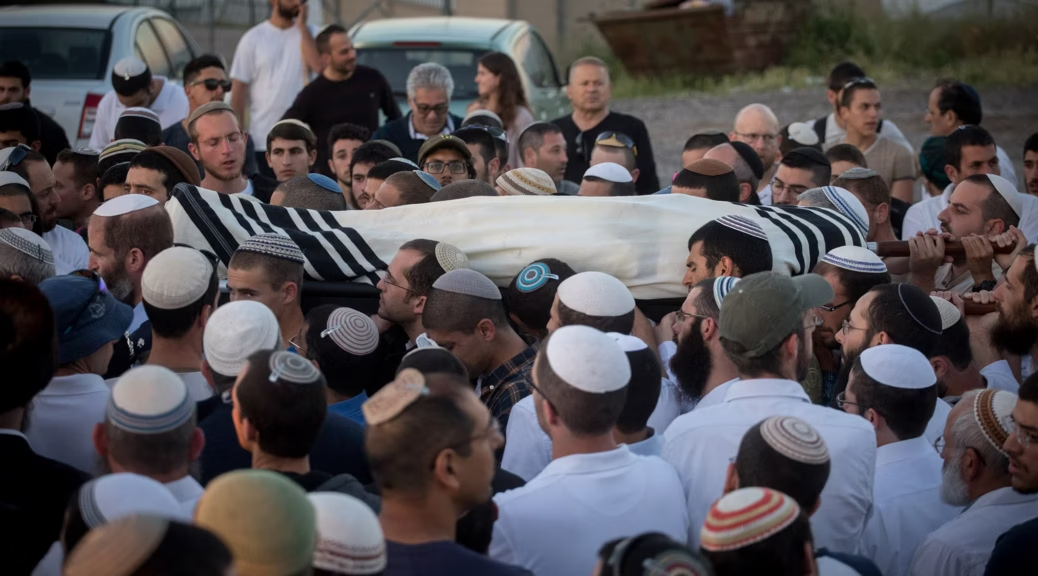
Right after Oct 7th, my wife and I were watching a video about what was happening in the land during the first few days, Oct 8th and 9th. How the bodies of our brothers and sisters were being recovered. One of the ladies speaking said her husband, Jeremy, was preparing the bodies of holy Jews after they were murdered and burned and were cut into pieces. Every woman was rapped she said.
In Judaism, every body has to have a special burial, Tahara. Mrs. Gimple said that her husband, Jeremy, had been busy for days preparing the bodies of the men. She said that the men and the women are separated. The men take care of the men and the women take care of the women.
So different than the Christian Bible.
Rav explains: if even in the ultimate national mourning after the war of Gog u’Magog the families must separate men and women, how much more so must we separate them in joy at the Simchat Beit HaShoeivah in the Temple. The Mechitza is therefore not a later custom; it is the architectural echo of the end-of-days mourning for Mashiach ben Yosef.
That mourning is described two verses earlier (Zechariah 12:10):
“I will pour out on the house of David and on the inhabitants of Jerusalem a spirit of grace and supplication, so that they will look to Me concerning those whom they have pierced, and they will mourn for him as one mourns for an only son…”
The Talmud (Sukkah 52a) identifies the slain figure as Mashiach ben Yosef, killed in the wars preceding the final redemption. The mourning is national, collective, and gendered—families and wives separate. October 7, 5784 (Simchat Torah) was that piercing. The hostages in the tunnels, the slaughtered families, the national keening that still has not ended—this is the misped of Zechariah 12. The Mechitza is the permanent ot that marks the space where that mourning is remembered and where the next stage of redemption is prepared.

Beit Hashoavah’s First Mechitza
Our little synagogue in Amarillo, Esnoga Beit HaShoavah, received its Mechitza eight years ago. I returned with my good friends Eliezer and Have Peña—Sephardic Jews whose families had walked together for hundreds of years in the South. We have studied Torah side by side for twenty-three years. We are the only two Jews in Amarillo who fully understand that the Christian faith is a human creation.
Only Hashem’s faithfulness to His Jewish people keeps us still standing inside a building that once carried Messianic labels. We installed the Mechitza because the blueprint required it. Torah is a blueprint exactly as DNA is a blueprint. Today I see from a place possible only because I returned home to my family, the Jewish people.
“Ask your father, and he will tell you; ask your elders, and they will teach you” (Devarim 32:7). The Mechitza is the sign Zechariah gave so that every honest Christian, looking at the prophets for the first time without the filter of replacement theology, must confront the truth: their book never knew what the end of days would actually look like.
The Failed Prophecies of the Church and the Miracle That Refutes Them
For nearly two thousand years, the Church taught that the Jews were eternally cursed for “killing God.” Church Fathers, councils, and popular preaching produced lists of punishments: perpetual exile, degradation, no return to the Land, no restoration of sovereignty, no Temple, and eventual conversion or annihilation. The Jews would never again be a nation. Jerusalem would remain forever under Gentile dominion. The “New Israel” had inherited the covenants.
Every one of those prophecies has failed.
Rabbi Tovia Singer has documented this spiritual battle for decades. The Church’s own history is a record of hatred written into doctrine: the Jews as “Christ-killers,” as children of the devil (John 8:44), as eternal wanderers under divine curse. Replacement theology was not a fringe opinion; it was the air the Church breathed.
When the State of Israel was reborn in 1948, when Jerusalem was reunited in 1967, when Jews returned from the four corners of the earth, the theological house of cards collapsed. The Church has nowhere left to turn. Its end-times charts—built on the assumption that the Jews would never return and that a rebuilt Temple would exist only so that a false messiah could deceive them into the Tribulation—have been emptied of predictive power.
Rabbi Pinchas Winston, whose teachings on the unfolding geulah are essential viewing (“These Prophecies Are Happening NOW”), shows the other side of the coin: the miracle of Jewish survival and return is itself the greatest living prophecy. Against every natural law, against every empire that tried to erase us, the Jewish people stand again in their land, speaking their language, fighting biblical wars.
We are in Messianic times. The birth pangs are real. The war is biblical precisely because Christianity still claims to be the sole inheritor of the New Covenant and still needs the Jews to build the Third Temple so that its own eschatological drama can play out—Jews deceived by the Antichrist, Jews going through the Tribulation, Jews finally “seeing” Jesus in Zechariah 12. That script is not Torah. It is a later invention that collides with the plain reading of the prophets and with the living reality of October 7.
Blood Libel: The Oldest Christian Accusation Still Alive
The hatred did not begin with the modern progressive campus or the Islamist. It was incubated inside the Church. Historian Trudy Gold lays it out with devastating clarity (J-TV interview):
“The first one recorded against the Jews was in 1144 in Norwich… the notion of your enemy killing babies for their blood… takes us back into pagan times where there was this fertility notion… What is the most precious thing? The blood of a baby… It’s used for Passover bread. The main blood libels always occur at Passover…
Once it enters history against the Jews, there are blood libels in every society in the Christian world… it then is borrowed by Islam, and it’s still present today… It’s a very, very dangerous thing, and it’s very much tied up with why on earth do people hate Jews… They don’t hate Jews in the Indian world.
They don’t hate Jews in the Chinese world. It is in the world of monotheism, particularly in the world of Christianity… Christianity took on board the Hebrew Bible… But the problem was the Jews did not accept Yeshua of Nazareth, Jesus, as Messiah. Because a Messiah, the notion of a person becoming a God is so alien to Judaism…
I’d like to bring the attention of your viewers to the first commandment: ‘I am the Lord thy God that brought thee out of the land of Egypt. Thou shalt have no other gods before me.’ The notion of a man becoming God is completely alien to Judaism… Who is a Messiah in the Jewish world? A leader who would lead the people to freedom.
He will be ben Adam… The tragedy was that Christianity becomes the religion of Rome… and with it written into the church fathers, actually in the gospels themselves, in St. John’s gospel, ‘you are of your father the devil.’ The Jews are singled out as the enemies of Christendom… Jews are therefore pushed into… completely marginalized professions… they are the arch heretics.”
Trudy Gold’s point is decisive: there can never be a way for Jews to “expect Jesus,” because God Himself spoke to us at Sinai and gave us His Torah. The First Commandment is not negotiable. A man-God is idolatry. The blood libel—pagan fertility magic baptized by the Church, first recorded in Norwich 1144, forever tied to Passover—became the perpetual justification for expulsions, massacres, and the theological claim that Jewish suffering was deserved. That same libel, mutated, walks the streets and the social-media feeds after October 7.
1 Thessalonians 2
14 For you, brothers and sisters, became imitators of God’s churches in Judea, which are in Christ Jesus: You suffered from your own people the same things those churches suffered from the Jews 15 who killed the Lord Jesus and the prophets and also drove us out. They displease God and are hostile to everyone 16 in their effort to keep us from speaking to the Gentiles so that they may be saved. In this way they always heap up their sins to the limit. The wrath of God has come upon them at last.[b]
Tisha B’Av: You Never Fast While Mourning
Tisha B’Av (the Ninth of Av) is the saddest day on the Jewish calendar — a 25-hour fast of mourning, deprivation, and reflection. Tradition teaches that this date was fixed for tragedy from the very beginning of our national story. The Mishnah (Ta’anit 4:6) lists five foundational calamities that occurred on this day. Over the centuries, more disasters clustered around it, turning the Ninth of Av into a day that seems set aside by Heaven for national suffering.
The Ancient Foundations
The Sin of the Spies (traditional dating ~1313–1312 BCE): Moses sent twelve spies into the Land of Canaan. Ten returned with a fearful, negative report. The people wept that night in despair and rejected the Land. God declared that this generation would die in the wilderness and that the date of their baseless weeping would become a night of weeping for future generations. The Midrash states that God fixed Tisha B’Av as a day of tragedy from that moment.
Destruction of the First Temple (586/587 BCE historical; traditional Jewish chronology ~423 BCE): Nebuchadnezzar’s forces breached Jerusalem. The Temple built by Solomon was set ablaze and burned. The Babylonian exile began. Biblical sources give dates of the 7th or 10th of Av for the burning; the Sages established the 9th as the day of national mourning.
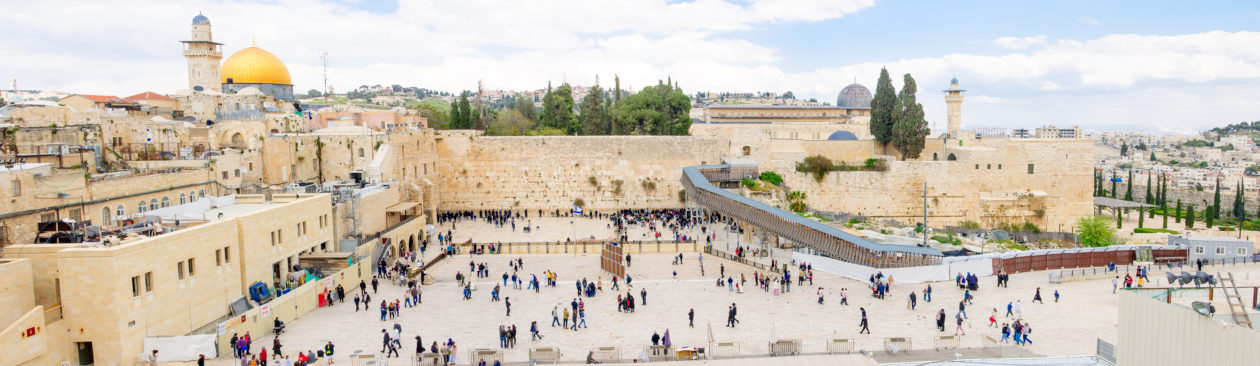
Destruction of the Second Temple (70 CE): Roman legions under Titus destroyed Herod’s Temple after a long siege. The fire again began on the 9th of Av. This destruction ended the sacrificial service and launched the long exile that has lasted nearly two thousand years. The Western Wall is the surviving remnant of the Temple Mount platform.
Fall of Betar (135 CE): During the Bar Kokhba revolt, the last major stronghold of Jewish resistance, Betar, fell to the Romans on Tisha B’Av. Hundreds of thousands of Jews were slaughtered. The Talmud records the horror of the massacre.
The Temple Mount Plowed Over (135 CE): Roman commander Quintus Tineius Rufus ordered the Temple Mount and surrounding areas plowed under, fulfilling the prophecy that Zion would be “plowed like a field.”
Medieval and Later Tragedies
First Crusade massacres (1096): As the Crusaders marched, they slaughtered Jewish communities in the Rhineland and France. Many of the massacres and forced conversions occurred in the weeks surrounding Tisha B’Av.
Expulsion from England (1290): King Edward I issued the Edict of Expulsion on or very near Tisha B’Av. England’s Jews were forced to leave after centuries of residence, pogroms, and confiscation of property.
Expulsion from Spain (1492): The Alhambra Decree gave Jews until the end of July to leave Spain. The final deadline fell on or immediately around Tisha B’Av. Rabbi Isaac Abravanel and others recorded that the last Jews departed on the Ninth of Av. This expulsion ended the Golden Age of Spanish Jewry and scattered Sephardic communities across the Mediterranean, North Africa, and the Ottoman Empire.
Modern Era
Outbreak of World War I (1914): On Tisha B’Av 5674 (August 1–2, 1914), Germany declared war on Russia. The war that followed reshaped Europe, destroyed Jewish communities in the East, and created the conditions that led to World War II and the Holocaust.
Holocaust connections (1941–1942): On or near Tisha B’Av 1941, Himmler received approval for the “Final Solution.” On Tisha B’Av 1942 (July 23), the mass deportations from the Warsaw Ghetto to Treblinka began. Kinnot (lamentations) for the six million are now recited on this day.
Gush Katif Disengagement (2005) Tisha B’Av 5765 fell on August 13–14, 2005. The Israeli government had postponed the actual evacuation of the Gaza settlements so it would not fall precisely on the fast day. Nevertheless, the final orders and the entry of forces into Gush Katif began immediately afterward (August 15). For many Religious Zionists, the forced removal of thousands of Jews from their homes in the Land of Israel — homes built with faith and sacrifice — felt like another national trauma on the same calendar day of destruction. You lived that moment directly, raising money for the families being uprooted. That experience sits inside the long chain of Tisha B’Av tragedies.
The Pattern and the Hope
The Sages teach that the First and Second Temples were destroyed primarily because of sinat chinam — baseless hatred among Jews. The spies’ report was an earlier expression of lack of faith and unity. Every subsequent disaster on this date is seen through that lens: a day when the consequences of internal division and external hatred converge.
Yet Tisha B’Av is not only about mourning. The afternoon of the fast turns toward consolation. The Book of Lamentations ends with the plea “Restore us to You, O Lord, that we may be restored; renew our days as of old.” The prophets promise that the fast days will one day become days of joy. The same calendar that records destruction also points toward the rebuilding of the Temple and the final redemption.
This year Tisha B’Av begins at sundown tonight, Wednesday, July 22, 2026 (8 Av 5786), and the fast continues through Thursday, July 23. As we sit on the floor, read Eicha, and recite the kinnot, we remember every link in the chain — from the spies in the wilderness to the families of Gush Katif and everything in between. We also remember that the same God who fixed this day for weeping has promised that it will not remain a day of weeping forever.
May this year’s fast bring us closer to genuine unity, deeper faith, and the day when Tisha B’Av itself is transformed into a festival of joy.
The Call Across the Mechitza
We, the Jewish people, are calling to the Christian world: open your eyes. Look at what is happening before your very eyes—Jew-hatred, blood libel reborn, the oldest Christian accusation recycled by progressives and Islamists alike. Look at Zechariah 12 without the later overlay.
See the Mechitza standing in every authentic synagogue as the physical reminder of the mourning that has already begun and of the separation that holiness requires. That every Christian prophecy of permanent Jewish exile has been shattered by Jewish return.
See that the Torah is the living blueprint, and DNA is its biological twin. See that Hashem’s faithfulness to the Jewish people is the only reason any of us are still here.
We are not waiting for a man-God to return. We are walking through the birth pangs of Mashiach ben Yosef so that Mashiach ben David can be revealed. The Mechitza is the ot. October 7 was the piercing. The generation that sees it is the generation that finally understands the prophets.
Ask your elders. They will teach you.
Hazan Gavriel ben David Esnoga Beit HaShoavah beithashoavah.org
Key Takeaways
- The Mechitza symbolizes separation for spiritual reasons, rooted in Torah and historical mourning practices.
- Historical prophecies claim Jewish eternal exile, yet the modern emergence of Israel contradicts these beliefs.
- Tisha B’Av signifies collective Jewish mourning, marking pivotal tragedies throughout Jewish history.
- Jews are called to unite and reflect on historical suffering while believing in future redemption and joy.
- The Mechitza serves as a reminder of both mourning and hope for the coming of Mashiach, as seen in recent events.